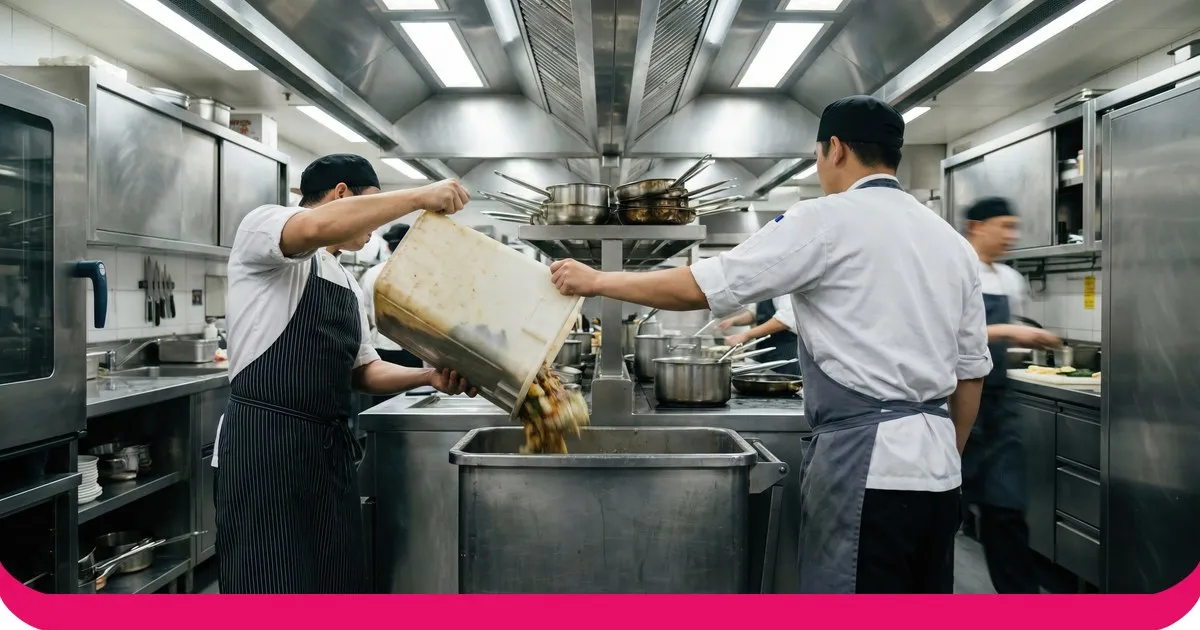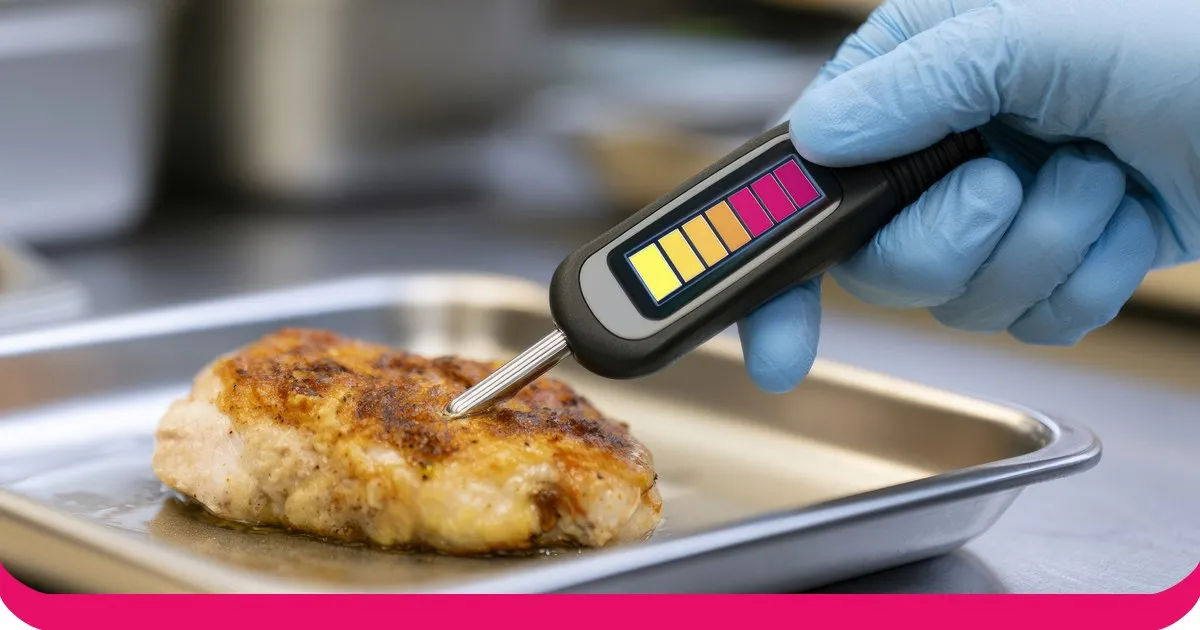
A cook scans the walk-in at the start of a shift and finds a tray of cooked rice that was meant to be cooled and covered the night before. It is lukewarm and the cooling log has a gap. Everyone on the crew passed the HACCP course last spring and can recite the seven principles. The question is whether anyone can work out how this happened, decide what to do with the rice, and stop it happening again.
This is an illustrative scenario, not a documented incident. It shows the gap this guide is about: knowing the HACCP rules is not the same as tracing a contamination risk back to its cause and explaining which approved control applies. The guide is for hospitality training directors and restaurant or hotel operations leads. It covers how to diagnose the gap, design HACCP training scenarios with feedback, run and score a case, and what training cannot fix. Have your food safety lead validate every case and criterion, and follow the guidance your local regulator approves.
Quick facts
| Question | Short answer |
|---|---|
| What is the task? | Trace a contamination risk to its cause and explain the approved control. |
| What is HACCP? | Hazard Analysis and Critical Control Point, a system built on seven principles, from hazard analysis to record keeping. |
| What do you score? | Cause analysis and control selection, not recall of the principles. |
| Is a course certificate enough? | In our view, no. It shows the rules were taught, not that someone can apply them to a new case. |
| Who validates the case? | A food safety lead or a restaurant or hotel operations lead. |
| What can training not fix? | Missing thermometers, unclear plans and understaffed shifts. |
| How do you know it worked? | A new, unseen case scored against agreed criteria, then observed checks on the line. |
1. Describe the performance problem
Start with the job. A team member who works with food must notice when a process has drifted, trace the likely cause, explain which approved control applies, and escalate when the answer is beyond their authority. Each of those is a decision, not a fact to recall.
The US Food and Drug Administration lists seven HACCP principles: conduct a hazard analysis, determine the critical control points, establish critical limits, establish monitoring procedures, establish corrective actions, establish verification procedures, and establish record keeping. The same document says the success of a HACCP system depends on educating and training management and employees. Training matters, but the principles are a framework for decisions. A crew that can list them and cannot apply them is still exposed.
2. Diagnose the learning and context gaps
Compare what the job needs with what your training currently asks for. Some HACCP courses end in a multiple-choice test. That checks remembering, the lowest level of Bloom's taxonomy. In our reading, tracing a contamination risk draws on apply and analyse, and choosing between controls on evaluate. Our guide to matching learning activities to Bloom's taxonomy explains how to read these demands.
Then check what training cannot touch:
- The plan. FDA guidance says it is the team's responsibility to develop the HACCP plan, and that the system must be developed by each food establishment. If the plan for your site is out of date or generic, staff cannot follow it.
- The tools. A critical limit is a maximum or minimum value a parameter must be controlled to. Without a working probe thermometer at the station, nobody can monitor it.
- The records. Gaps in logs, like the cooling log in the opening case, are often a staffing or design problem before they are a knowledge problem.
- Time and staffing. Our guide to food safety training during peak rush hours covers why controls slip when the pass is busy.
If any of these is the main cause, hand it to whoever owns staffing, equipment or the plan before you build another module.
3. Design purposeful preparation and practice
Match each stage to what it must achieve.
Preparation: confirm the basics. Use a short self-paced check on prerequisites: the seven principles, the terms critical control point, critical limit, monitoring and corrective action, and where your own plan keeps its records. FDA guidance defines monitoring as a planned sequence of observations or measurements to assess whether a critical control point is under control, and corrective action as the procedures followed when a deviation occurs. A recall check like this confirms prerequisites only. Do not report it as competence.
Practice: root-cause scenarios with feedback. Give learners a short case with evidence: a log extract, a photo description, a delivery note. Ask three questions. What went wrong? Which control should have caught it? What would you do now? Give feedback on the two skills separately, cause analysis and control selection, so a learner can see whether they found the right cause but chose the wrong action.
Root-cause audits work well here. Take a real near miss from your own kitchen, remove names, and have the team trace it back through the process step by step. Check any real data with your food safety lead before sharing it.
Review and transfer. Live discussion adds the most value on ambiguous cases, such as a hold temperature that was out of range for an unknown period. Asynchronous review is enough for clear-cut cases. Short interactive polls, quizzes and scenario slides can run in a pre-shift huddle or be taken self-paced, so every shift gets the same practice.
4. Work through a realistic example
Here is a short task to adapt. It is illustrative and needs your food safety lead to validate the evidence and the answer key.
The case. A tray of cooked rice is found lukewarm in the walk-in. The cooling log shows the batch was started but has no second reading. The shift lead that night was covering two stations, and the blast chiller was out of service for part of the evening. The plan lists cooling as a critical control point with a written critical limit.
The learner's task. Review the evidence. State what happened, which part of the process failed, which control applies, what you would do with the batch, and what further information you need.
Learner choices and feedback.
- "Throw the rice away and retrain the closing cook." Defensible but incomplete. Discarding may be right, but the choice skips the cause. Feedback: ask why the second reading was missed and why the chiller was down.
- "The cook forgot the log, so remind everyone to fill it in." Partly right. It names the monitoring failure and ignores the equipment and staffing evidence. Feedback: separate the person's action from the conditions around it.
- "Hold the batch for the food safety lead's decision under the plan's corrective action procedure, record the deviation, and flag the chiller outage and double coverage as causes to fix." Strong. It separates the corrective action from the root cause, stays within authority, and names the context.
The retry. Give a new case with the same pattern in a different process, for example a delivery that arrived above its limit, and see whether the learner transfers the reasoning instead of repeating the earlier answer.
5. Assess capability and plan transfer
Score a new, unseen case with a short rubric. Rate each criterion 0 to 2, defined with your food safety lead.
| Criterion | Observable evidence |
|---|---|
| Task execution | Traces the contamination risk to its cause and records the action taken and the evidence behind it. |
| Reasoning | Explains constraints, alternatives and uncertainty, and checks both cause analysis and control selection. |
| Boundaries | Uses approved procedures and escalates when information or authority is missing. |
Anchors: 0 means absent or unsupported, 1 means partial with relevant omissions, 2 means complete and justified against agreed criteria. Define critical errors separately, for example serving a product that has failed a critical limit. An overall score must not hide a critical failure. This rubric is a proposed starting point, not a validated readiness standard.
Workplace follow-up. Check transfer after people have had time on the line. Compare baseline and follow-up on cause analysis and control selection using the same cases and the same denominator, such as staff assessed per site per quarter. Our guide to assessing judgement and problem solving covers rubric design in more depth. Look at concurrent changes before crediting training: a new thermometer, a revised plan or a staffing change can all move your numbers.
What training will not fix
- An outdated or generic plan. The plan has to fit your site.
- Missing equipment. No probe thermometer, no monitoring.
- Understaffed shifts. Double coverage produces missed checks whatever people know.
- Supply variation. A supplier change can alter the risk the plan was built for.
- Evidence limits. One audit shows that something differs. It does not prove why.
Name these to the site owner early and agree who fixes each one.
Frequently asked questions
What are HACCP training scenarios?
Short realistic cases where learners trace a contamination risk, choose the approved control and explain why. They practise the decision, not the recital of the principles.
How many HACCP principles are there?
Seven, from conducting a hazard analysis to establishing record keeping and documentation procedures.
Is a HACCP course enough for kitchen staff?
No. A course shows the rules were taught. A scored scenario on a new case shows whether staff can apply them, and observed checks show whether it carries over to the line.
Who writes the HACCP plan?
The food establishment's own team. FDA guidance says it is the team's responsibility to develop the plan, so scenarios should use your plan, not a generic one.
Where to start
Pick one critical control point, for example cooling or receiving, and collect two real near misses from the last quarter. Anonymise them and turn them into cases. Have your food safety lead validate the answer criteria, then pilot with one team and score it with the rubric above before rolling it out.
To see how a case like this could run live in a pre-shift huddle, and be reused self-paced afterwards, explore AhaSlides.