

Closed yes/no questions give you polite nods, not genuine understanding. Open-ended questions, on the other hand, reveal what's actually happening in your audience's minds.
Research on the generation effect shows that people remember information better when they produce it themselves than when they simply read it (Slamecka & Graf, 1978). That's why facilitators, trainers, and presenters who master open-ended questioning consistently see higher engagement, better learning outcomes, and more productive discussions.
This guide breaks down everything you need to know about open-ended questions, what they are, when to use them, and 80+ examples you can adapt for your next training session, team meeting, or workshop.
What are Open-Ended Questions?
Open-ended questions are prompts that cannot be answered with a simple "yes," "no," or by selecting from pre-defined options. They require respondents to think, reflect, and articulate their thoughts in their own words.
Key characteristics:
💬 Require thoughtful responses – Participants must formulate their own answers rather than choose from provided options
💬 Typically start with: What, Why, How, Tell me about, Describe, Explain
💬 Generate qualitative insights – Responses reveal motivations, feelings, thought processes, and unique perspectives
💬 Enable detailed feedback – Answers often include context, reasoning, and nuanced opinions
Why they matter in professional settings:
When you're running a training session, leading a team meeting, or facilitating a workshop, open-ended questions serve a critical function: they help you hold a mirror up to the room. Instead of assuming everyone's on the same page, you get real-time visibility into comprehension gaps, concerns, and breakthrough insights you might otherwise miss.
Starting presentations or training sessions with open-ended questions establishes psychological safety early. You signal that all opinions are valued, not just "correct" answers. This shifts participants from passive listeners to active contributors, setting the tone for genuine engagement rather than performative participation.
Open-Ended vs Closed-Ended Questions
Understanding when to use each type of question is essential for effective facilitation and survey design.
Closed-ended questions limit responses to specific options: yes/no, multiple choice, rating scales, or true/false. They're excellent for gathering quantitative data, tracking trends, and quick comprehension checks.
Closed-Ended QuestionsOpen-Ended QuestionsWill we implement this new process?How do you think this new process will affect your daily workflow?Are you satisfied with the training?What aspects of the training were most valuable to you?Do you prefer option A or option B?What features would make this solution work better for your team?Rate your confidence level from 1-5Describe a situation where you'd apply this skillDid you attend the workshop?Tell me about your key takeaways from the workshop
Dos and Don'ts When Asking Open-ended Questions
The DOs
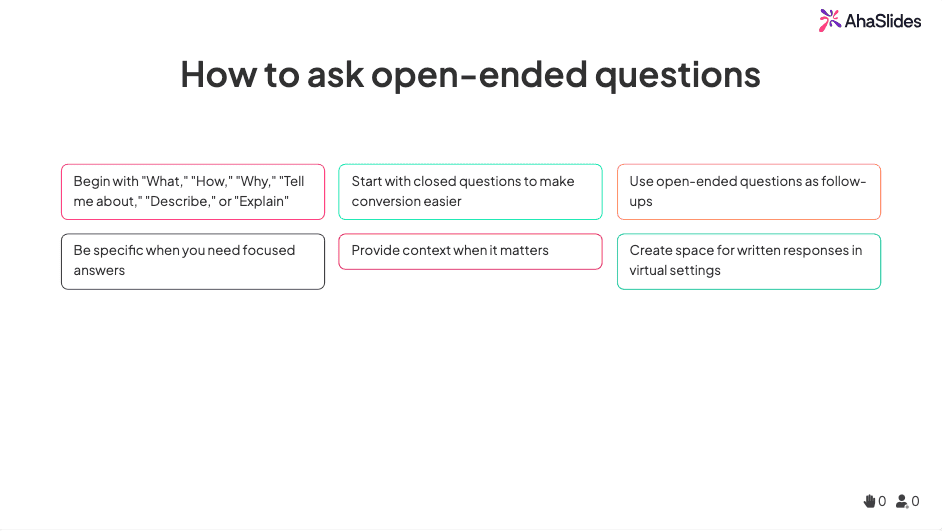
✅ Use question starters that invite elaboration: Begin with "What," "How," "Why," "Tell me about," "Describe," or "Explain." These naturally prompt detailed responses.
✅ Start with closed questions to make conversion easier: If you're new to open-ended questions, write a yes/no question first, then rework it.
✅ Deploy them strategically as follow-ups: After a closed question reveals something interesting, dig deeper.
✅ Be specific to guide focused responses: Instead of "What did you think of the training?" try "What's one skill from today's session you'll use this week, and how?"
✅ Provide context when it matters: In sensitive situations, explain why you're asking.
✅ Create space for written responses in virtual settings: Not everyone processes verbally at the same speed.
The DON'Ts
❌ Avoid overly personal questions in professional contexts.
❌ Don't ask vague, impossibly broad questions.
❌ Never ask leading questions.
❌ Avoid double-barrelled questions.
❌ Don't overload your session with too many open questions.
❌ Don't ignore cultural and language considerations.
80 Open-Ended Questions Examples
Training & Learning Development Sessions
For corporate trainers and L&D professionals, these questions help assess understanding, encourage application thinking, and identify barriers to implementation.
- What challenges do you anticipate when applying this technique in your daily work?
- How does this framework connect to a project you're currently working on?
- Describe a scenario where you'd use this skill in your role.
- What's one action you'll take this week based on what you've learned today?
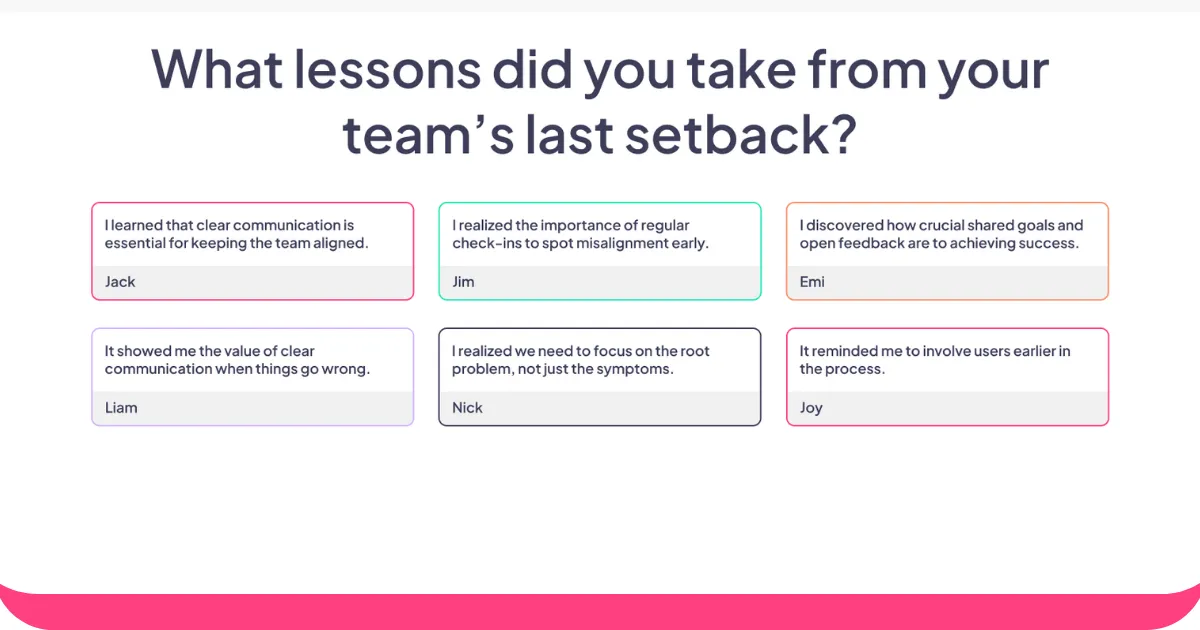
- Tell me about a time when you encountered a problem similar to what we discussed—how did you handle it?
- What additional support or resources would help you implement these strategies?
- How might you adapt this approach for your specific team or department?
- What's the biggest barrier preventing you from using this skill?
- Based on your experience, what would make this training more relevant to your work?
- How would you explain this concept to a colleague who wasn't here today?
Team Meetings & Workshops
- What problem do you want to solve in today's meeting?
- What's one outcome you need from this discussion?
- How can we improve the ways we collaborate on this project?
- What's blocking progress on this initiative, and what ideas do you have for moving forward?
- Tell me about a recent success on your team—what made it work?
- What's one thing we should continue doing, and one thing we should change?
- How has this challenge affected your team's ability to deliver results?
- What perspectives or information might we be missing in this discussion?
- What resources or support would help your team succeed with this goal?
- If you were leading this project, what would you prioritise first?
- What concerns haven't been addressed yet in this meeting?
Employee Surveys & Feedback
- What's one change our organisation could make that would significantly improve your day-to-day experience?
- Think about a time when you felt particularly valued here—what specifically happened?
- What skills or capabilities do you wish our team was better at developing?
- If you had unlimited resources to solve one challenge we're facing, what would you address and how?
- What's something we're currently not measuring that you believe we should pay attention to?
- Describe a recent interaction that exceeded your expectations—what made it stand out?
- When you think about our culture, what's one thing you hope never changes?
- What question should we have asked in this survey but didn't?
- What would make you feel more supported in your role?
- How could leadership communicate more effectively with your team?
Presentations & Keynotes
- Based on what you've heard so far, what questions are coming up for you?
- How does this relate to challenges you're seeing in your industry?
- What would success look like if you implemented this approach?
- Tell me about your experience with this issue—what patterns have you noticed?
- What's your biggest concern about the trend I just described?
- How might this play out differently in your specific context or region?
- What examples from your own work illustrate this point?
- If you could ask an expert one question about this topic, what would it be?
- What's one assumption I've made in this presentation that you'd challenge?
- What will you do differently after today's session?
Educational Contexts (For Teachers & Educators)
- What connections do you see between this concept and what we learned last week?
- How would you solve this problem using the framework we discussed?
- Why do you think this event happened? What evidence supports your thinking?
- What questions do you still have about this topic?
- Describe a situation outside school where you might use this knowledge.
- What was most challenging about this assignment, and how did you work through it?
- If you could teach this concept to someone else, what examples would you use?
- What alternative explanations could there be for this outcome?
- How has your understanding of this topic changed today?
- What would you want to explore further about this subject?
Job Interviews
- Walk me through your approach when you encounter a problem you've never solved before.
- Tell me about a project where you had to influence people without direct authority.
- Describe a time when you received difficult feedback—what did you do with it?
- What motivates you to do your best work, and what environment helps you thrive?
- How would your current colleagues describe your strengths and areas for development?
- Tell me about a professional setback and what you learned from it.
- What aspect of this role excites you most, and what concerns do you have?
- Describe your ideal team dynamic—what makes collaboration work for you?
- What's a skill you've developed recently, and how did you go about building it?
- How do you decide what to prioritise when everything feels urgent?
Research & User Interviews
- Walk me through how you typically approach this task.
- What frustrations do you encounter with your current solution?
- Tell me about the last time you needed to accomplish this.
- What would an ideal solution look like for you?
- How does this challenge affect other aspects of your work or life?
- What have you tried in the past to solve this problem?
- What matters most to you when making a decision about this?
- Describe a time when this process worked well—what made it successful?
- What would prevent you from using a solution like this?
- If you could change one thing about how you currently handle this, what would it be?
Icebreakers & Team Building
- What's a skill you've learned recently that surprised you?
- If you could have any superpower for a day, which would you choose and why?
- What's the best piece of advice you've received this year?
- Tell me about something you're looking forward to this month.
- What's a small thing that made you smile recently?
- If you could master any skill instantly, what would it be?
- What's your go-to productivity hack or work tip?
- Describe your ideal weekend in three words.
- What's something you're proud of accomplishing lately?
- If you could ask anyone one question over coffee, who and what?
Conversation Starters
- What trends are you watching closely in your area of work?
- What's been keeping you busy lately?
- How did you end up in your current field?
- What's the most interesting thing you've learned or read recently?
- Tell me about a professional challenge you're working through right now.
- What's your take on the recent changes in our industry?
- What advice would you give your younger self about navigating your career?
- What does a typical day look like for you?
- How has your work evolved over the past few years?
- What's something you wish more people understood about your role?
3 Audience Engagement Tools for Hosting Live Open-ended Questions
Gather live responses from thousands of people with the help of some online tools. They are best for meetings, webinars, lessons or hangouts when you want to give the whole crew a chance to get involved.
AhaSlides
AhaSlides transforms standard presentations into engaging experiences with built-in features designed for professional facilitators, trainers, and presenters.
Best for open-ended questions:
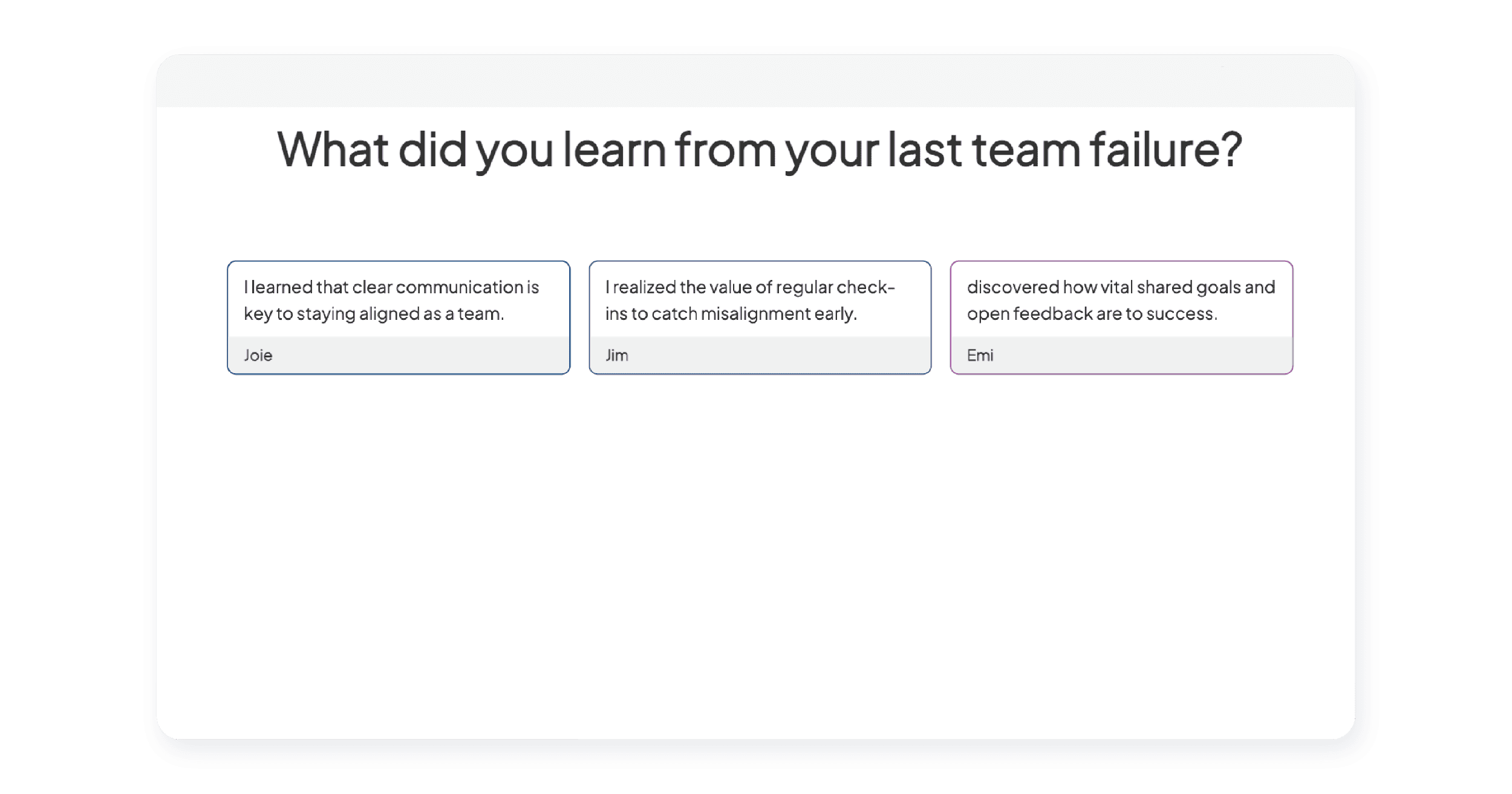
Open-Ended slides: Participants type paragraph responses from their phones. Perfect for questions requiring detailed answers: "Describe a scenario where you'd apply this technique."
Brainstorm slides: Works similarly to Open-Ended slide but allows participants to vote for the answers they like.
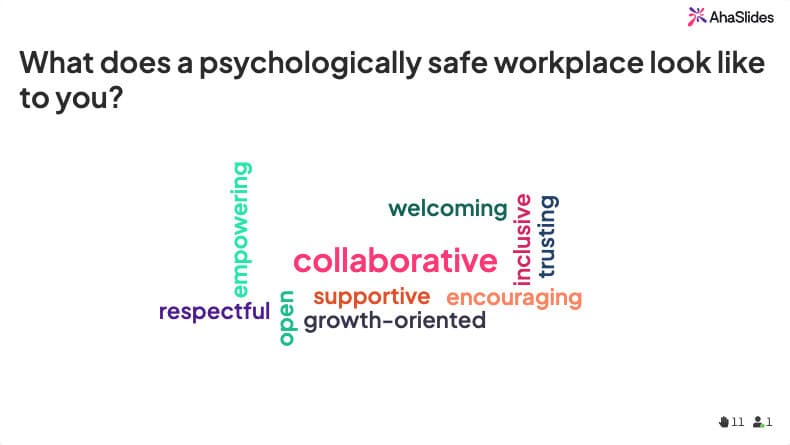
Word Cloud: Visual feedback tool that displays responses as a word cloud, with frequently mentioned terms appearing larger. Brilliant for: "In one or two words, how are you feeling about this change?" or "What's the first word that comes to mind when you think about our team culture?"
Why it works for trainers: You can create comprehensive training presentations with polls, quizzes, and open-ended questions all in one place—no switching between tools. Responses save automatically, so you can review feedback later and track participation over multiple sessions. The anonymous option encourages honest feedback in sensitive topics (organisational change, performance concerns, etc.).
Real-time visibility into everyone's thinking helps you adjust facilitation on the fly. If 80% of responses indicate confusion on a concept, you know to slow down and provide more examples before moving forward.
Poll Everywhere
PollEverywhere is an audience engagement tool that uses interactive polling, word cloud, text wall and so on.
Nearpod
Nearpod is an educational platform for teachers to make interactive lessons, gamify learning experiences and host in-class activities.
In a Nutshell...
Open-ended questions are your most powerful tool for transforming passive audiences into engaged participants.
Your participants want to be heard. Open-ended questions give them that opportunity, and in doing so, they give you the insight you need to deliver training, meetings, and presentations that genuinely make an impact.