
Slips, trips and falls on the same level were the most common kind of reported workplace injury in Great Britain: 30% of non-fatal injuries to employees reported by employers in 2024/25, according to the Health and Safety Executive (HSE). Most of those started with something someone could have spotted first.
These 25 spot the hazard pictures train that habit. They are real workplace photos in five rounds of five: warehouse, construction, office, kitchen and workshop. Under each one is an answer key that names only the hazards you can see, so you can read it out and move on.
How to play: show one picture, give everyone 60 seconds to find every hazard, then reveal the answer. Count who found the most, and ask how each hazard should be fixed.
Round 1: Warehouse and loading bay
Warehouses mix people, heavy loads and moving vehicles in the same aisles. Start here: the hazards are big and easy to name.
Pictures 1 to 55 pictures
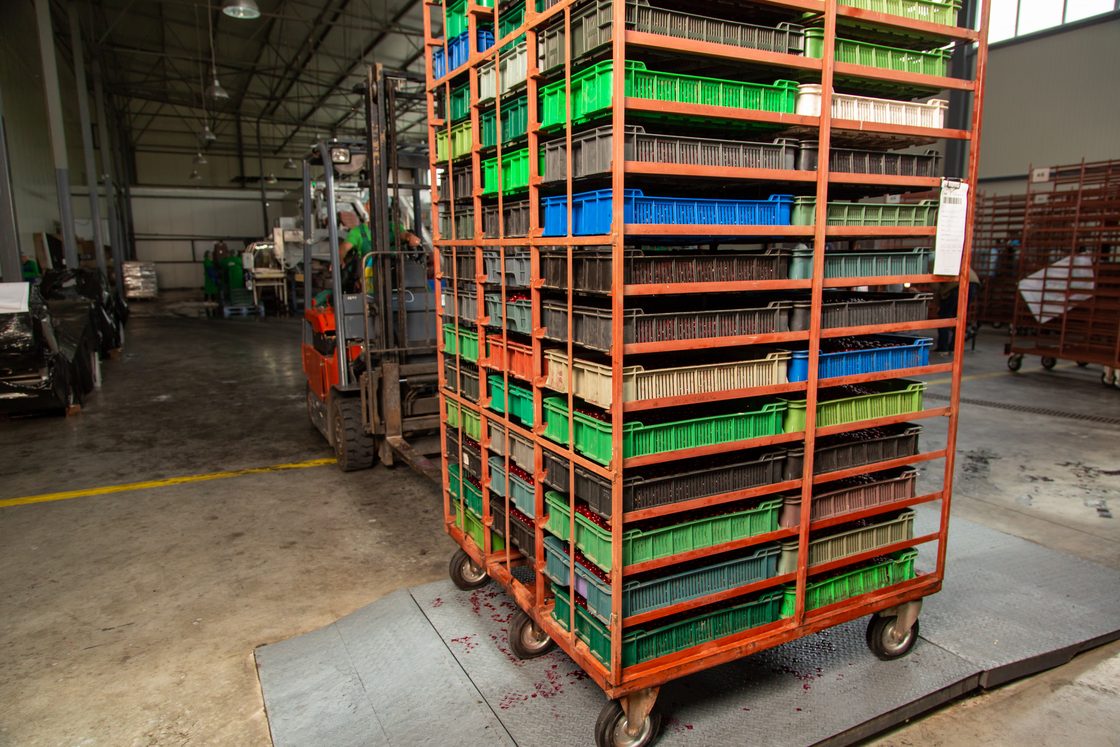
1A loaded crate trolley on the scales at a fruit warehouse. How many hazards can you spot?
Our pick: answer4. (1) A trolley stacked far above head height, so it is top-heavy and could tip. (2) Crushed fruit and juice on the floor round the scales, which is a slip hazard. (3) A forklift working right behind the trolley. (4) The tall load limits the forklift driver's view of anyone walking past.

2A forklift driver in a warehouse aisle. How many hazards can you spot?
Answer2. (1) He is reading his phone at the controls, so his eyes are off the aisle. (2) Only one hand is on the steering wheel.

3Picking stock from high shelving. How many hazards can you spot?
Answer3. (1) She is reaching above her head from a stepladder, stretching to the limit of her reach. (2) A spare hard hat sits on the table instead of on someone's head. (3) Boxes are stored on the top shelves, where they are awkward to lift down safely.

4A worker carrying a large box across the warehouse. How many hazards can you spot?
Answer2. (1) She is straining under a box that looks too heavy to carry alone. (2) She holds it out in front of her, away from her body, and it blocks her view of the floor ahead.

5A racking aisle in a distribution centre. How many hazards can you spot?
Answer1. (1) Jumping about in a working aisle, next to racking and steel barriers they could land on. This is the easy one: one hazard.
Our pick: picture 1. A tall load, a slippery floor and a moving forklift in one corner: each hazard makes the others worse.
Round 2: Construction and working at height
Building sites are where hazard spotting started, and most of these pictures show work above the ground.
Pictures 6 to 105 pictures
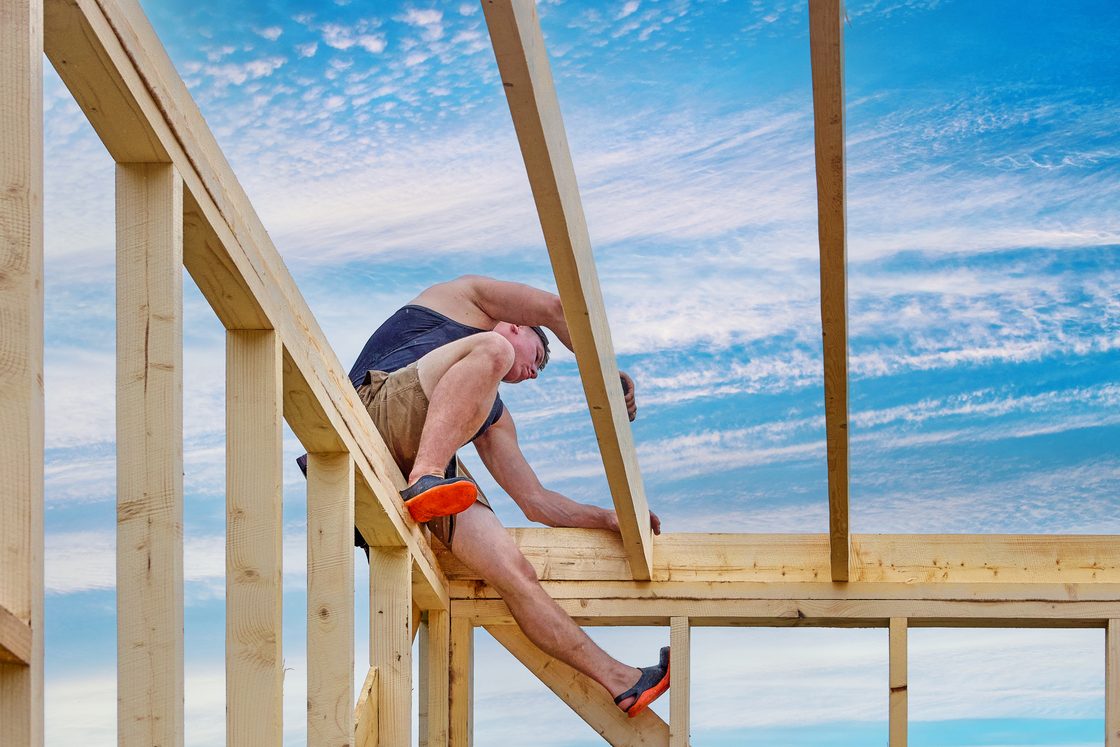
6A worker climbing a timber roof frame. How many hazards can you spot?
Our pick: answer4. (1) No fall protection: no harness and no edge protection. (2) No hard hat. (3) Soft sandals instead of safety boots. (4) He is climbing the frame itself instead of using a ladder or a working platform.
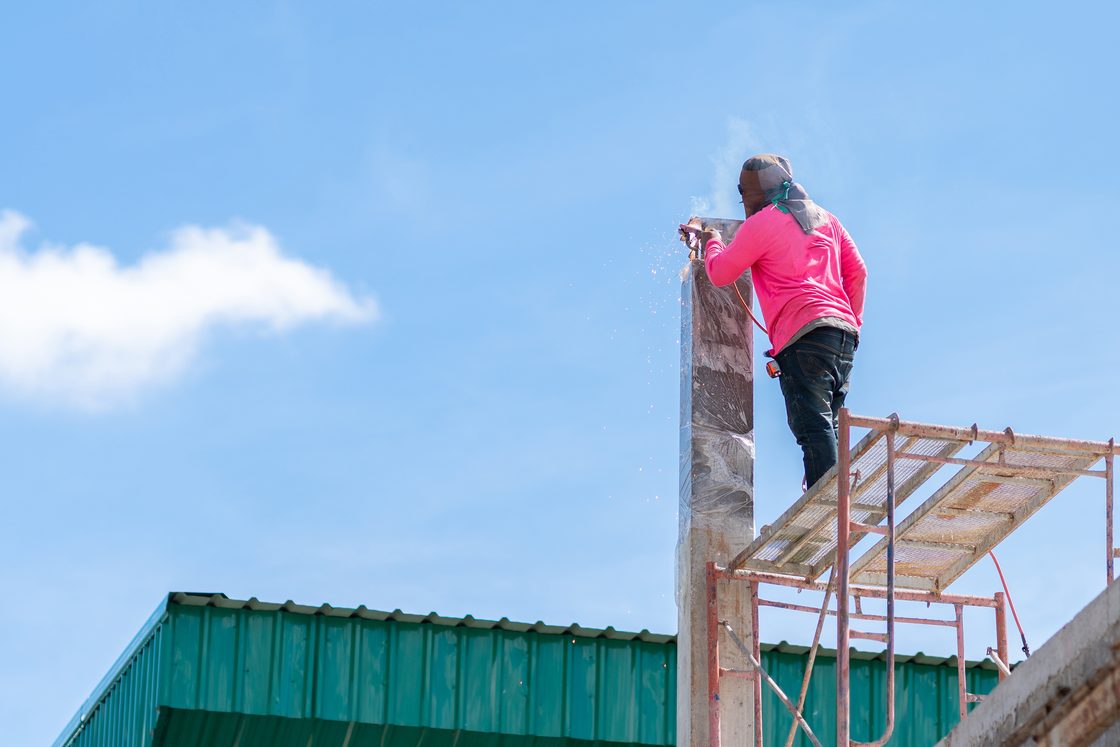
7Cutting the top of a concrete column. How many hazards can you spot?
Answer4. (1) The scaffold platform has no guardrail on the side he is standing on. (2) No harness. (3) No hard hat, only a cloth wrapped round his head. (4) A gas hose trailing off the platform while he cuts with a flame.
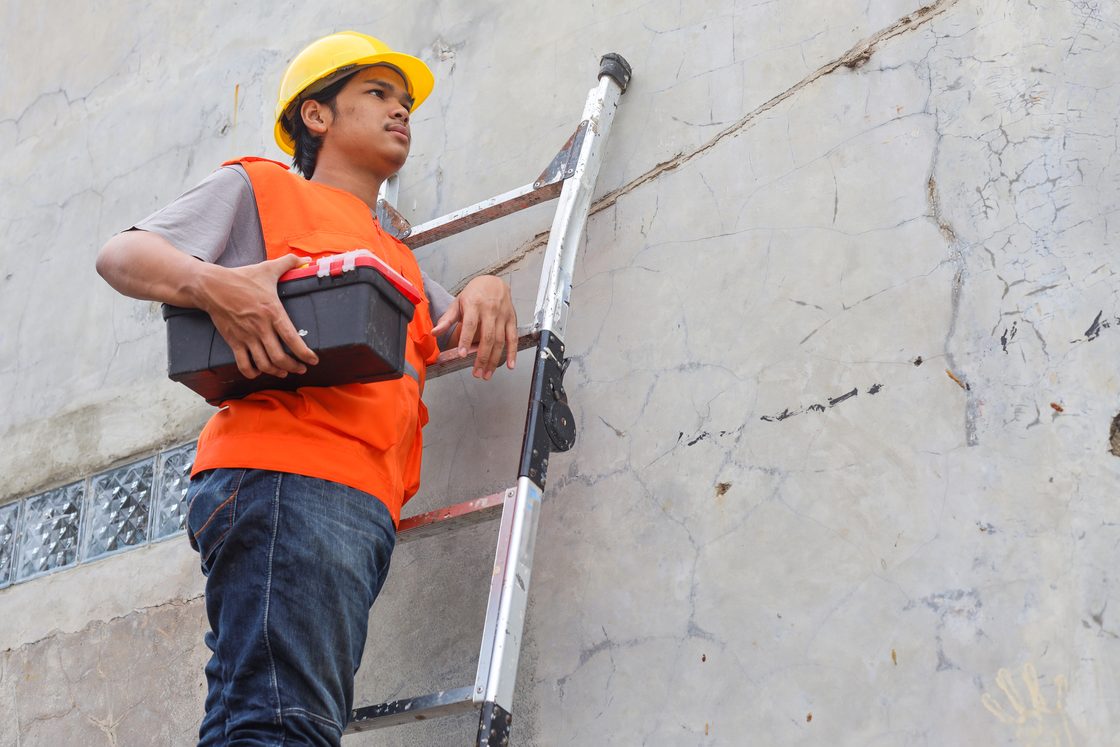
8A worker on a ladder against a wall. How many hazards can you spot?
Answer2. (1) He is carrying a toolbox in one arm, so only one hand is holding the ladder. (2) His body is out to the side of the ladder instead of between the stiles.
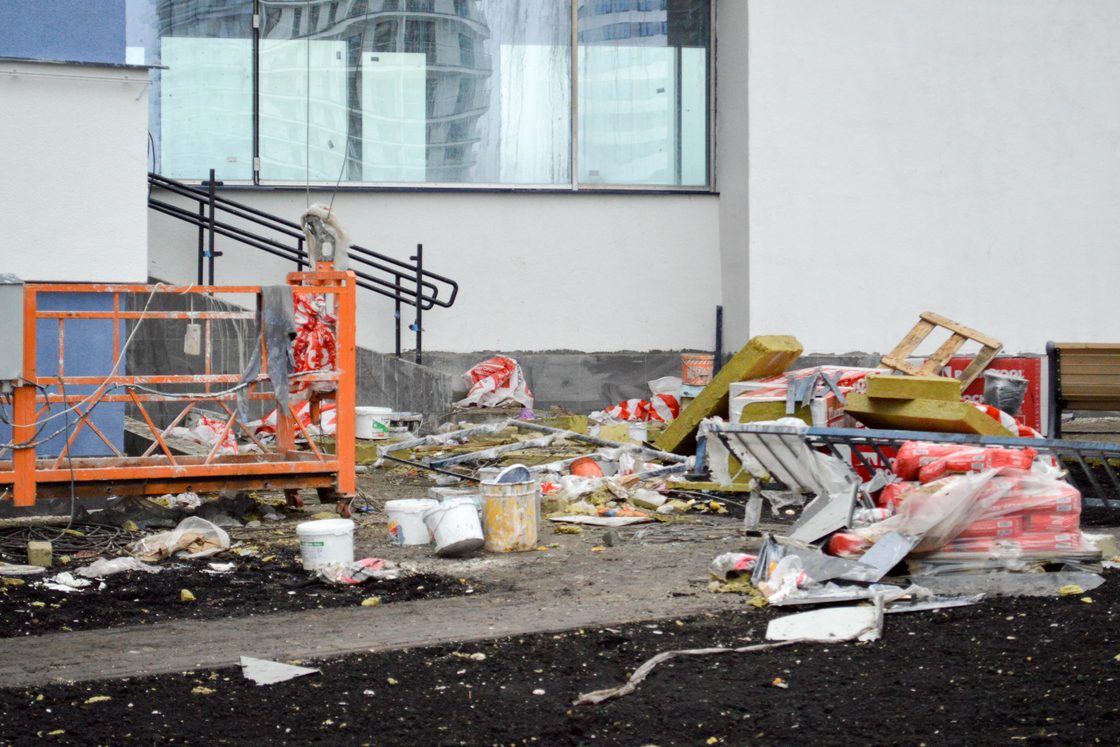
9Outside a building under refurbishment. How many hazards can you spot?
Answer4. (1) Packaging, offcuts and metal sheets are scattered across the ground, which is a trip hazard with sharp edges. (2) Open paint buckets left on the ground. (3) A broken pallet and insulation boards piled up loosely. (4) An access cradle left on the ground with cables hanging from it.
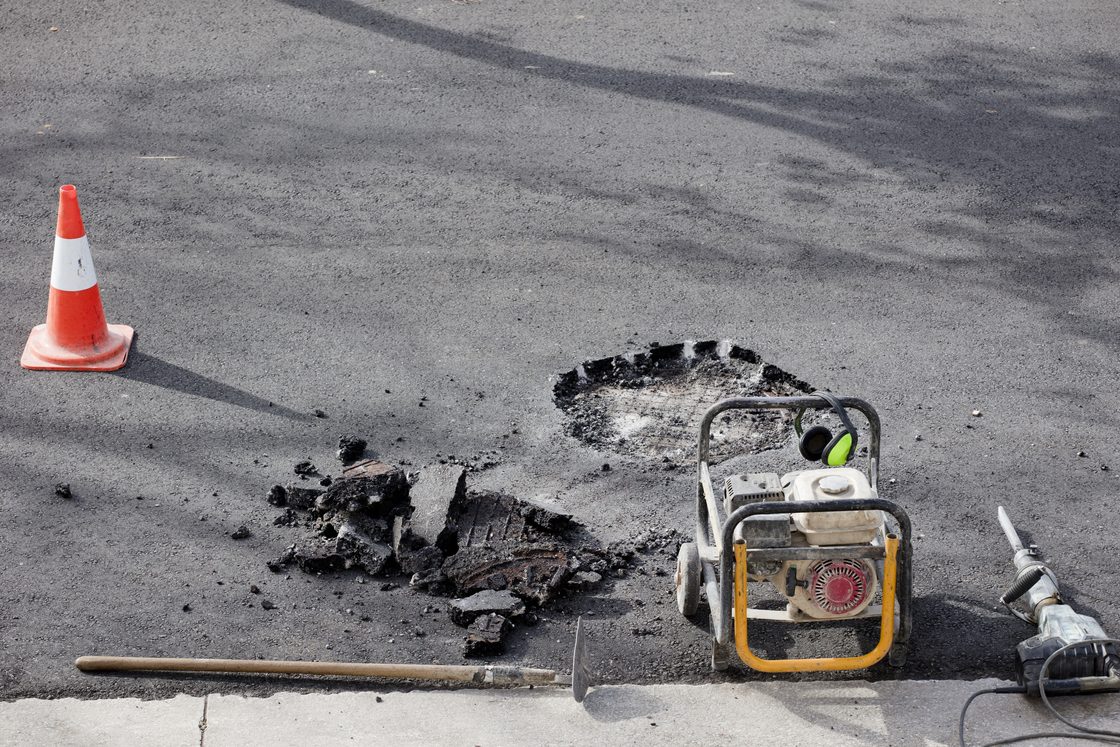
10Roadworks left half done. How many hazards can you spot?
Answer5. (1) An open hole in the road with no barrier round it. (2) Only one cone, set well away from the hole. (3) Broken asphalt left in lumps beside the hole. (4) A generator and a breaker left on the road. (5) The breaker's cable and a long-handled tool lying where someone could trip over them.
Our pick: picture 6. Every control for work at height is missing, and each one alone could turn a slip into a fall.
Round 3: Office
Offices look safe, which is why their hazards get missed. Most of these come down to cables, clutter and liquids.
Pictures 11 to 155 pictures
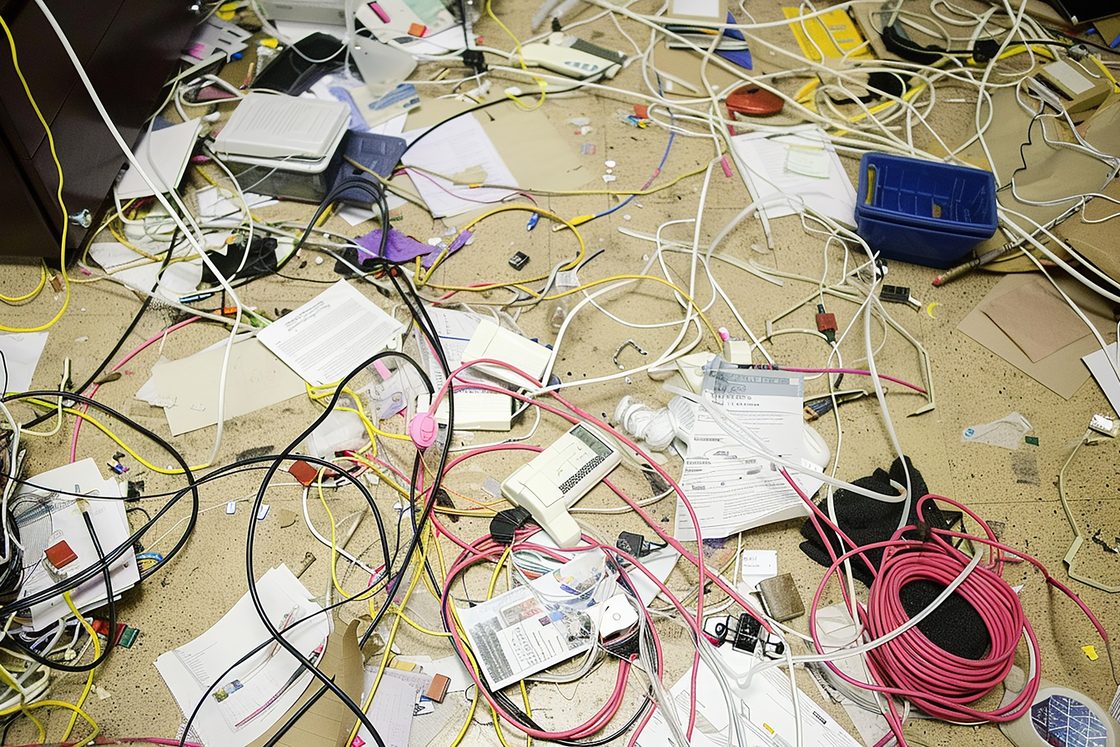
11An office floor during a move. How many hazards can you spot?
Answer4. (1) Cables tangled across the floor, a trip hazard. (2) Loose sheets of paper on the floor, which slide underfoot. (3) A crate and equipment dumped where people walk. (4) Power supplies and plugs lying among the paper.
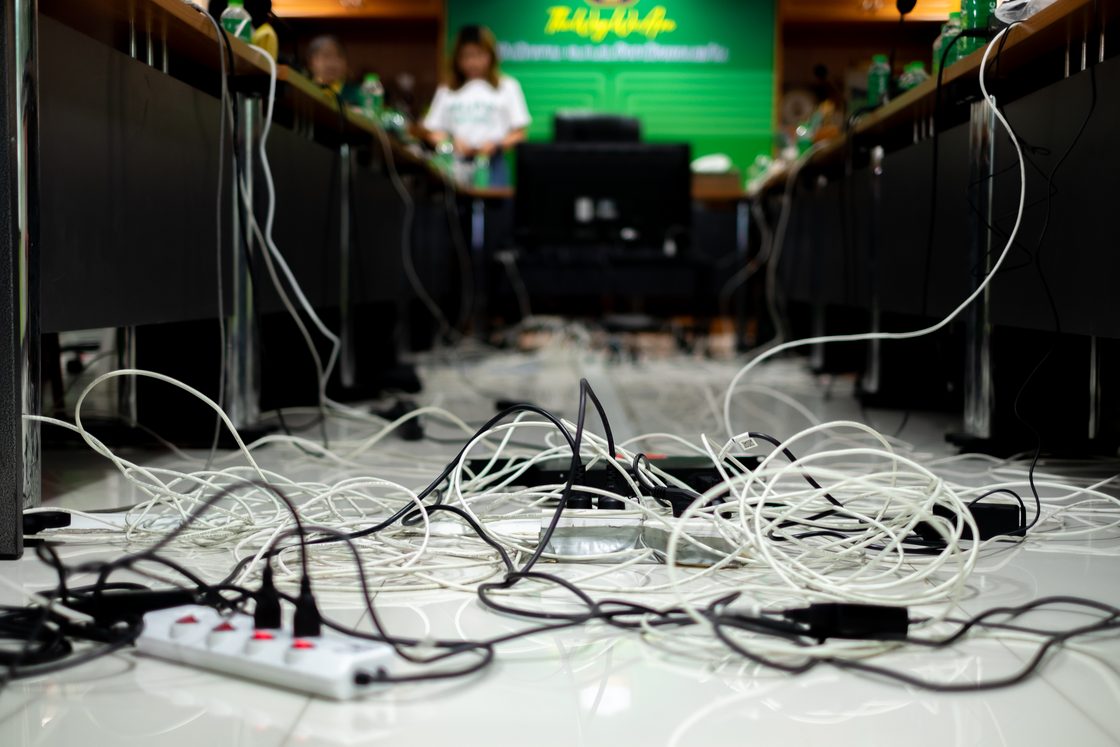
12A room set up for a meeting. How many hazards can you spot?
Answer3. (1) Cables trailing across the walkway between the tables. (2) An extension lead on the floor, in the walkway. (3) Leads bunched in a heap, where they can be kicked loose or crushed.
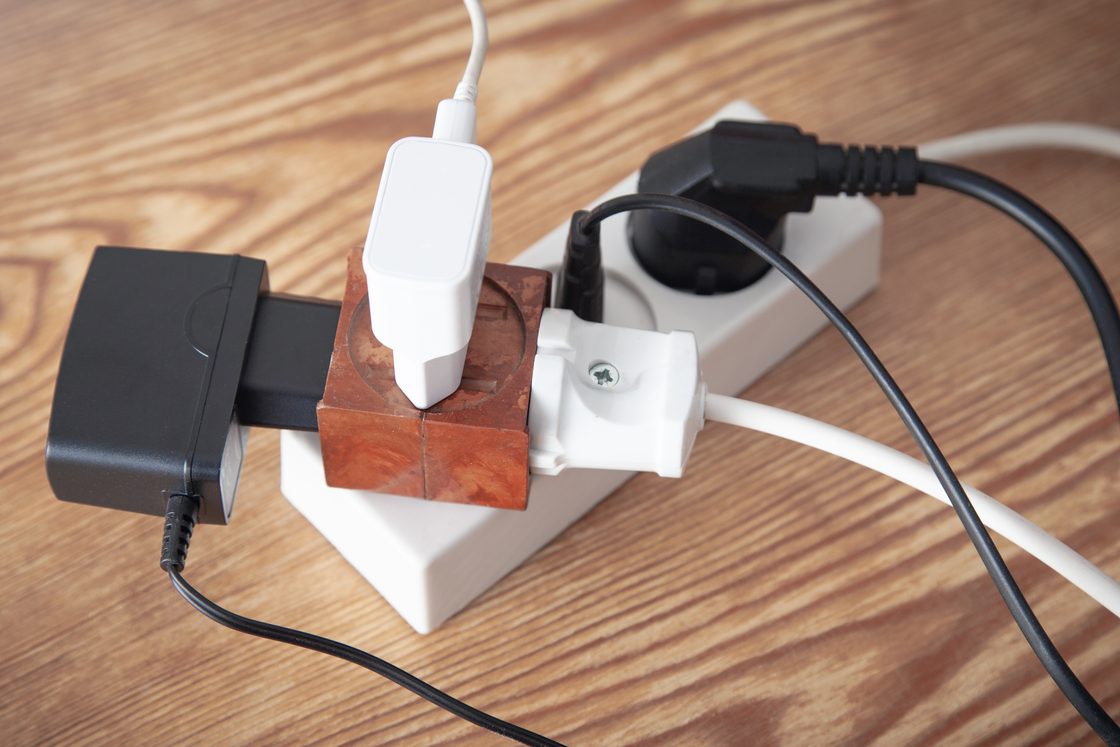
13An extension lead on a desk. How many hazards can you spot?
Our pick: answer3. (1) A cube-shaped adapter stacked on the extension lead, with a charger plugged into the top of it. (2) Bulky plugs and chargers hanging off the adapter, which strains the socket. (3) Too many devices drawing power through one socket, which can overload it.
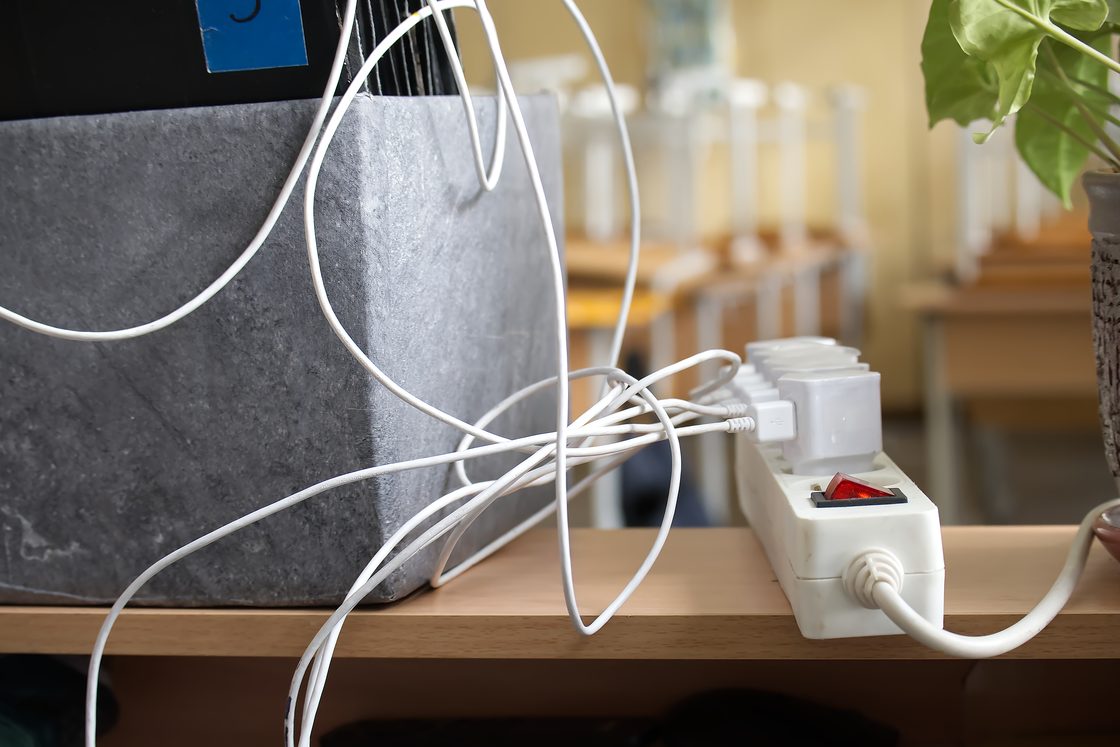
14A shelf by a window. How many hazards can you spot?
Answer3. (1) Tangled cables hanging over the edge of the shelf, where they can be caught and pulled. (2) A pot plant close by the power strip, so watering it puts water near live sockets. (3) The power strip sits at the very edge of the shelf, with its cord hanging down.

15A desk at coffee time. How many hazards can you spot?
Answer2. (1) A drink spilling right next to the keyboard, so liquid is heading for electrical equipment. (2) A spilt drink that, if hot, can scald.
Our pick: picture 13. It looks harmless, and there is one like it under half the desks in most offices.
Round 4: Kitchen and food prep
Kitchens add heat, oil and sharp edges to the usual clutter. Look at the handles in every picture.
Pictures 16 to 205 pictures
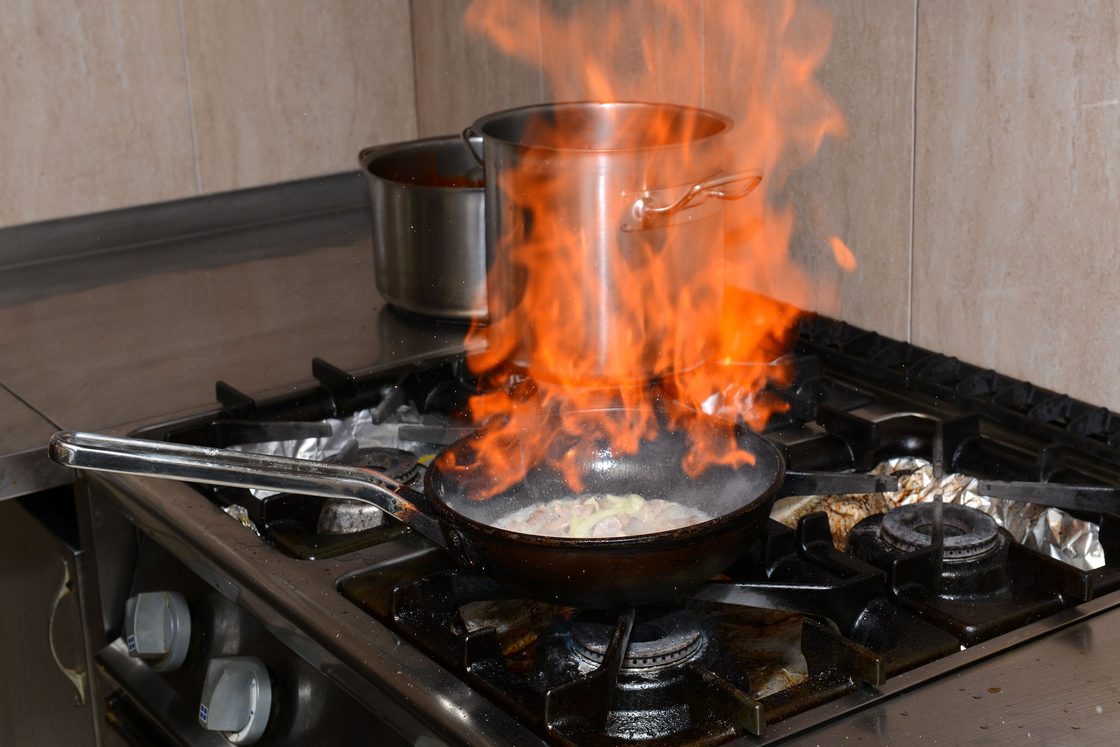
16A gas hob in a busy kitchen. How many hazards can you spot?
Our pick: answer4. (1) A frying pan on fire. (2) Foil lining the hob round the burners, where grease collects. (3) The pan handle sticking out over the front of the hob. (4) A tall stockpot right beside the flames.

17Three pans on a home hob. How many hazards can you spot?
Answer4. (1) Wooden spatulas left in the hot pan, one dark and scorched. (2) Spice jars and bottles packed right behind the hob. (3) The pan handle rising over the jars at the back. (4) Pans crowded so close together that they overlap.

18A restaurant range during service. How many hazards can you spot?
Answer4. (1) A frying pan caked in burnt-on grease over an open flame. (2) Its handle lying across the hot griddle. (3) The saucepan's handle sticking out past the edge of the griddle. (4) A squeeze bottle of oil and stacked plates right beside the griddle.
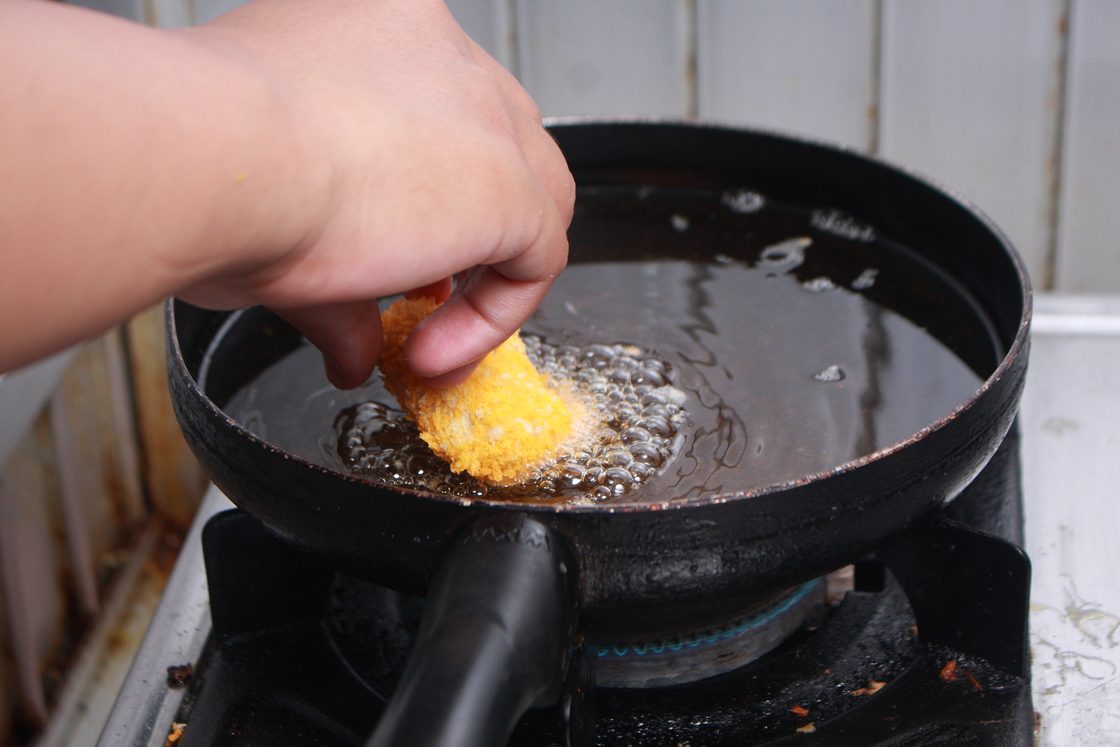
19Frying breaded food. How many hazards can you spot?
Answer3. (1) Lowering food into hot oil by hand, with fingers right above the oil. (2) The pan handle pointing out where it can be knocked. (3) Grease and burnt food built up round the burner.
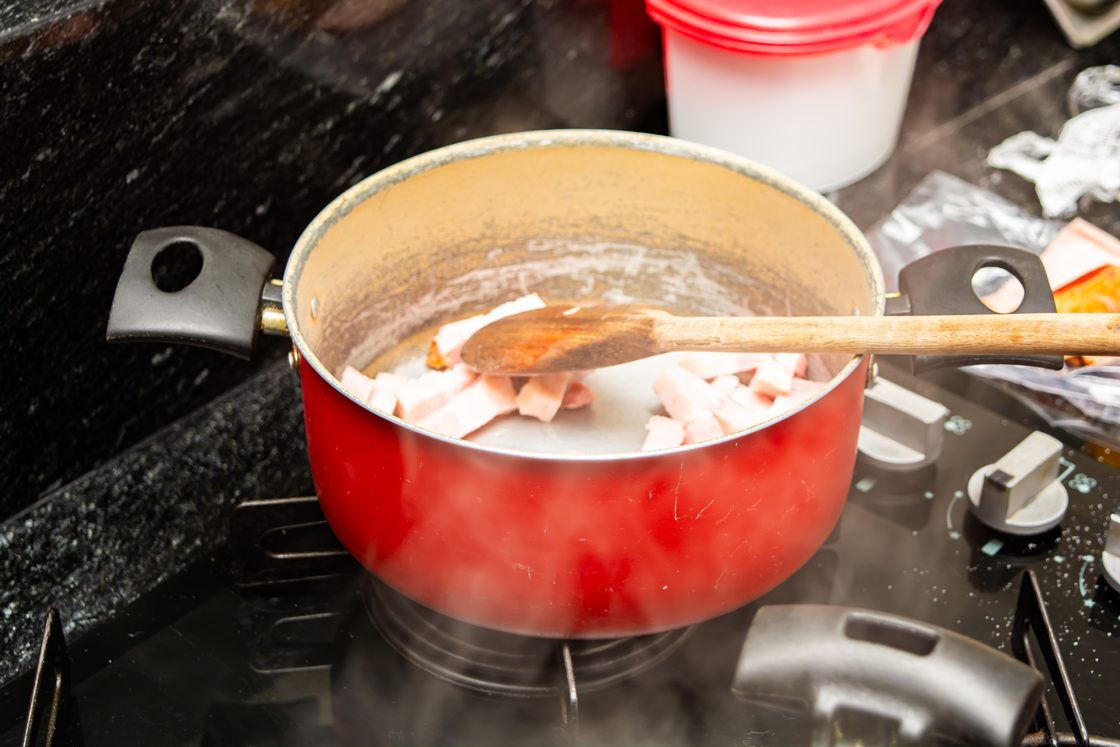
20A pot on the hob. How many hazards can you spot?
Answer3. (1) A plastic tub right next to the hob. (2) Food packaging and plastic bags beside the burners. (3) A wooden spoon resting across the pot with its handle sticking out over the side of the hob.
Our pick: picture 16. Almost everything that made this fire worse was set up before it started.
Round 5: Workshop, machinery and plant rooms
The last round is the hardest. Machines move fast, and the hazards are often in the small details: where the hands are and what the person is wearing.
Pictures 21 to 255 pictures
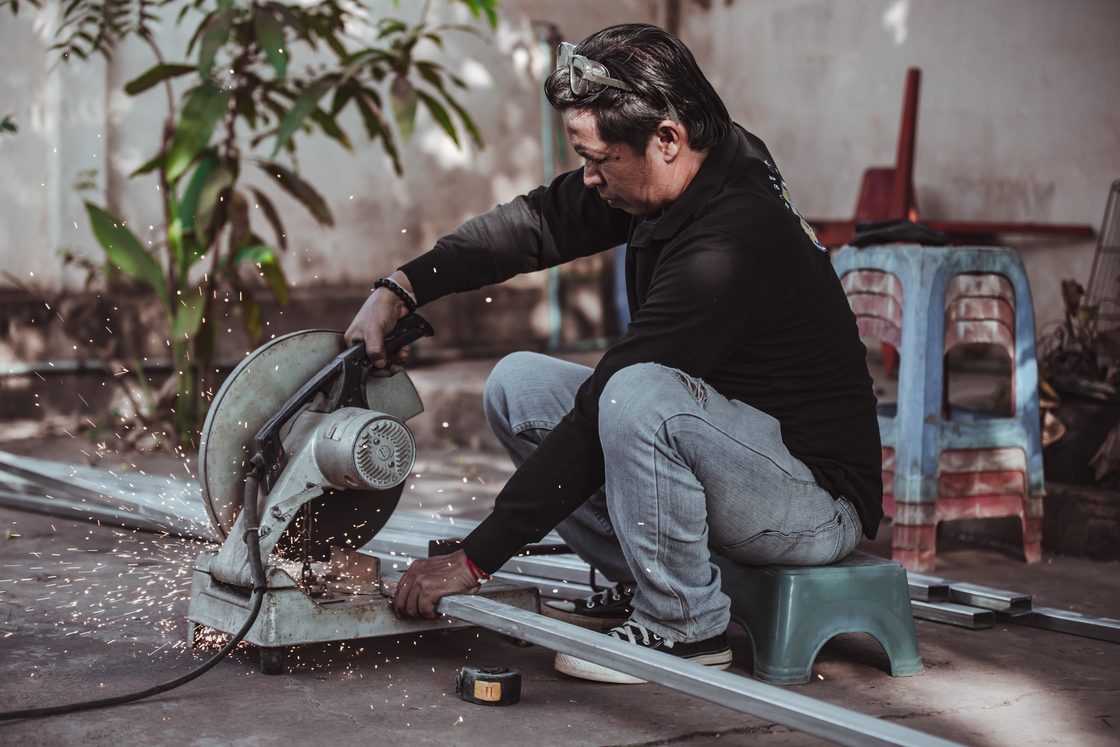
21Cutting steel tube with a cut-off saw. How many hazards can you spot?
Our pick: answer5. (1) His safety glasses are pushed up on his head, not over his eyes. (2) He holds the tube by hand next to the blade instead of clamping it. (3) No hearing protection. (4) Sparks spray across the ground, with plastic stools and a plant close by. (5) A power cable and a tape measure lying on the ground round the saw.
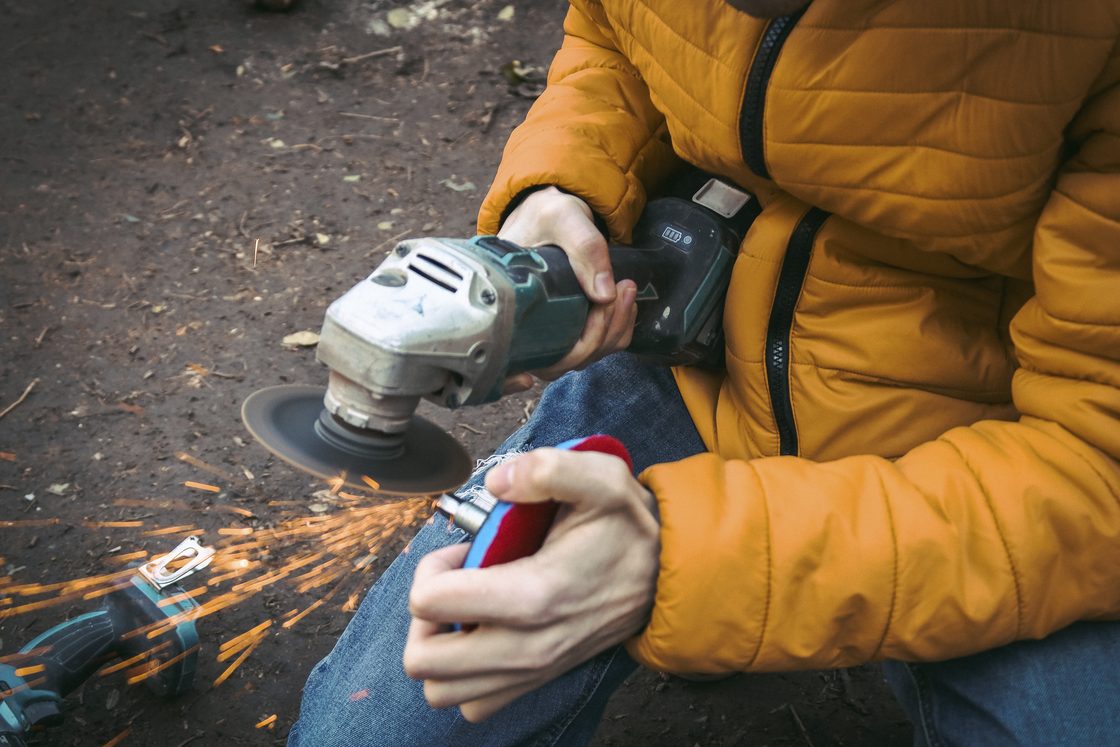
22Grinding a small part. How many hazards can you spot?
Answer3. (1) The part is held in a bare hand, close to the disc, instead of clamped. (2) The worker is down at knee height, with the disc close to their leg. (3) Sparks are spraying across the ground towards another power tool.
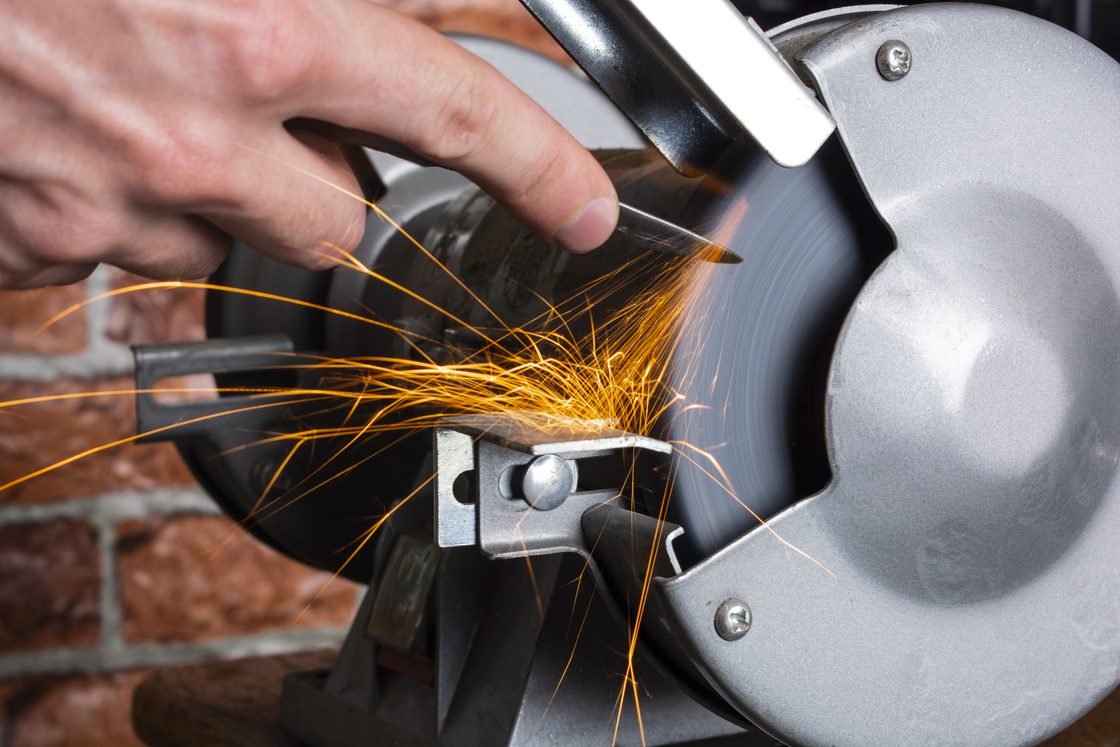
23Sharpening on a bench grinder. How many hazards can you spot?
Answer2. (1) Fingertips right next to the spinning wheel. (2) A small blade held by hand instead of in a holder or jig.
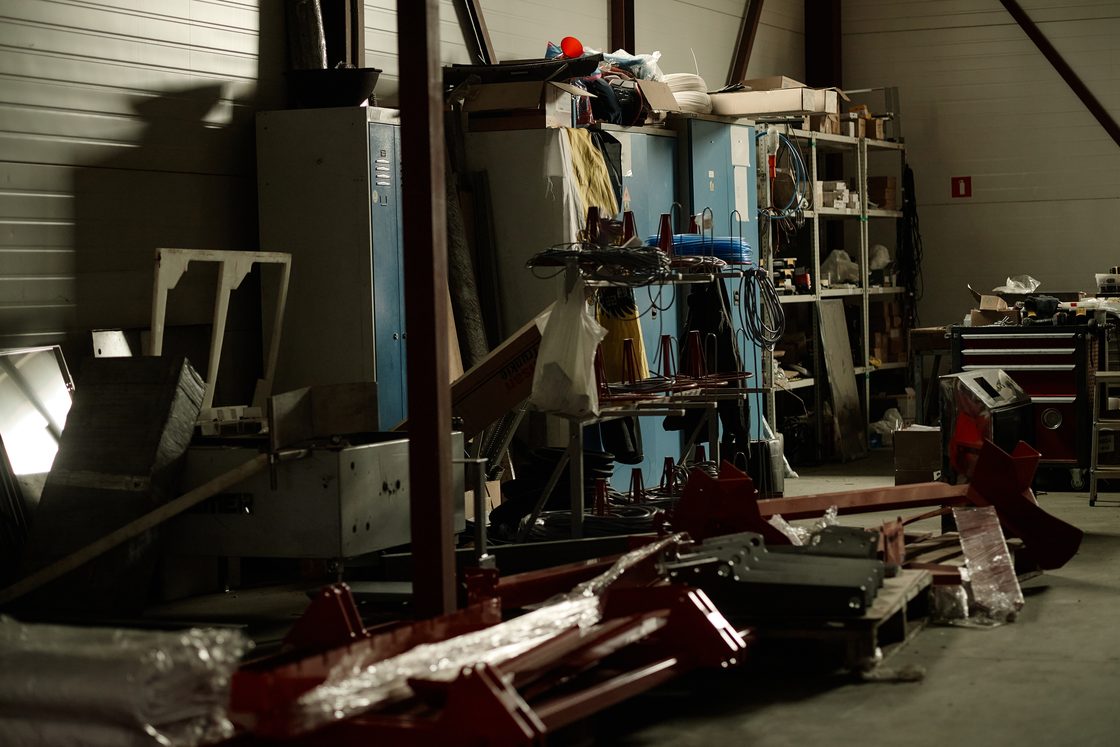
24A metal workshop store. How many hazards can you spot?
Answer4. (1) Steel parts and frames left lying on the floor. (2) Loose plastic sheeting on the floor, a slip and trip hazard. (3) Boxes stacked on top of tall cabinets, where they could fall. (4) A large board and loose frames propped against the cabinets, which could slide or fall.
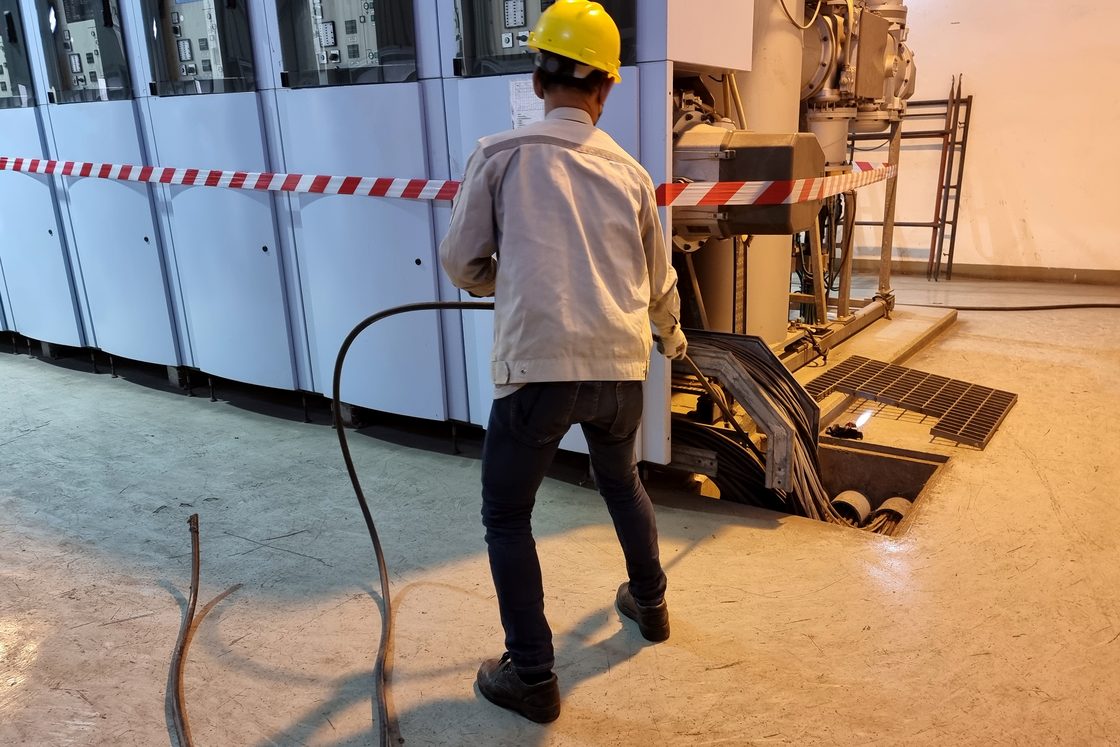
25A switchgear room. How many hazards can you spot?
Answer3. (1) An open floor pit with its grating lifted and left to one side. (2) A cable trailing across the floor. (3) The barrier tape fences off the cabinets but not the open pit.
Our pick: picture 21. Five hazards in one shot, and the glasses on his head start the best debate.
Ways to host spot the hazard for a group
Spot the hazard works best when everyone answers at once, not just the loudest person in the room. Four slide types turn a picture into a group activity, and people join on their phones:
- Annotate: add an Annotate slide with a photo of a work area and ask "Circle every hazard you can see". Everyone draws on the picture from their phone, and all the drawings are layered onto one image on the big screen, so a hazard nobody circled stands out.
- Pick Answer: list the hazards in a picture and ask "Which hazard is the most serious?" The split of votes starts the conversation about risk.
- Word Cloud: ask "What did you notice first?" The biggest words show what draws the eye, and the missing ones show what does not.
- Open Ended: ask "Share a near miss like this one." People can answer anonymously, which brings out stories they would not tell out loud.
For your own sessions, photos of your own site work best: the hazards are real, and people know exactly where they are.
Tips for running a spot the hazard session
- Start easy. Open with picture 5 or picture 15, where the hazard is obvious, so everyone gets a win before the harder rounds.
- Time each picture. 60 seconds per picture keeps the pace up. A round of five then fits into ten minutes with the answers.
- Ask for the fix, not just the hazard. Naming a hazard is half the job. Ask what should change and who would change it.
- Weight the floor. Slips, trips and falls on the same level made up 30% of employee injuries reported to HSE in 2024/25, so give an extra point for every trip hazard spotted.
- Bring it back to your site. End by asking where people have seen the same hazard at work this month.
Frequently asked questions
What is a spot the hazard activity?
A training exercise where people look at a picture of a workplace and name every hazard they can see. It builds the habit of noticing risks before they cause an injury.
How do you play spot the hazard?
Show a picture, give people a set time to find the hazards, then reveal the answers. Score a point for each hazard found and talk through how each one should be fixed.
How many hazards should one picture have?
Between one and five. Fewer feels too easy, and many more turns into a hunt for small details. The pictures here have one to five each.
Related posts
- Workplace safety topics for toolbox talks and safety meetings
- Manufacturing safety training mistakes and how to avoid them
- How to train kitchen staff on food safety
Run your next safety session with AhaSlides
Pick a round above, add your own site photos and let the whole team mark up the hazards together.
Sources
[1] Health and Safety Executive. Non-fatal injuries at work in Great Britain. https://www.hse.gov.uk/statistics/causinj/overview.htm
Figures read on 24 October 2026. Photos are licensed stock images.