Most icebreakers stall at "two truths and a lie". People answer, everyone nods politely, and the conversation moves on without anyone knowing each other any better.
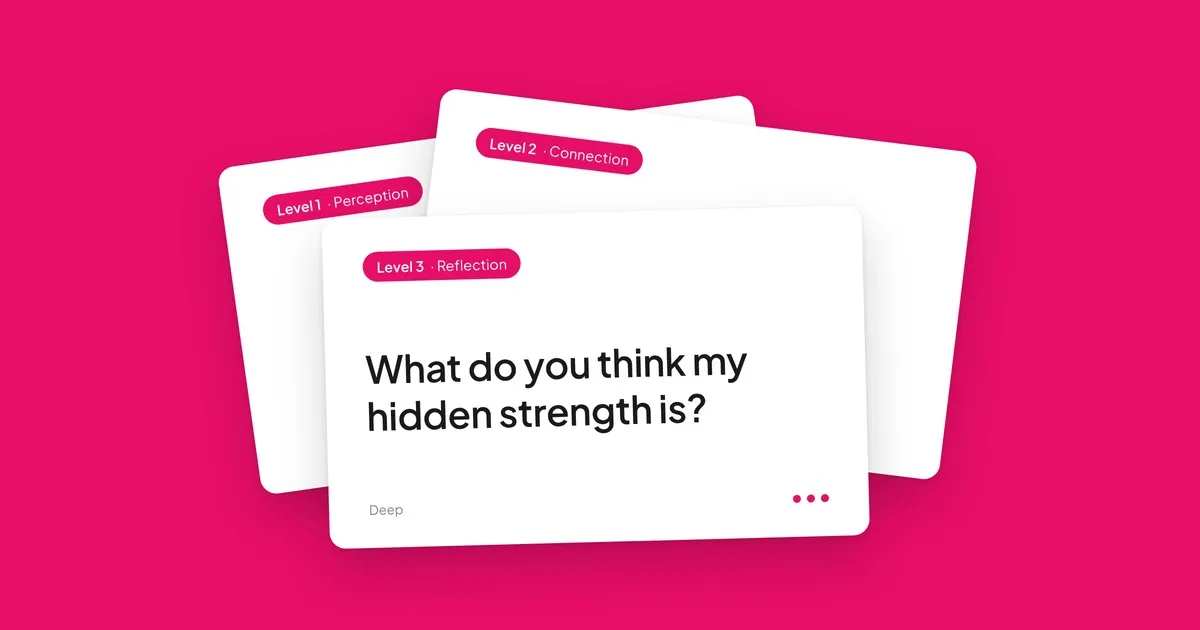
"We're Not Really Strangers" (WNRS) was built to fix that. The card game skips small talk and walks two people through three levels of questions, from light guesses to genuinely reflective ones. Below are 80 questions you can play online for free with friends, partners, family or colleagues, plus a printable PDF checklist and a way to run them live on AhaSlides.
Quick facts
What is "We're Not Really Strangers"?
Koreen Odiney created WNRS after a meaningful encounter with a stranger during a photography session, an experience that led her to explore how the right questions can turn strangers into real connections [2]. She turned that idea into a card game built around three progressive levels: Perception, Connection and Reflection. The original deck has 150 cards, counting questions and wildcards [4].
Unlike most party games, WNRS isn't competitive. There's no winner. The final card asks players to write each other a short note, to be opened only after they've parted ways, a small detail that turns a card game into something people remember. That emotional payoff took WNRS from an indie project to a global phenomenon, with couples, family, friendship and coworkers editions.
How to play We're Not Really Strangers online for free
You don't need to buy a deck to play. A question list and a quiet moment are enough.
- Pick the level that matches how well you know each other, and shuffle the questions in that level.
- Take turns to ask a question. The other person answers honestly, and you can pass on any question.
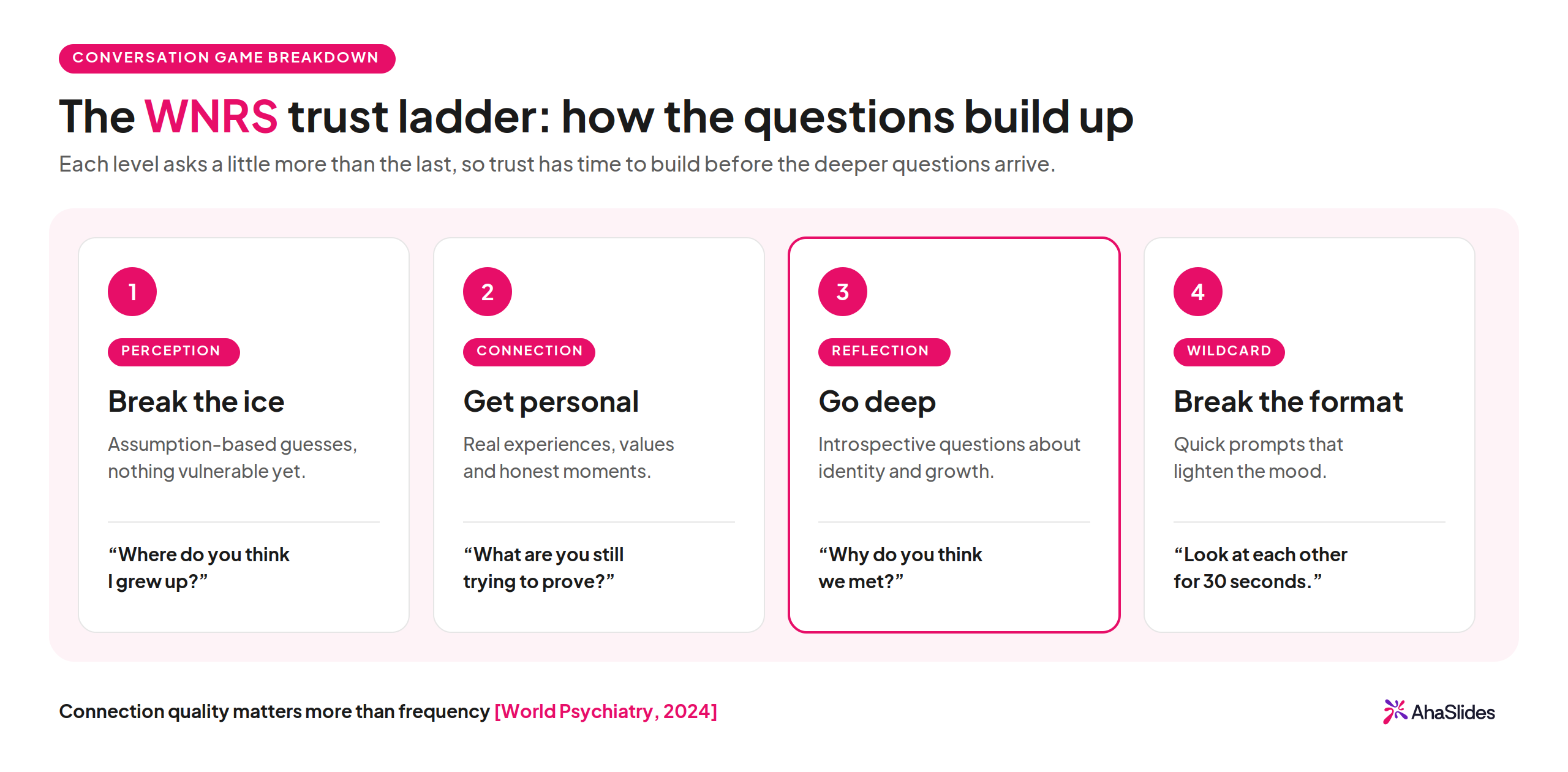
- Work through the levels in order. Don't jump to Reflection before Perception has warmed people up, because the order is what makes deeper questions feel safe instead of invasive.
- Finish by writing each other a short note to open later.
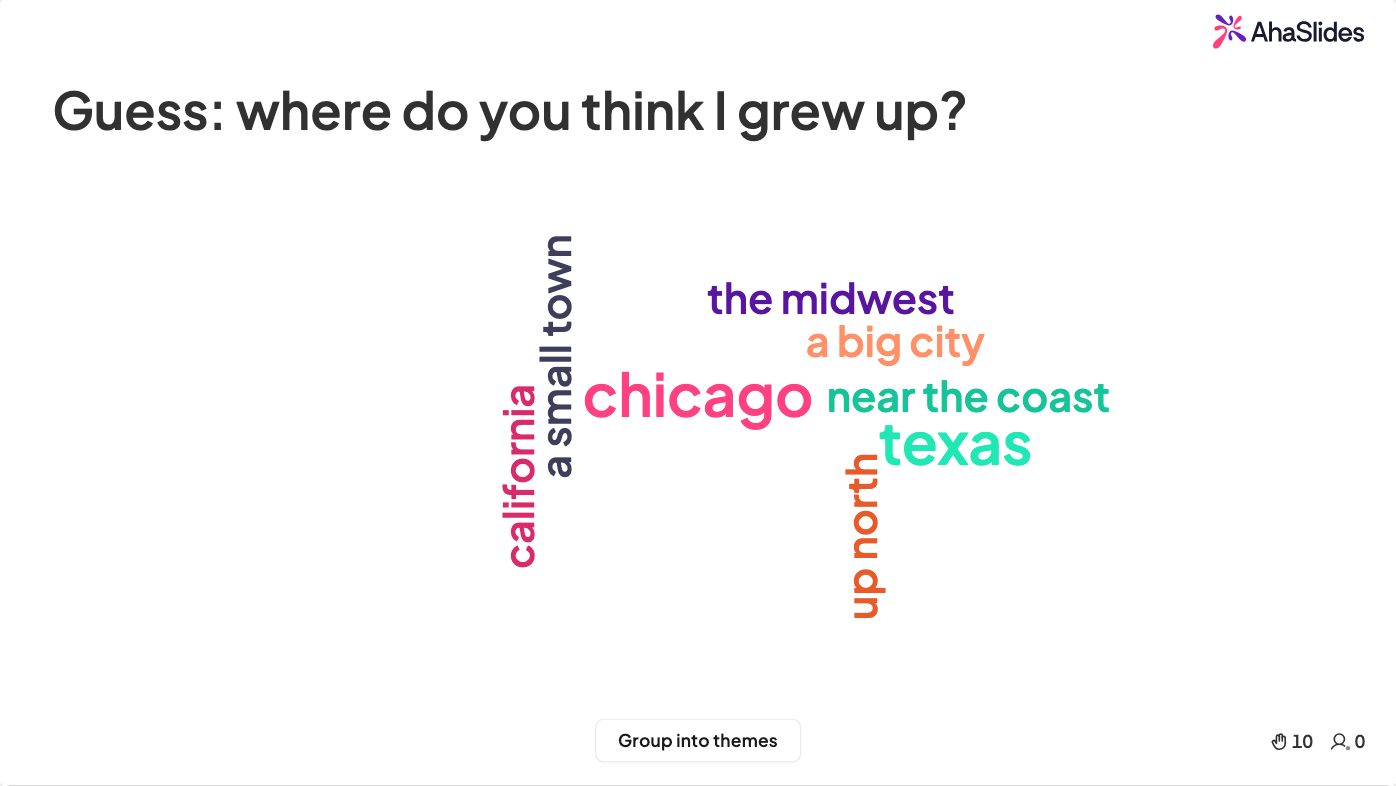
Playing online: on a video call, share the list on screen or put the questions into a shared presentation. With AhaSlides, add a word cloud slide for the lighter Perception questions so the whole group sees common guesses cluster in real time, and use an open-ended or Q&A slide for the deeper levels so each person answers from their own phone.

Printing it: prefer paper? Download the free printable PDF (80 questions with tick boxes, three pages) and cut or tick as you go.
15 Level 1 Perception questions (icebreaker)
Light, guess-based questions that break the ice without asking for anything vulnerable.
15 Level 2 Connection questions (personal)
Personal questions about experiences, mistakes and values.
15 Level 3 Reflection questions (deep)
Introspective questions about identity, growth and how the two of you see each other.
10 We're Not Really Strangers questions for couples
For partners and dates. These sit between Connection and Reflection in tone.
5 questions for friends
Good for old friends who think they've heard every story.
5 questions for family
For parents, siblings and grown-up kids who rarely get a quiet hour together.
10 workplace edition questions
WNRS publisher The Skin Deep released a Coworkers Edition for this use case [3]. These are personal enough to build trust and professional enough for a Monday team meeting.
5 wildcard prompts
Quick action prompts to drop in between rounds.
The science behind why it works
WNRS isn't just a clever gimmick. A 2024 review published in World Psychiatry by Holt-Lunstad identifies social connection as a critical factor in both mental and physical health [1], and notes that the quality of connection, not just its frequency, drives the benefit. Surface-level small talk doesn't move that needle. Structured, gradually deepening disclosure does.
Starting with low-stakes Perception questions lets people build comfort before being asked anything vulnerable. By the time players reach Reflection, they've built enough trust for the deeper questions to feel natural. It's worth preserving the level order even when you write your own list.
Run it live with AhaSlides
Physical decks suit small in-person groups, but many groups are spread across desks, cities or time zones. A shared presentation keeps the three-level pacing without anyone mailing a deck.
- Perception questions as a word cloud: everyone submits a guess and the answers cluster live, a low-pressure way to open.
- Connection and Reflection questions as open-ended or Q&A slides: each person answers on their own device and the host reveals responses one at a time.
- A scale slide for check-ins: a quick way to gauge how comfortable the group feels before or after the deeper rounds.
Sign up for a free AhaSlides account to build any of these in a couple of minutes.
Write your own questions
Start with one question: what kind of connection are you trying to build in this group? A newly formed group needs more Perception-level questions, while people who've known each other for years might skip straight to Reflection.
- Keep Perception questions light and guess-based.
- Make Connection questions specific ("What's a decision you're proud of?") rather than abstract ("What matters to you?").
- Save Reflection questions for groups with some existing trust, as cold Reflection questions can feel invasive.
- Borrow the wildcard format for quick, low-effort prompts between rounds.
Alternatives to We're Not Really Strangers
For a lighter warm-up before WNRS, try two truths and a lie or most likely to questions. Never Have I Ever, Would You Rather, This or That and Who Am I also work, and TableTopics and Big Talk use a similar tiered structure for longer sessions.
FAQ
Can I play We're Not Really Strangers online for free?
Yes. Use the 80 questions above on a video call or in a shared AhaSlides presentation. No deck is needed.
What is the last card in We're Not Really Strangers?
The final card asks each player to write a short note to the other, to be read only after they've parted ways.
How many cards are in a We're Not Really Strangers deck?
The original deck has 150 cards, split across the three levels, according to the publisher [4]. The themed editions, including couples, friendship, family and coworkers, each have their own sets.
Can it work for a team that has never met in person?
Yes. Perception and Connection were designed for people who don't know each other well yet, which suits new hires and distributed teams. Run them through a shared word cloud or Q&A slide so responses stay visible to everyone.
What are good alternatives?
Never Have I Ever, Two Truths and a Lie, Would You Rather, This or That and Who Am I all work as lighter rounds or warm-ups.
Start with five or ten questions at your next catch-up or team meeting. You don't need the full deck to get a room of near-strangers talking like old friends.
Sources
[1] Holt-Lunstad, J. (2024). Social connection as a critical factor for mental and physical health: evidence, trends, challenges, and future implications. World Psychiatry, 23(3), 312-332. https://pubmed.ncbi.nlm.nih.gov/39279411/
[2] Eldor, K. "We're Not Really Strangers: This 25-Year-Old Founder Created A Global Movement From A Card Game And Instagram Feed." Forbes, May 2020. Forbes article
[3] The Skin Deep. "Coworkers Edition." We're Not Really Strangers product line. Amazon product listing
[4] We're Not Really Strangers. "Card Game." Official shop. werenotreallystrangers.com