

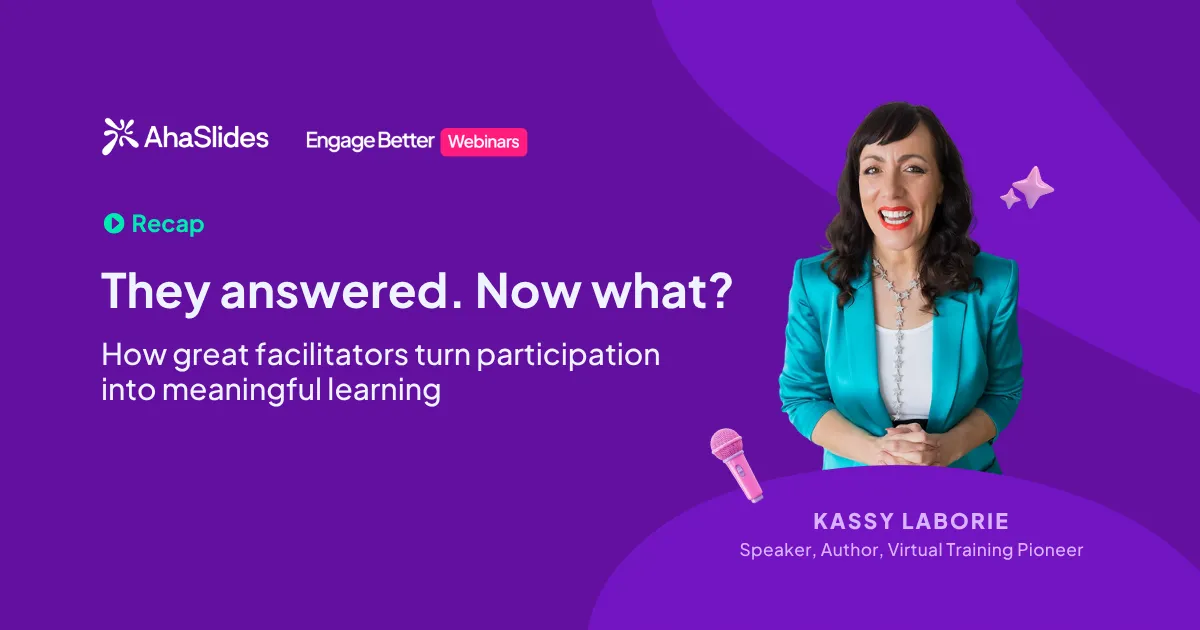
Virtual training pioneer Kassy LaBorie joined AhaSlides to share how great facilitators turn a simple response into real learning. Here's a recap of her three strategies and what you can take straight into your next session.
A room full of people just answered your question. Then what?
Most of us are good at the asking part. We design a poll, drop a question in the chat, invite people to draw or vote or type. The hard part isn't getting a response, it's knowing what to do once you have one. That's the gap Kassy LaBorie spent this session closing.
Meet the speaker
Kassy LaBorie is a Human-Centered Futurist and a globally recognised pioneer in virtual training. She's the two-time bestselling author of Interact and Engage! 75+ Activities for Virtual Training, Meetings, and Webinars and Producing Virtual Training, Meetings, and Webinars, and the creator of the Y-O-U framework: Your Invitation, Own the Tools, Unleash Your Presence.
True to form, she didn't just talk about responding to an audience, she did it live, walking through her own debrief process in real time as attendees answered her questions.
Kassy's never fail debrief process
It's important to pay attention to the debrief, because the debrief is where you're going to take care of responding to them properly.
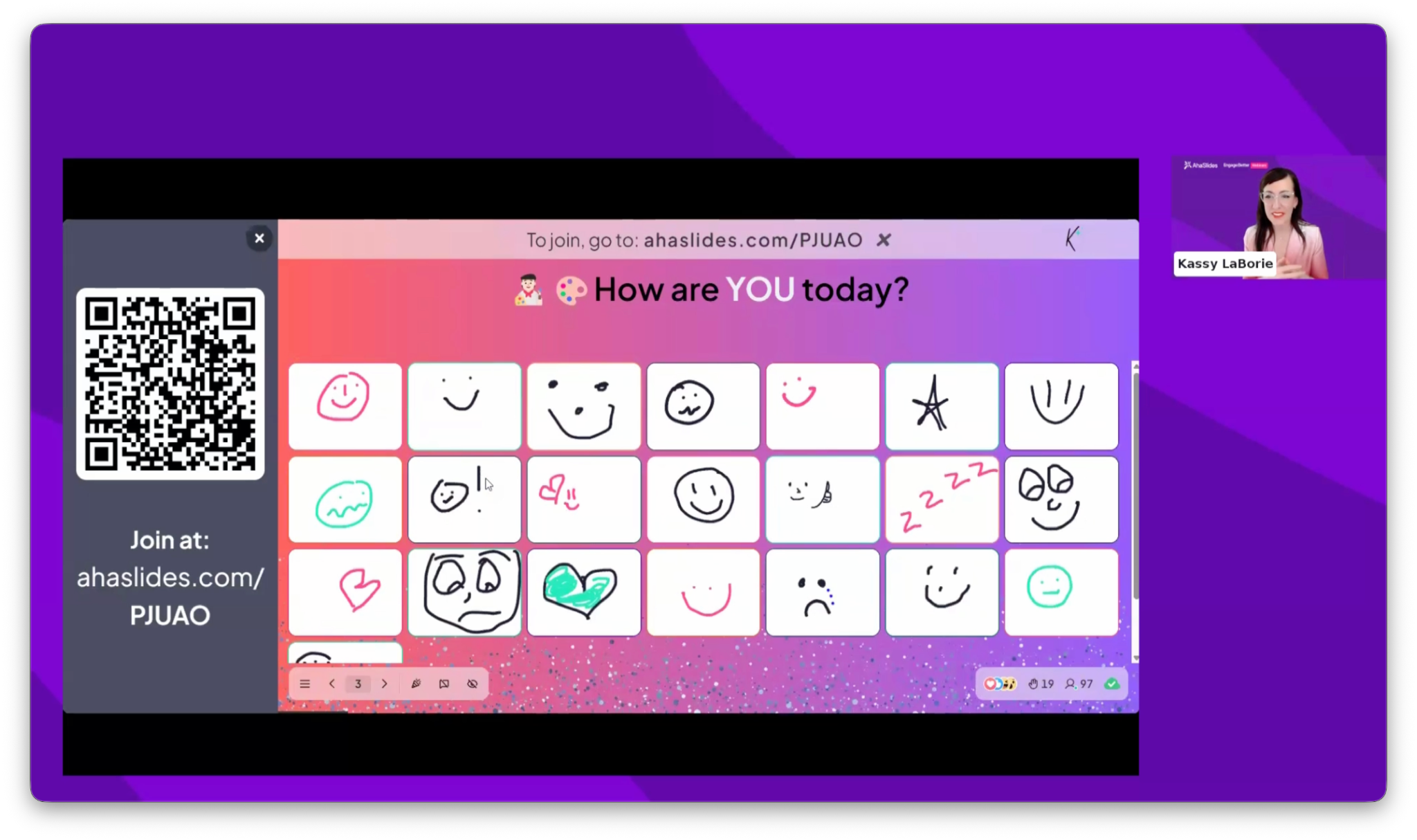
It comes down to two moves: invite people to respond, then debrief what they gave you.
The invitation is straightforward: ask the question and let people decide how they want to answer, in the chat, on a poll, or by drawing. Then hold back, don't speak until roughly three-quarters of the room has responded, and resist reading every answer out loud.
The debrief is where the real work happens, three steps for turning a response into something that matters:
- Summarise: Give an overview of what you're seeing rather than reading every answer aloud, and look for the themes that stand out.
- Spotlight: Call on a few people to share more.
- Transition: Connect what they've shared to whatever comes next.
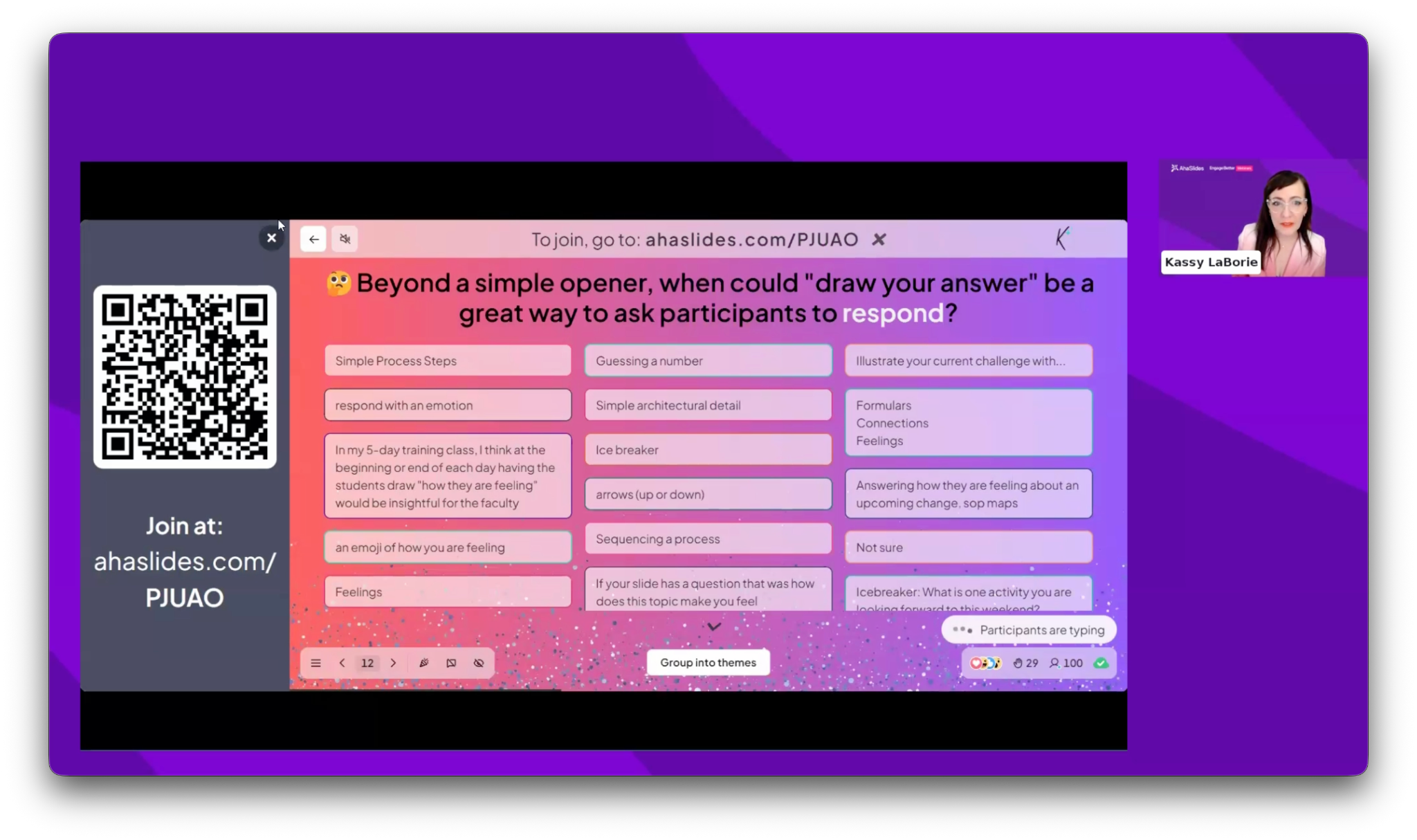
The water-glass trick
One small habit Kassy flagged: keeping a glass of water nearby gives her a reason to stay quiet while people think. It's a small thing, but it gives a presenter permission to wait.
Key strategies shared
1. Build the bridge
Connect what people just told you to what happens next, specifically, not generically.
Kassy showed three versions of the same moment: a broken bridge that ignores the response, a functional bridge that briefly acknowledges it, and a powerful bridge that names exactly what people said before moving on.
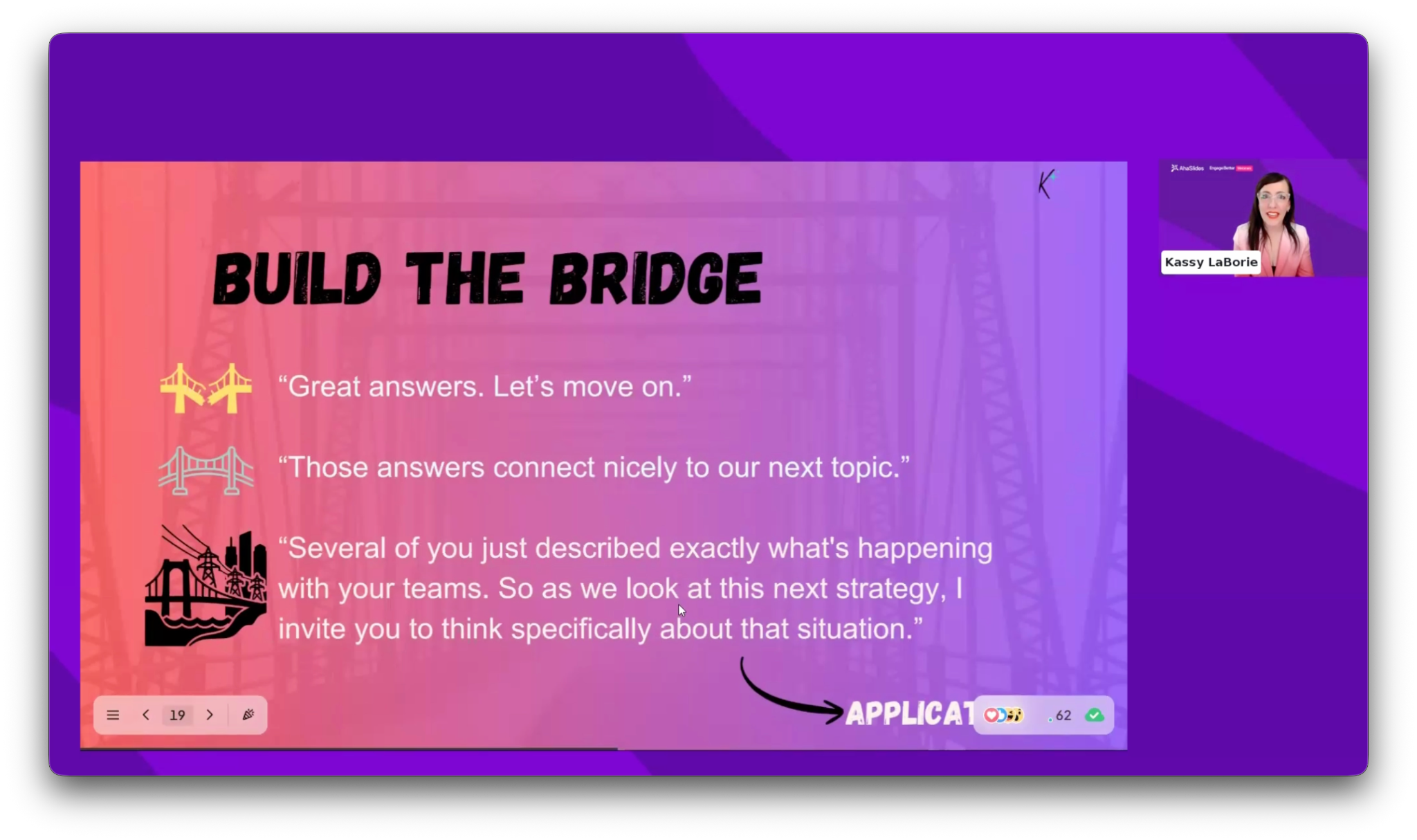
The recommendation: move from a functional bridge to a powerful one. It's the difference between attendees feeling heard and attendees feeling processed.
2. Show your humanity
Be vulnerable on purpose, not by accident.
Kassy shared a story about turning down a request to reuse a video of her talking about imposter syndrome, on her friend's podcast, in a live workshop. She was candid that she still second-guesses moments like that, referencing Brené Brown's idea that vulnerability is a source of strength, not a weakness, as the belief she's trying to live up to.
- Be purposeful about what you share, not everything needs to be said
- Stay in the role of guide, even in a vulnerable moment, so the room doesn't end up taking care of you
- Let it serve the learning, not just the moment
The recommendation: vulnerability only works if it's in service of what the audience is there to learn, not a detour from it.
3. Hold up the mirror
Reflect back what people's answers reveal about them, not just what they said.
Kassy demonstrated this live, using an augmented reality reveal and named four ways to do it without special tools.
She also described opening a recent in-person session by telling the group their leader had called them creative, then pointing to the room's own answers as proof.
- Notice insight, growth, strength, or connection, not just participation
- Be specific about what you noticed, generic praise doesn't land the same way
- Keep an old-fashioned notepad handy. Kassy tracks names and themes by hand so she can call back to them later in the session
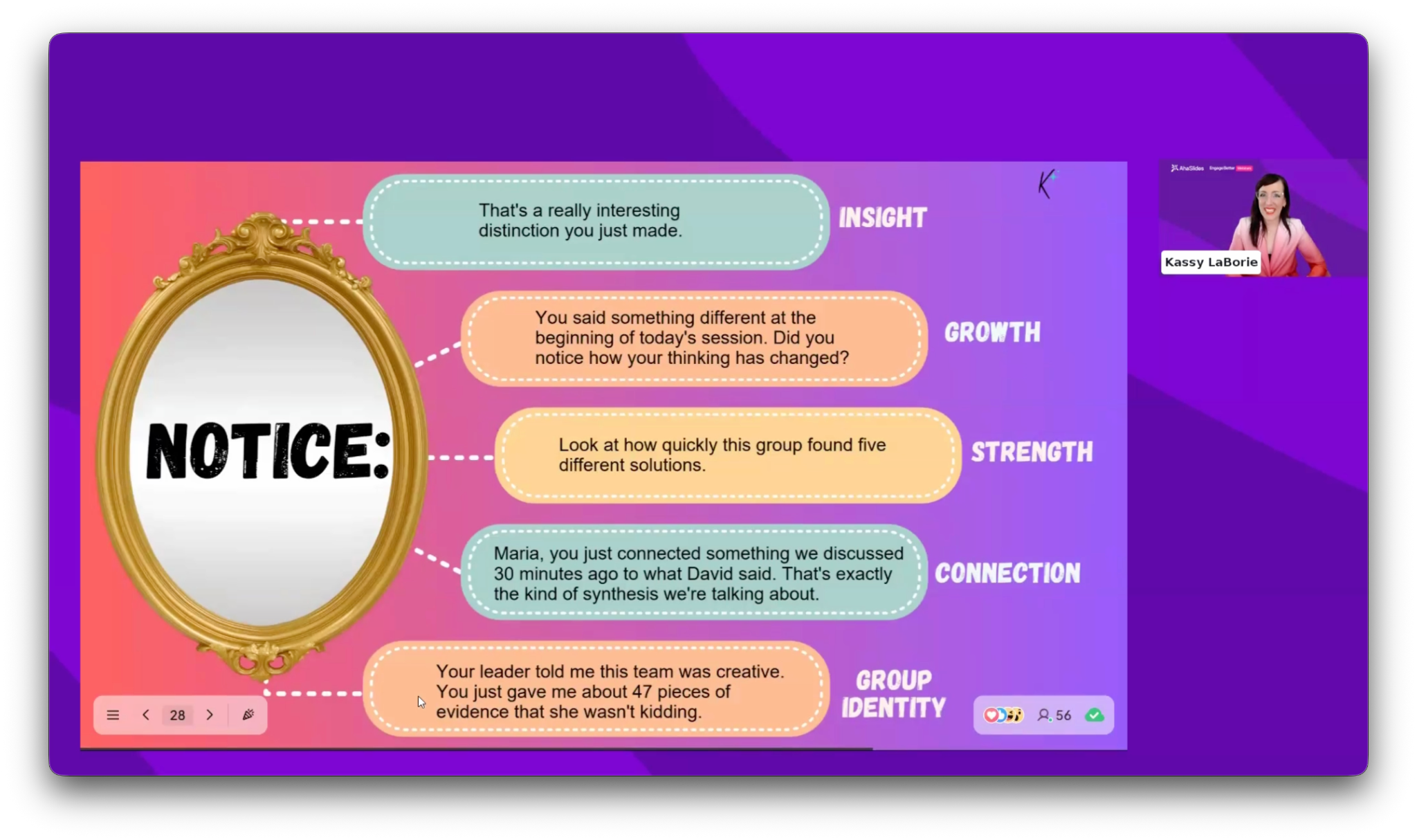
The recommendation: of the three strategies, holding up the mirror asks for the most attention. It's also the one people remember longest.
The takeaway
They answered, and now what? I think that the situation from here on out for all of you is going to be: they answered, and you got this.
Kassy's closing line doubled as the whole session's thesis. Getting a response was never really the hard part. What separates a forgettable session from a memorable one is what happens in the thirty seconds after someone answers, whether you build a bridge, show your humanity, or hold up the mirror, and whether you do it on purpose, every time.
Want more from Kassy? She joined AhaSlides once before, with ATD in June, for a session on earning genuine audience response in the first place. Watch that one too if you missed it.