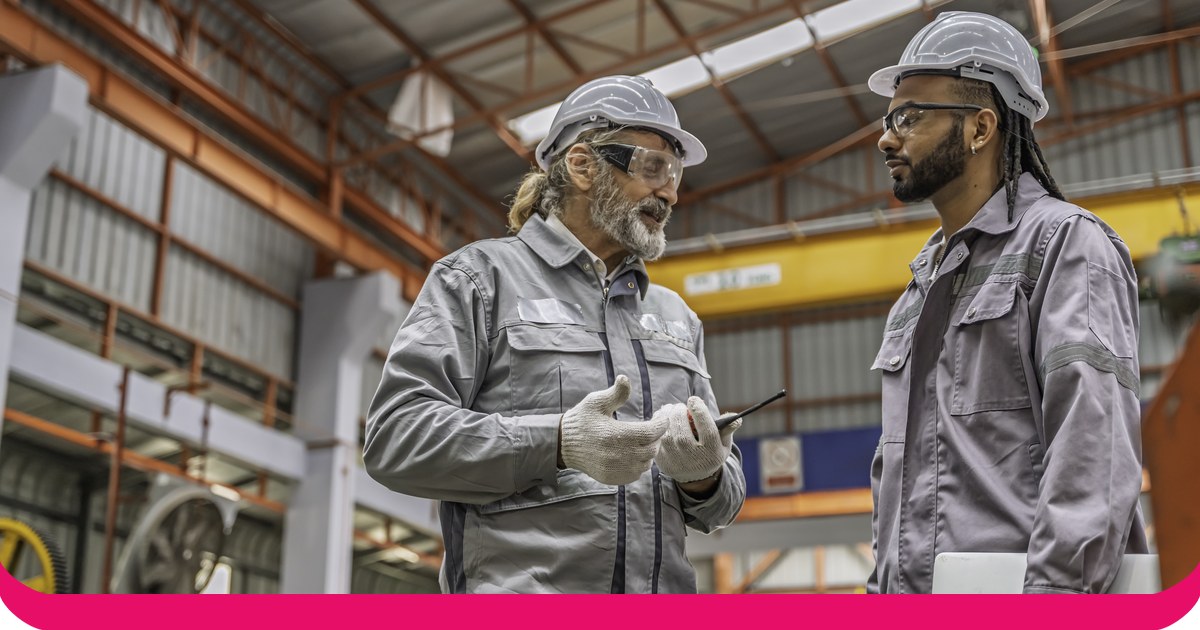
Personal protective equipment is the last line of defence. OSHA says employers must provide it when engineering, work practice and administrative controls are not feasible or do not give enough protection (OSHA: personal protective equipment). It also gets cited: Eye and Face Protection in construction (29 CFR 1926.102) was ninth on OSHA's list of most frequently cited standards for fiscal year 2025, 1 October 2024 to 30 September 2025 (OSHA top 10).
This post gives you a PPE toolbox talk you can read out today. It has a 5-minute script in 5 short parts, then a 10-question quiz in 2 sets of 5 to check it landed. Each answer carries the OSHA duty behind it. The rules here are for OSHA general industry, mainly 29 CFR 1910.132. Construction and maritime have their own PPE sections, and your state or country may add rules.
The 5-minute script
Read each part aloud and pause where you see a question. A minute per part is enough.
Part 1: why we wear it
"PPE is the last line of defence. It does not make a hazard go away. It stands between you and what is left once the guards and safe methods have done their job. OSHA says PPE must be provided and used wherever a hazard could injure or impair any part of the body. That covers eyes, face, head, hands, feet and the rest. Think about today's job. What could hit you, cut you, burn you, splash you or drop on you?" Pause. Take two or three answers.
Part 2: what we wear for which hazard
"Each hazard has its own item. Flying chips or splashes: eye or face protection. Falling objects overhead: a hard hat. Cuts, burns, chemicals or hot surfaces: gloves chosen for that task. Falling or rolling objects, or something sharp through the sole: protective footwear. Your supervisor has assessed this job and chosen the PPE. If you are not sure the kit you have matches the hazard, ask now, not after the first shift."
Part 3: how it should fit
"Gear that does not fit does not protect. OSHA says it should fit comfortably, and if it does not fit properly it can make the difference between being safely covered and dangerously exposed. Adjust the hard hat so it stays put when you bend. If you wear prescription glasses, tell us, because there is protection made to go over them. Check that gloves are the right size and let you grip. If something rubs, pinches or slips, say so." Pause. "Who has a fit problem right now?"
Part 4: its limits, and when to throw it out
"PPE does not remove the hazard. Gloves chosen for cuts may not protect against heat or chemicals. OSHA says glove choice must be based on the task, the conditions and the hazards, so check yours matches the job. Know what yours is for and what it is not for. And never use damaged kit. OSHA is plain: defective or damaged PPE shall not be used. Cracked lenses, split gloves, a dented hard hat, worn-through soles: swap them before you start, clean and store the rest, and follow the maker's guidance on useful life."
Our pick: the line "PPE does not remove the hazard." It stops the idea that wearing the gear makes a risky job safe. Say it twice if you only have time for one point.
Part 5: who pays, and who to tell
"In most cases your employer provides PPE at no cost to you, and pays for replacements unless you lost it or damaged it on purpose. There are limited exceptions, such as non-specialty safety-toe boots, and ordinary clothing. If your kit is missing, damaged or the wrong type, tell me or your safety rep before you start work, not after. Reporting a cracked visor is exactly what we want." Pause. "What PPE is missing on your job?"
Hazard assessment in 5 questions
Before the talk, check the job yourself. OSHA requires the employer to assess the workplace for hazards that need PPE, select it, have each affected employee use it, and certify the assessment in writing (29 CFR 1910.132(d)). Under 1910.132(g), the hazard assessment and training duties apply to the eye and face, head, foot and hand protection standards and to 1910.140, not to the respirator standard (1910.134). Ask:
- What could hit or drop on someone doing this job?
- What could cut, pierce or crush?
- What could burn, splash or spray?
- Which of these is already controlled by guards or a safer method?
- What is left, and is the PPE on site matched to it?
Fit and care: 5 checks
Run these on any piece of kit in the room.
- Right size. It fits the person wearing it, not whoever wore it last.
- Comfortable for the task. A worker who takes it off to see or grip is not protected.
- No damage. Defective or damaged PPE must not be used (1910.132(e)).
- Clean and stored properly. OSHA says PPE should be maintained in a clean and reliable fashion.
- Replaced when worn. Follow the maker's guidance on useful life, and swap anything that fails check 3.
Our pick: check 3, no damage. It is the one that fails quietly. Eye and face protection, whose construction standard (1926.102) ranks ninth in the intro, only works if it is intact when the hazard arrives. For more short talks, see our workplace safety topics.
Round 1: quiz set A (choosing PPE)
Read each question, wait for answers, then read the answer and its source.
- Sparks and chips are flying from a grinder. What kind of eye protection is needed? Eye protection that gives side protection. Clip-on or slide-on side shields are acceptable. Source: OSHA 1910.133.
- A worker wears prescription glasses on a job with eye hazards. What must the employer ensure? The worker wears eye protection that includes the prescription, or that goes over the glasses without moving the lenses. Source: OSHA 1910.133.
- When must a protective helmet be worn? Where there is a potential for head injury from falling objects. A helmet designed to reduce electric shock is needed near exposed electrical conductors that could contact the head. Source: OSHA 1910.135.
- When is protective footwear required? Where there is a danger of foot injury from falling or rolling objects or objects piercing the sole, or an electrical hazard that remains after other protective measures. Source: OSHA 1910.136.
- Which hazards call for hand protection? Skin absorption of harmful substances, severe cuts or lacerations, severe abrasions, punctures, chemical burns, thermal burns and harmful temperature extremes. Employers base the choice on the task, conditions and how long the gloves are used. Source: 29 CFR 1910.138.
Our pick: question 1. Plenty of people wear glasses without side protection around flying chips. The answer fixes it in one sentence.
Round 2: quiz set B (fit, damage, cost and retraining)
- A glove has a tear. Can it be used for one more shift? No. Defective or damaged PPE shall not be used. Source: 1910.132(e).
- Who pays for a replacement hard hat? The employer, unless the worker lost it or damaged it on purpose. Source: 1910.132(h)(5).
- Does the employer have to pay for steel-toe boots? Not for non-specialty safety-toe footwear, as long as the employer lets workers wear it off the job site. Specialty footwear and most other PPE are paid for by the employer. Source: 1910.132(h)(2).
- The site switches to a different type of face shield. Is retraining needed? Yes, if the new type makes earlier training obsolete, for example because it is put on or adjusted differently. Changes in the workplace can do the same. Source: 1910.132(f)(3).
- What must a worker show before doing a job that needs PPE? That they understand the training and can use the PPE properly. Source: 1910.132(f)(2).
Our pick: question 10. It turns the quiz into the point of the talk. Reading the rule is not enough: the worker has to show they can use the kit.
Ways to host the quiz with AhaSlides
The 10 questions work best when the room answers rather than listens. Use these slide types.
- Pick Answer for the 10 questions, with a team leaderboard so crews can compete.
- Word Cloud: "What PPE do you wear every day?" Compare the answers with the hazards from Part 2.
- Rating Scale: "How well does your PPE fit?" Rate from 1 to 5, then follow up on the low scores.
- Open Ended, anonymous: "What PPE is missing on your job?" People will say things they would not say in front of a supervisor.
For more ideas, see these interactive games for training sessions. The 5-minute safety talks post has 30 more scripts, and the workplace safety quiz post adds more questions. The Personal protective equipment (PPE) course template gives you the slides ready to adapt.
Frequently asked questions
What should a PPE toolbox talk cover?
Why PPE is used, which PPE suits which hazard, how it should fit, how to care for it and when to replace it, and who to tell when it is damaged. The script above covers each in about a minute.
How long should a PPE toolbox talk be?
About 5 minutes, then a short quiz. That covers the main points and is short enough that people stay with you. It does not replace the employer's training under 1910.132(f).
Who pays for PPE at work?
The employer, with limited exceptions such as non-specialty safety-toe footwear and ordinary clothing (1910.132(h)). The employer also pays for replacements unless the worker lost or intentionally damaged the item.
What does OSHA require for PPE training?
Workers must be trained to know when PPE is necessary, what kind, how to put it on, adjust, wear and take it off, its limitations, and its care, maintenance, useful life and disposal. They must also show they understand before doing work that needs it (1910.132(f)).
Where to start
Pick the script for this week's toolbox talk, then run quiz set A or set B as the check. Keep the talk to 5 minutes and let the room do the answering.