Education is the process of learning and gaining knowledge, skills, values and understanding, and the topic of education covers every question we ask about how and why people learn. This guide answers “what is education topic?” by walking through why education matters, the main areas it covers, from philosophy and K-12 to higher education and research, and two specialised areas with sample research questions you can use.
What is education, and why does it matter?
What does “education” mean?
In its simplest form, education is the process of learning and gaining knowledge. It is how we acquire information, skills, values and understanding about the world around us. Education is not limited to schools and classrooms: it happens throughout our lives, every time we explore, ask questions, read a book or learn from experience.
Why is education important?
Education shapes individual lives and the societies around them. Five reasons stand out:
- Personal growth. Education teaches us how to think for ourselves, find solutions and share ideas clearly.
- Better opportunities. It opens access to more jobs and careers, and a better chance of supporting yourself and your family.
- Understanding society. Learning about cultures, histories and societies builds tolerance, empathy and better relationships.
- Problem solving. People with more education are better placed to weigh evidence and make informed decisions in their communities.
- Innovation. Education fuels the creativity behind new inventions and discoveries.
Key topics of education
The topic of education covers a vast landscape of ideas and practices. To make it manageable, here are the key topics grouped into broader themes.
Philosophical foundations of education
Education is rooted in philosophies that guide how we teach and learn. Five influential perspectives are idealism, realism, pragmatism, existentialism and constructivism. The first four are the four broad schools of thought set out by Kansas State University Libraries: idealism and realism go back to Plato and Aristotle, while pragmatism and existentialism are more contemporary. Constructivism is a more recent view of how learners build understanding.
- Idealism: the pursuit of knowledge and truth is the highest goal of education. It emphasises critical thinking and the study of classic literature and philosophy.
- Realism: education should teach practical knowledge about the real world, with an emphasis on subjects like maths and science.
- Pragmatism: knowledge is tested through use. It encourages hands-on learning and problem solving to prepare students for real-world challenges.
- Existentialism: education should support individuality and self-expression, valuing personal experience and self-discovery.
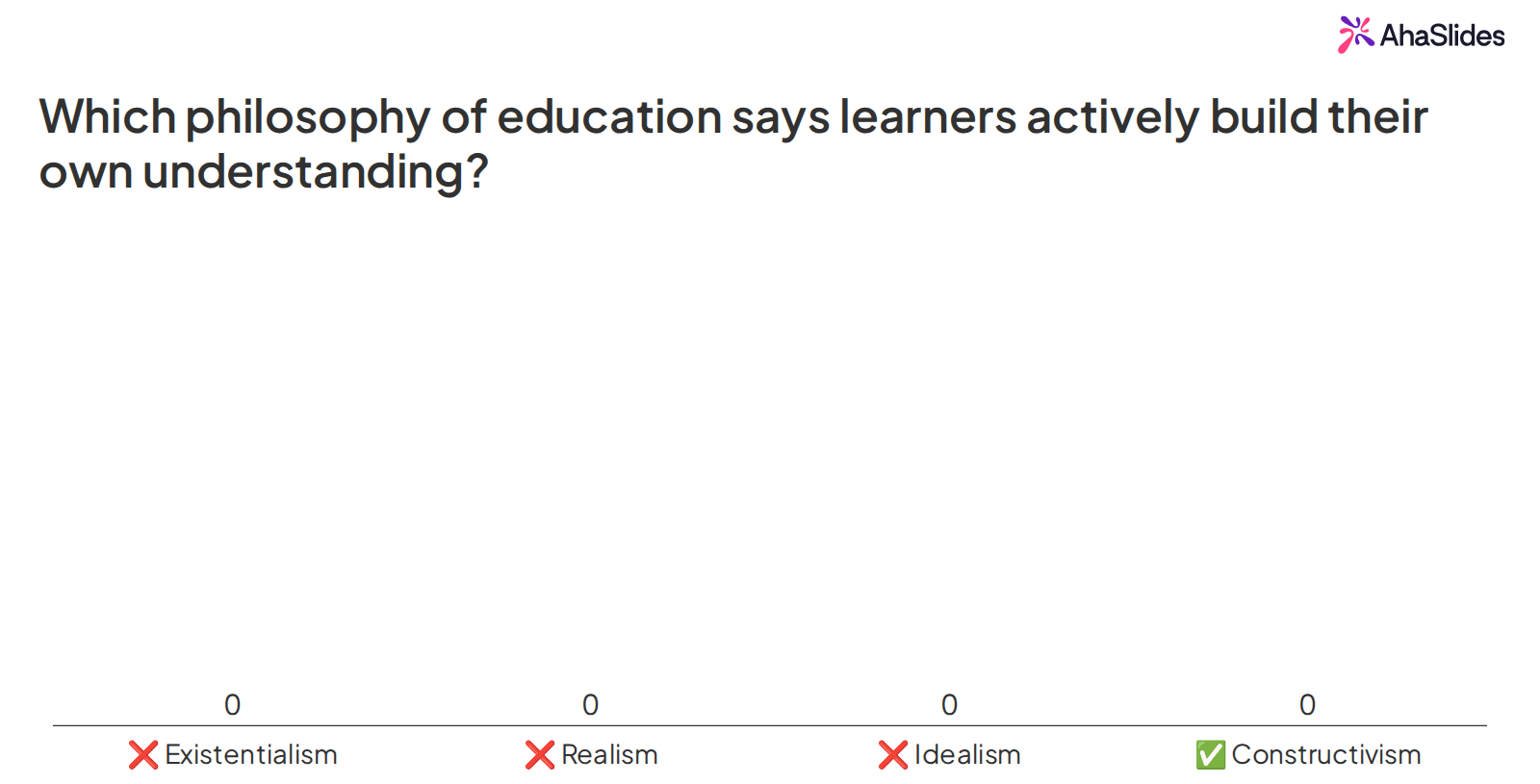
- Constructivism: learners actively build their own understanding of the world, which is why collaborative and hands-on learning matter.
These philosophies shape curriculum choices, teaching methods and the overall goals of an education system. A quick way to check that a class has absorbed them is a short quiz, like the one below, built with the AhaSlides quiz maker.
Contemporary education trends
Education keeps evolving to meet new challenges. Two trends shape most current discussion:
- The new normal in education. Since the COVID-19 pandemic, online and blended learning models have become a regular part of teaching in many schools, including virtual classrooms, digital resources and remote collaboration.
- Digital and online learning. Mobile learning (m-learning) and electronic learning (e-learning) offer flexibility and access for learners of all ages.
K-12 education
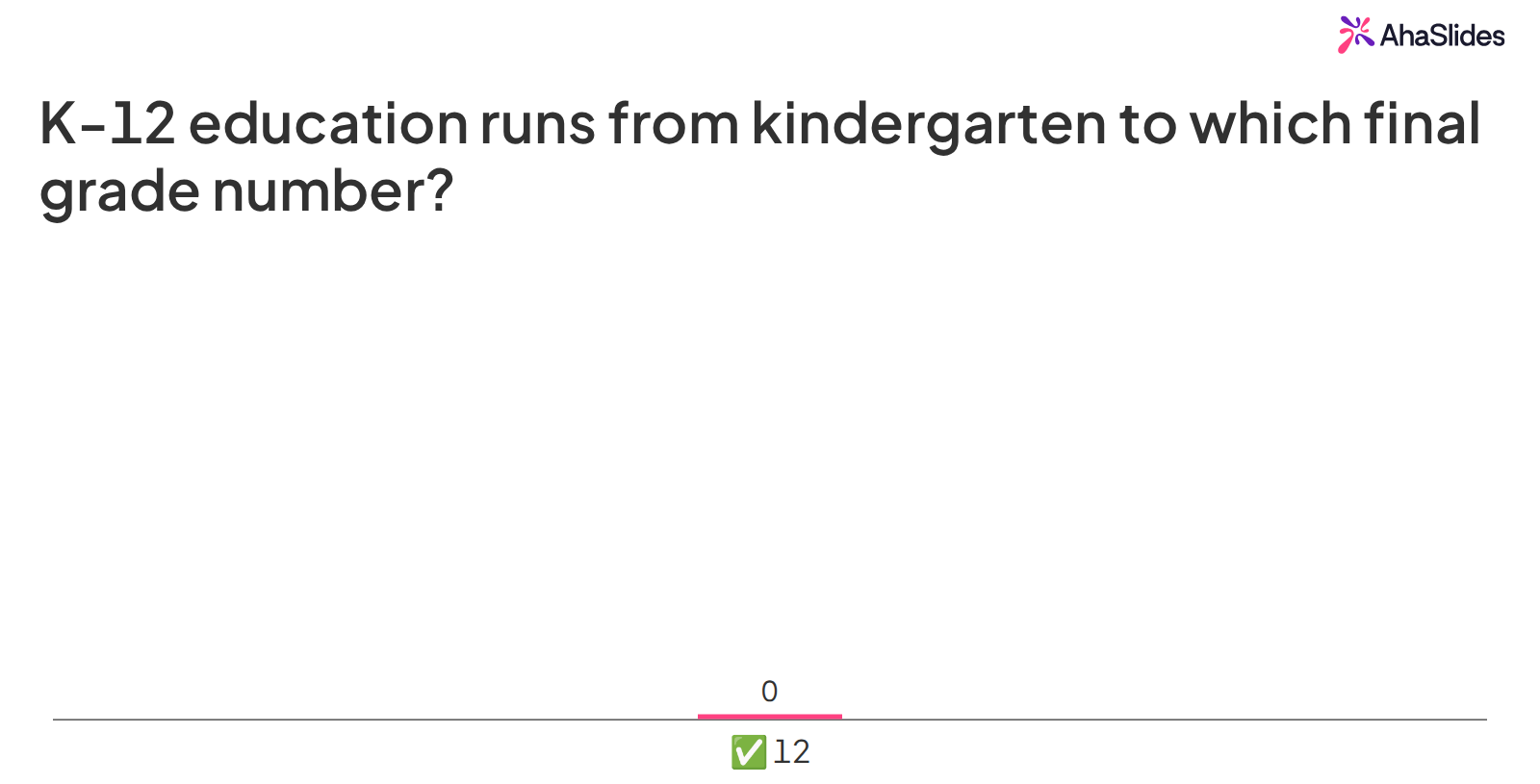
K-12 education is the foundation of a student’s academic journey. It refers to the school system from kindergarten (K) through 12th grade, giving students a structured learning experience that builds foundational knowledge and essential skills. It prepares them for higher education or vocational paths and helps them develop critical thinking and problem-solving abilities.
Checking recall at this level works well with short typed answers, because students have to produce the answer instead of recognising it:
Higher education
Higher education institutions, such as colleges and universities, offer advanced learning in many fields. They provide the specialised knowledge and training that prepare students for careers and leadership roles.
Alongside academic study, vocational education is instruction that equips people for industrial or commercial occupations, whether in trade schools, technical secondary schools or on-the-job training. It leads into careers in trades, technology, healthcare and other industries.
Research in education
Research is the driving force behind educational improvement. Educational research covers topics from effective teaching methods to student learning outcomes, and it addresses issues such as achievement gaps, curriculum development, educational equity and the use of technology in education. If you are choosing a research topic, start from a question you can actually collect evidence for, such as the examples in the two specialised areas below.
Specialised education topics
Education is not one-size-fits-all: it caters to specific needs and stages of life. Here are two specialised topics, early childhood education and physical education.
Early childhood education
Early childhood education covers the education of children in their earliest years, from infancy up to primary school, usually at about five, six or seven years of age (Britannica). It builds a strong foundation for a child’s future and helps children move smoothly into formal schooling, so they arrive confident and ready to learn.
If you are exploring early childhood education through research, consider these topics:
- The impact of early literacy programmes. Investigate how programmes that promote reading to young children affect their language and cognitive development.
- The role of play in learning. Explore how play-based learning influences creativity, problem solving and social skills.
- Parental involvement in early education. Research how parents’ participation affects a child’s academic and emotional development.
Physical education
Physical education is not just about sport: it is about keeping bodies healthy and active. Through sport and group activities, it teaches life skills such as teamwork, leadership and sportsmanship, and it can help students manage stress and build resilience.
Possible research topics in physical education include:
- Physical activity and academic performance. Investigate whether students who take regular physical education perform better academically.
- Inclusivity in physical education. Explore how programmes can be made more inclusive for students with disabilities or diverse needs.
- Technology in physical education. Research how digital tools can enhance lessons and encourage physical activity.
Key takeaways
- The topic of education covers the subject matter, themes and questions within the field, from philosophy to practice.
- Education matters for personal growth, opportunity, understanding society, problem solving and innovation.
- Key areas include educational philosophy, current trends, K-12, higher and vocational education, and research.
- A good research topic starts from a question you can gather evidence for.
To bring these topics to life in a classroom or lecture, sign up for AhaSlides for free and add live polls, a word cloud or live quizzes to your next lesson. Real-time feedback shows what students have understood and sparks discussion.
More education topics
Frequently asked questions
What is the topic meaning of education?
The topic of education is the subject matter or themes within the field that are being discussed, studied or explored: the specific areas, questions or aspects that researchers, educators and learners focus on.
What are the best topics for education?
It depends on your interests, goals and context. Popular and important topics include educational technology, early childhood education, curriculum development, teacher training and development, and higher education trends.
What are some great research topics in education?
Strong topics line up with current challenges. Examples include the impact of remote learning on student engagement, mental health support services in schools, and the role of social-emotional learning in reducing bullying and improving school climate.