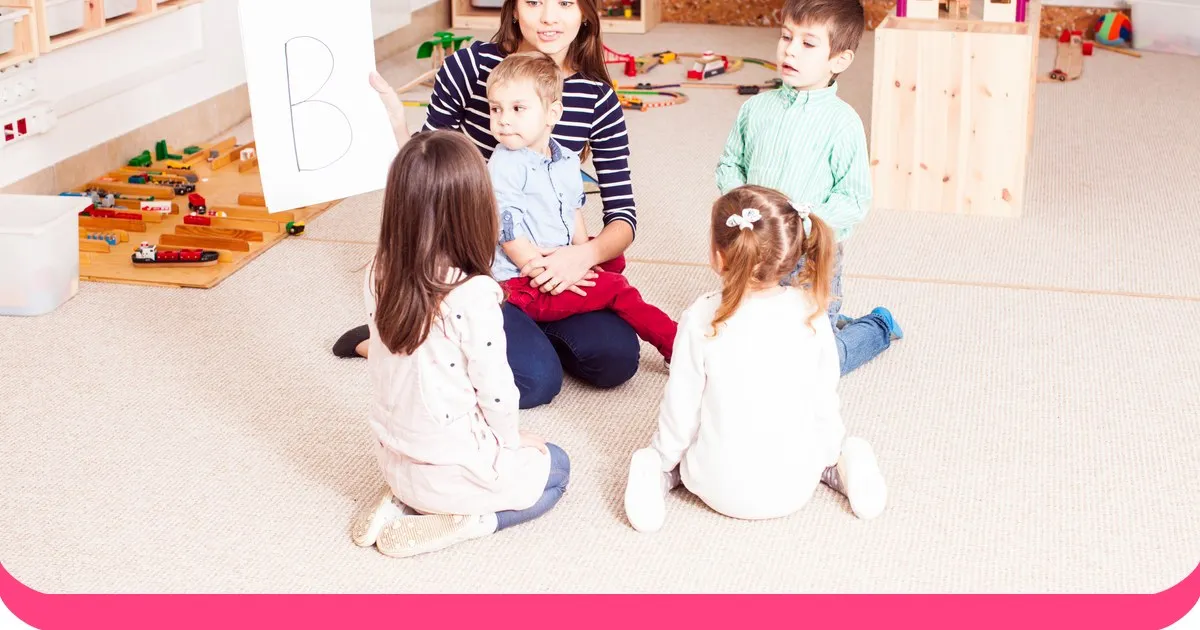
Circle time is one of the simplest routines in an early years classroom: children sit together in a circle, everyone can see everyone else, and for a few minutes the whole group talks, sings, plays and learns together. Done well, it is where children practise listening, taking turns, sharing ideas and naming their feelings.
Below you will find 24 circle time activities for preschool, nursery and reception children, sorted into five categories, plus practical advice on planning a circle time that holds young children's attention.
Quick facts
| Question | Answer |
|---|---|
| How many activities are here? | 24, in five categories |
| What age are they for? | Mostly 3 to 6 years, with ideas to stretch older children |
| How long should circle time last? | A typical daily circle time in US preschools is 15 to 20 minutes; go shorter with the youngest children |
| What do children learn? | Listening, turn-taking, language, early maths and recognising feelings |
Why circle time matters
In England, the Early Years Foundation Stage (EYFS) statutory framework names three prime areas that are "particularly important for learning and forming relationships": communication and language; physical development; and personal, social and emotional development. A single circle time can touch all three. Its early learning goals even describe children listening attentively and responding "during whole class discussions and small group interactions", and learning to "take turns with others".
Circle time also adds up. Deborah Stipek, Professor Emerita and former Dean of Stanford's Graduate School of Education, notes in Making Circle Time Count that a typical daily circle time of 15 to 20 minutes comes to about 45 to 60 hours over a 180-day school year. That is plenty of time to use well, or to lose to rote routines. She points to a Chicago-area study that found the amount of maths talk during circle time predicted growth in children's maths knowledge over the year.
How to run a circle time that works
These habits make any of the activities below run more smoothly.
- Keep it short. Young children's attention runs out fast. Watch the group rather than the clock: if they are engaged, carry on; if they are fidgeting, finish with a song and move on.
- Use the same opening and closing. A welcome song at the start and a goodbye rhyme at the end tell children what is happening and make transitions easier.
- Pass a talking object. Only the child holding the soft toy or shell speaks. It makes turn-taking visible and stops the loudest voices taking over.
- Let children pass. A child can say "pass" and have another turn later. Being made to speak in front of the group can make shy children dread circle time.
- Mix active and calm. Pair one movement game with one quieter activity, and put the calm one last if children are going on to focused work.
- Sit at their level. Sit on the floor in the circle with the children, not on a chair above them, so the circle feels like a shared space.
- Plan for every child. Some children find sitting still hard. A wobble cushion, a spot next to an adult or permission to stand at the edge of the circle helps them join in.
Movement and interaction circle time activities
Movement games work well at the start of the day or after a long stretch of sitting.
1. Duck, Duck, Goose
Children sit in a circle. One child walks around, tapping each head and saying "duck" until they choose a "goose". The goose chases the tapper around the circle and back to the empty space. Tip: add a rule that each child can only be chosen once, so everyone gets a turn.
2. Pass the smile
One child smiles at the child next to them and says, "I pass the smile to you." The smile travels around the circle. It is a calm, happy way to open circle time and helps new children feel welcome.
3. Hot potato
Pass a beanbag around the circle while music plays. When the music stops, the child holding it answers a simple question, such as "What is your favourite animal?" Tip: with young children, skip the traditional rule where the holder is "out". Nobody likes waiting at the side, and a question keeps everyone in the game.
4. High-five counting
Count from 1 to 10 together as a group, giving the child next to you a high-five for each number. Once children are confident, try counting backwards or in twos.
5. Freeze dance
Play music and let children dance. When the music stops, everyone freezes. Children who move can simply start again, rather than being out. Freeze dance builds listening skills and self-control.
6. Nature yoga
Give each child an animal or nature pose, such as a tree, a cat or a frog. Children take turns showing their pose while the others guess what it is, then everyone copies it.
7. Body part identification
Call out a body part and children touch it: "Touch your elbow! Touch your knees!" Speed up as they get better, or play "Simon says" so children have to listen carefully.
Early literacy and numeracy circle time activities
These activities build early literacy and numeracy skills through play.
8. Weather wheel
Make a wheel with weather symbols: sun, rain, cloud, snow and wind. Spin it, talk about the weather that comes up, and ask children what they would wear in it. Then look out of the window and compare it with the real weather.
9. Number count
Count around the circle, with each child saying the next number. Use toys or counting bears for younger children so they can see the numbers. For a maths challenge, ask, "How many children are here today? If two more came, how many would there be?"
10. Alphabet march
March on the spot while going around the circle, with each child saying the next letter of the alphabet. Letter cards in the middle of the circle help children who are still learning the order.
11. Rhyme time
Say a word, such as "cat", and go around the circle with each child adding a word that rhymes. Nonsense words count, which keeps the game fun and still builds sound awareness.
12. Letter detective
Choose a letter and have children name words that start with its sound. Place a few objects in the middle, some of which start with the letter, so children can "detect" the right ones.
Emotional awareness and expression circle time activities
Circle time is a good moment to help children put feelings into words in a safe, supportive group.
13. Emotion hot seat
One child sits in the "hot seat" and acts out an emotion with their face and body. The others ask yes-or-no questions, such as "Are you feeling something good?", to guess the emotion.
14. Feelings check-in
Each child shows how they are feeling using a word, a face, or by pointing to a picture on a feelings chart. Ask one or two children, "What made you feel that way?" and remember they can always pass.
15. Pass the compliment
Each child says something kind about the child next to them. Model it first with a specific example: "I liked how you helped Sam tidy the blocks." Specific compliments mean more than "You're nice."
16. Feeling statues
Call out a feeling, such as happy, sad, surprised or cross, and children freeze in a pose that shows it. Ask a few children what their statue is feeling and why someone might feel that way.
Imagination and creativity circle time activities
Storytelling games build vocabulary, sequencing and confidence in speaking to a group.
17. Story circle
Start a story with one sentence, such as "One morning, a little dragon woke up and…", and let each child add a sentence as it goes around the circle. Recap the story at the end so children hear how their ideas fit together.
18. Silly faces
One child makes a silly face and passes it to the next child, who copies it and adds their own twist before passing it on. It nearly always gets laughs and works well as a warm-up.
19. Storytelling with props
Put a few props in a bag, such as a hat, a key and a toy car. Each child pulls one out and adds a sentence to the story that includes their prop.
20. Colourful story
Tell a story as a group. Whenever a child mentions a colour, the next child must include that colour in their sentence. It reinforces colour names and careful listening.
Observation and memory circle time activities
These games sharpen attention and memory, and they are a calm way to end circle time.
21. Guess the sound
One child closes their eyes (or wears a blindfold if they are happy to) while another makes a sound with an object, such as shaking keys or crinkling paper. The first child guesses the sound and the object.
22. Memory circle
Place five or six objects in the middle of the circle. Children look carefully, then close their eyes while you remove one. Who can spot what is missing? Add more objects as children get better. With under-3s, use objects too big to swallow.
23. Guess the smell
Fill small pots with scents such as orange peel, vanilla or lavender. Children close their eyes, smell a pot and guess what it is. Tip: check allergies and dietary needs first, and avoid anything strong enough to irritate.
24. Opposites game
Say a word, such as "hot", "up" or "happy", and children take turns saying its opposite. Use pictures or actions for younger children. It builds vocabulary and early reasoning.
Which activities support which areas of learning?
| Area of learning | Activities that support it |
|---|---|
| Communication and language | Story circle, storytelling with props, colourful story, opposites game |
| Physical development | Freeze dance, nature yoga, body part identification, Duck, Duck, Goose |
| Personal, social and emotional development | Feelings check-in, pass the compliment, emotion hot seat, pass the smile |
| Literacy | Rhyme time, letter detective, alphabet march |
| Mathematics | Number count, high-five counting |
Add an interactive screen to circle time
Circle time doesn't need technology, but a big screen can add variety, especially with older children in reception and primary classes.
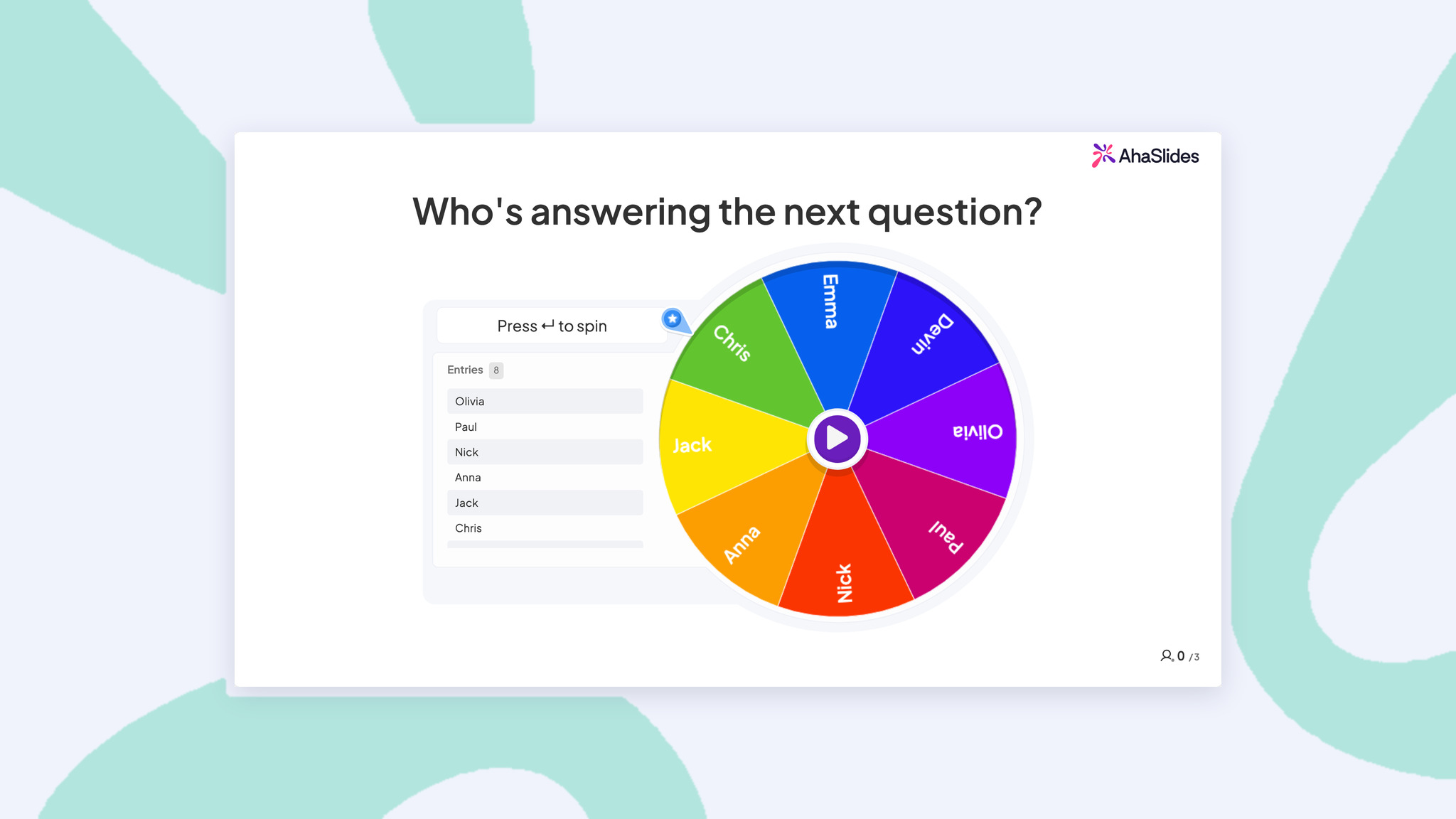
A spinner wheel makes turn-taking feel fair and exciting. Add the children's names and spin to choose who goes next, or fill it with weather words, feelings or story starters for the weather wheel, feelings check-in or story circle. The AhaSlides spinner wheel runs on the classroom screen from the teacher's device, so children don't need a device of their own.
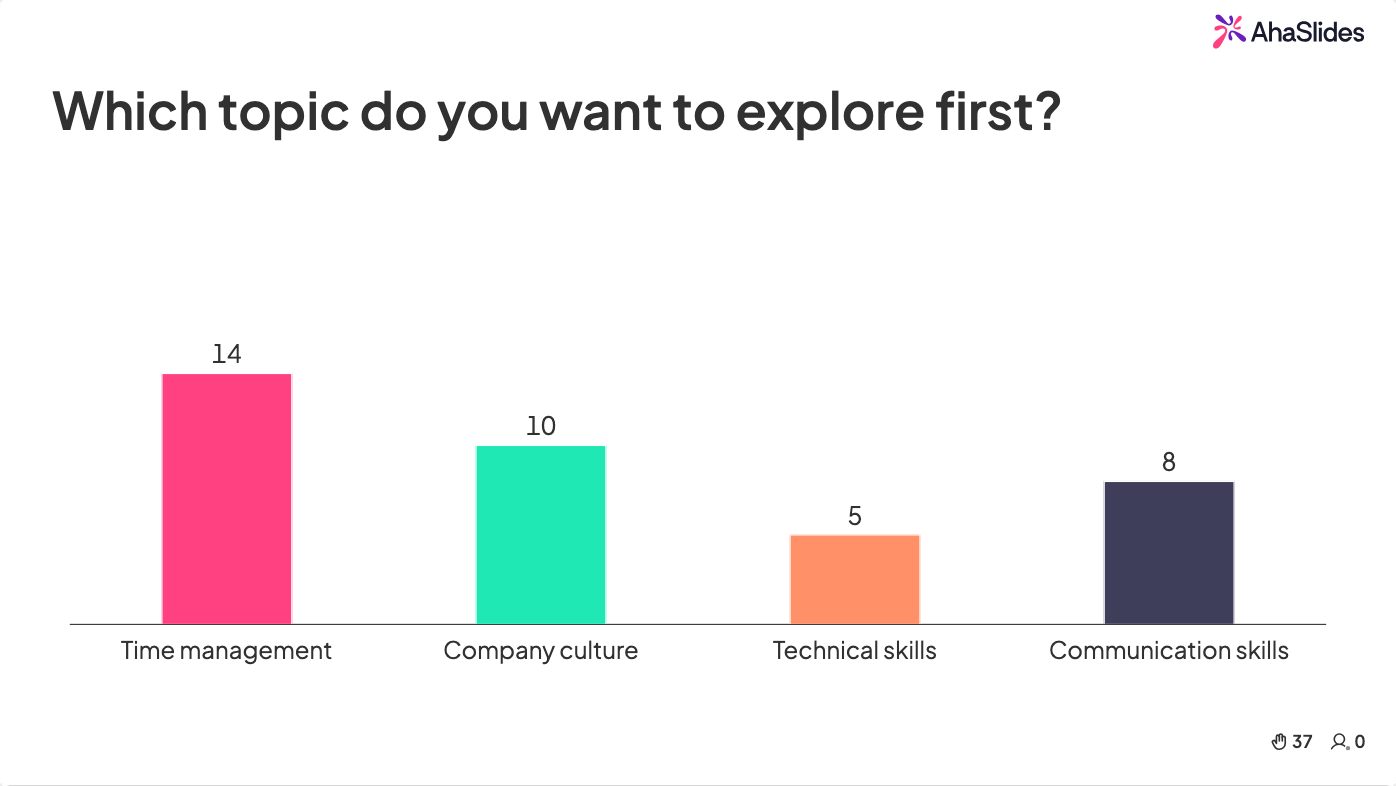
Voting also works well. Stipek suggests letting children vote on which of two books to read and counting the votes together, a small maths lesson in itself. A live poll can show the result as a bar chart that children can count. Younger children can vote with a show of hands and count them together; older pupils with class tablets can vote on the poll themselves.
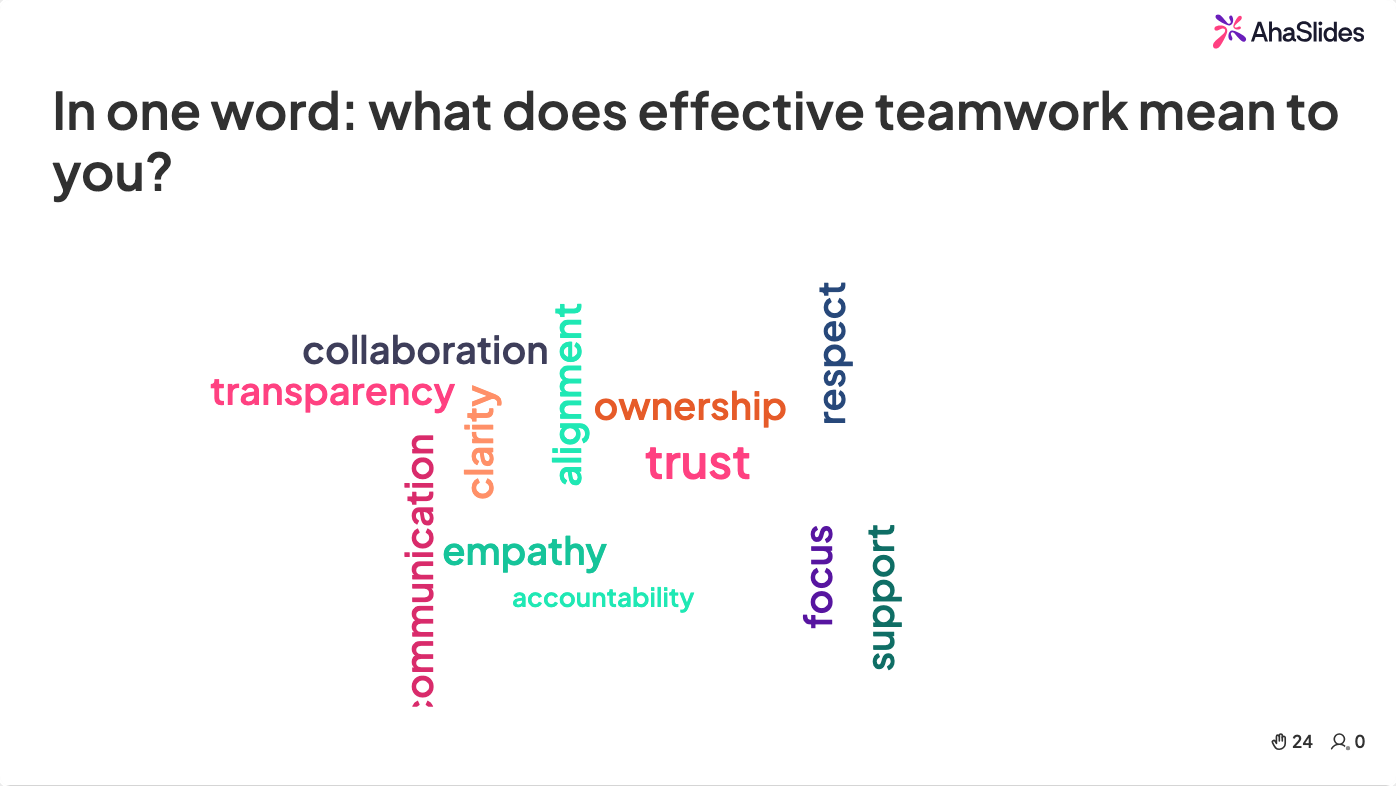
With older primary classes, a word cloud works well for a feelings check-in: ask "How are you feeling today?", each pupil types one word, and the most common words appear biggest.
For more classroom ideas, see our interactive classroom activities guide and quiz questions for kids.
Frequently asked questions
What is circle time?
Circle time is a short, whole-group session in which children sit together in a circle to talk, sing, play games and share ideas. It is common in nurseries, preschools and reception classes, and many primary schools use it too.
What are the benefits of circle time?
Circle time helps children practise listening, speaking to a group, taking turns and recognising their own and others' feelings. It also builds a sense of belonging, because everyone in the circle can see and hear everyone else.
How long should circle time be for preschoolers?
Keep it short enough that children stay engaged, and finish before attention runs out. Stanford's DREME Network puts a typical daily circle time in US preschools at 15 to 20 minutes. With the youngest children, a shorter session, or two short ones, often works better.
What are some circle games?
Popular circle games include Duck, Duck, Goose, hot potato, pass the smile, freeze dance, story circle and memory circle. Choose one active game and one calm activity for a balanced session.