
Why do we work, and what keeps us giving our best effort day after day? Those are the questions at the heart of a motivational interview. Employers want to know what drives you beyond the paycheque, so they can trust you with important responsibilities. This guide explains what interviewers are really listening for and gives you 32 motivational interview questions, with sample answers, for students, fresh graduates and managers.
What is a motivational questions interview?
A motivational questions interview is one where the employer asks questions aimed squarely at understanding your motivation. The goal is to judge your drive and work ethic: will you be engaged, self-directed and productive once you are in the role?
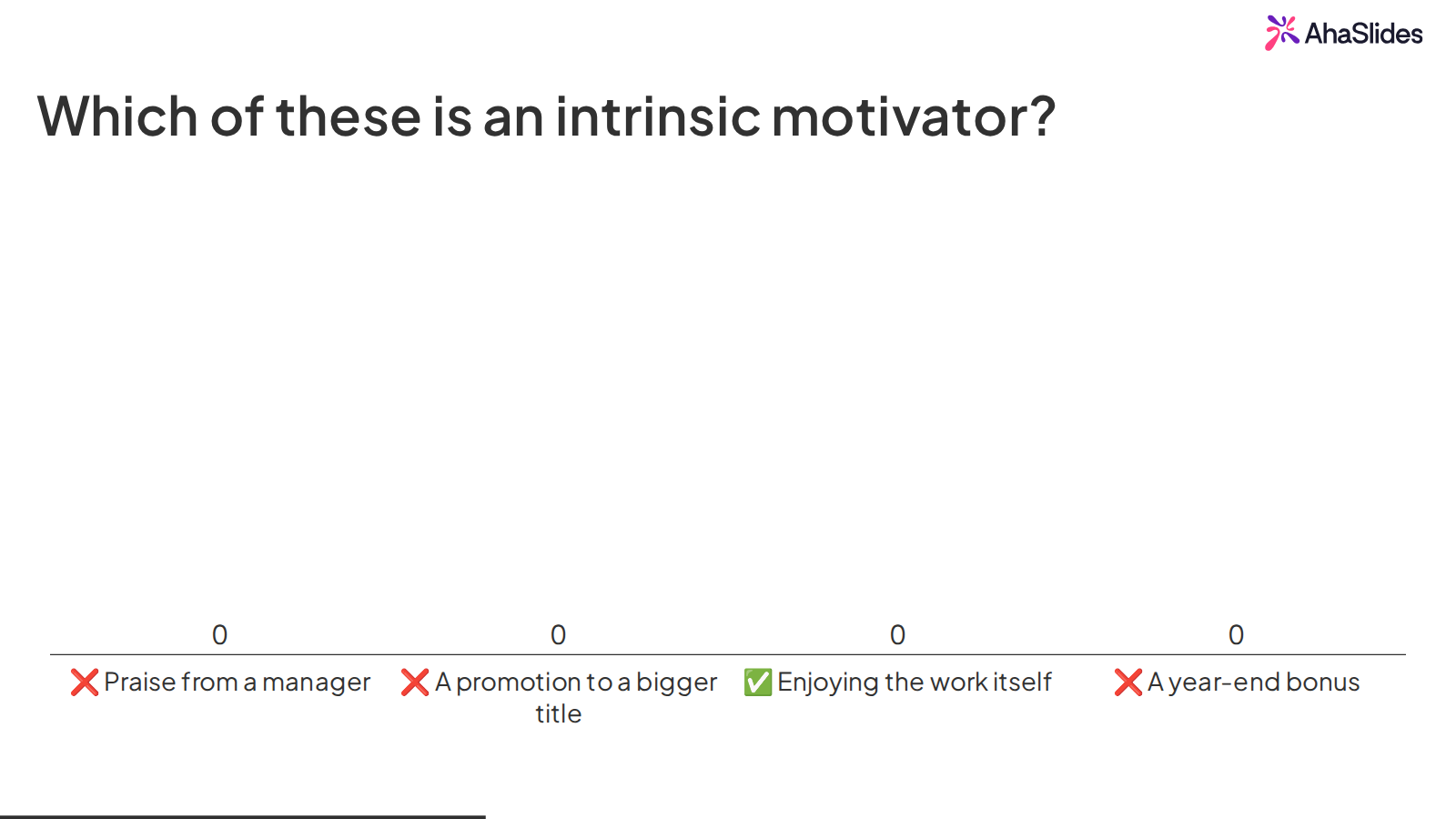
Interviewers are usually listening for the difference between intrinsic and extrinsic motivation. In self-determination theory, intrinsic motivation means doing something because it is inherently interesting or enjoyable, while extrinsic motivation means doing it because it leads to a separable outcome such as a reward or approval (Ryan and Deci, “Intrinsic and Extrinsic Motivations: Classic Definitions and New Directions”, Contemporary Educational Psychology, 2000). A good answer does not pretend money does not matter. It shows what you genuinely enjoy about the work itself, and connects that to the job and the company’s culture.
How to answer motivational interview questions
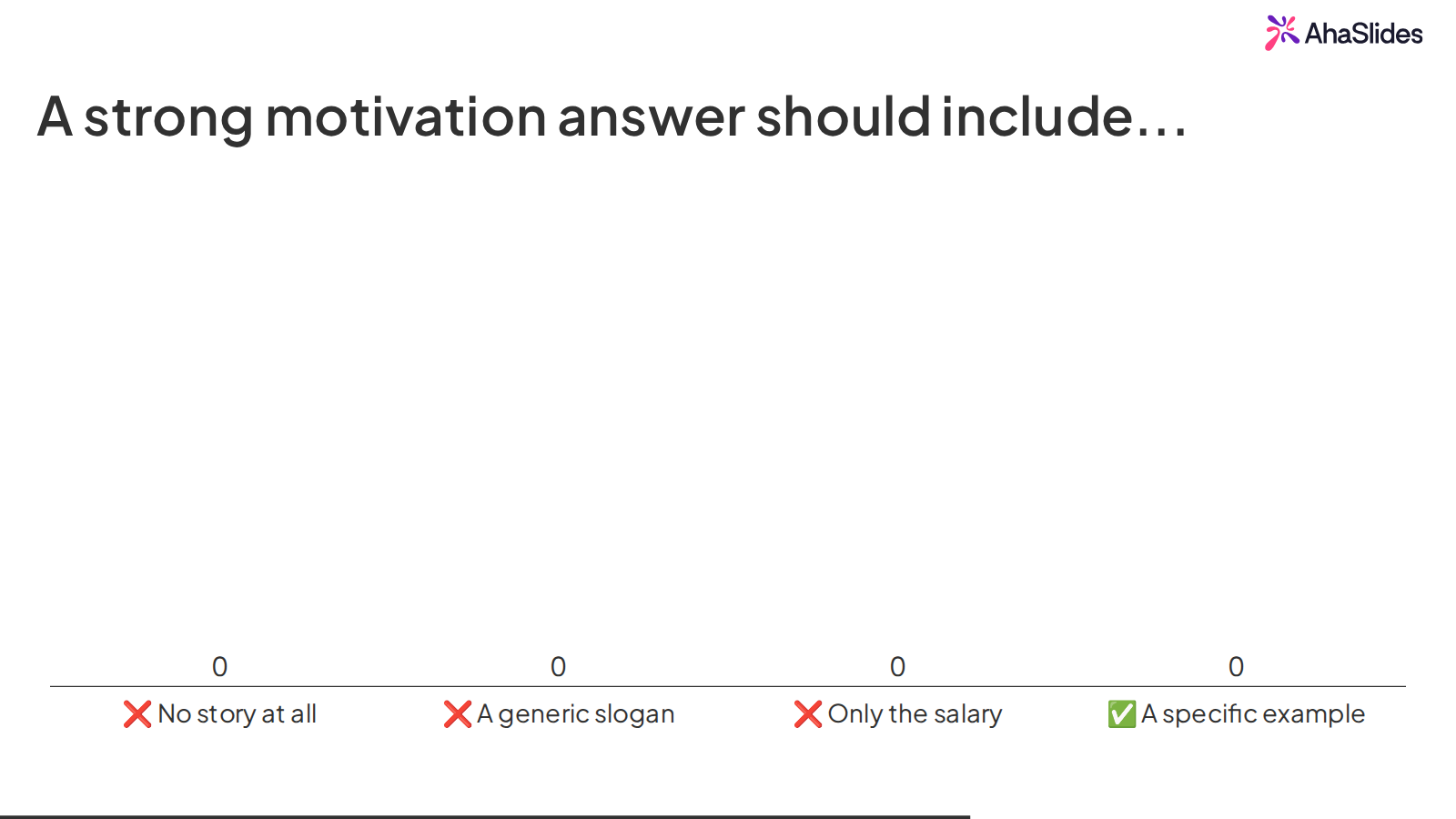
- Tell a specific story. A concrete moment, such as the project you stayed late on because you wanted it to be good, is more convincing than a slogan like “I’m passionate about learning”.
- Link your motivation to the role. Say what about this job, team or mission energises you, and use the company’s own words where they are true for you.
- Show how you handle setbacks. Drive is easiest to prove when things went wrong and you kept going.
- Be honest about extrinsic motivators. Pay, progression and recognition are normal. Pair them with the work you enjoy so the answer stays balanced.
- Keep it short. Aim for about a minute: the situation, what you did, and what it taught you.
If you coach students, graduates or new managers, you can turn this list into a practice session by asking the questions as live polls and open-ended slides in AhaSlides, so everyone answers at once and compares approaches. You may also like our guide to the aptitude test for interview.
Motivational questions interview examples for students
Looking for an internship or a part-time job before you finish your degree? Here are motivation questions employers may ask when you start your career journey.
- Why do you want an internship now rather than after graduation?
Example answer: I’m seeking an internship now because it will let me gain real-world experience that helps me hit the ground running in my career. As a student, applying the theories I learn in class to an actual work environment would be extremely beneficial. It will help me test different areas of interest within this field to confirm which career path suits me best. Completing an internship now also gives me an advantage when I look for full-time jobs, because employers increasingly look for candidates who already have internship experience. - What interests you most about this field of study or industry?
- What outside organisations or activities have you taken part in to gain experience?
- What goals do you have for your learning and career development during college?
- What inspired you to pursue this area of study over other options?
- How do you make sure you are constantly acquiring new skills and knowledge?
- What motivates you to seek out opportunities that will help you grow professionally?
- What challenges have you faced in your education or career journey so far, and how did you overcome them?
- How do you perform your best work? What kind of environment keeps you engaged and productive?
- Which experience so far has given you the greatest sense of achievement, and why was it meaningful?
Motivational questions interview examples for freshers
Here are motivational questions that may be asked of fresh graduates, with sample answers for a software engineering role.
- What sparked your interest in this field or career path?
Example answer: Ever since I was young, I’ve been fascinated by how technology can solve real-world problems. In high school I joined a coding club where we built basic app ideas to help NGOs, and seeing the apps make a positive impact sparked my passion. When I researched college majors, software engineering stood out as a way to channel that passion. I love breaking down complex problems and designing logical solutions through code, and my coursework in cybersecurity, artificial intelligence and cloud technologies has deepened my interest. Ultimately, I’m motivated by the prospect of using technology to drive innovation, and the pace of the field means there will always be something new to learn. - How do you stay motivated to continuously learn new skills?
- What motivates you to take on challenges outside your comfort zone?
- What career goals do you have for the next one to two years, and five years from now?
Example answer: In terms of technical skills, I hope to become proficient in the core languages and tools used here, and to develop my project management abilities, such as tracking timelines and budgets. Looking five years ahead, I aspire to a senior developer position where I can lead the development of new features independently, while expanding into related areas like data science or cybersecurity. I’d also like to gain a certification in an industry framework such as AWS or an Agile methodology. - What projects have you driven independently in your coursework or personal time?
- What are you most excited about contributing to the company?
- How do you perform your best work, and what work environment motivates you?
- Tell me about a specific experience that gave you a sense of pride and accomplishment.
- How would your classmates describe your work ethic and motivation?
- What do you consider failure, and how do you learn from challenges?
- What motivates you to go above and beyond the basic requirements of a task?
- How do you stay determined to complete goals when you face setbacks?
Motivational questions interview examples for managers
If you are going for a senior or leadership role, these are the motivation questions that might come up.
- What did you do to help your team stay motivated and help individuals grow in their roles?
Example answer: I held regular one-on-one check-ins to discuss development goals, gather feedback on how people were feeling and address concerns, which let me tailor encouragement to each person. I introduced semi-annual reviews to recognise achievements and discuss new learning opportunities, and team members presented their work to the group to boost morale. We celebrated big wins and small milestones to keep energy high in difficult periods. To help people expand their skills, I encouraged them to find mentors among senior colleagues and worked with management to secure training budgets. I also shared project updates and successes company-wide so people could see the impact of their contributions on a bigger scale. - Describe a time when you went above and beyond to support your team.
- What strategies do you use to delegate work effectively based on people’s strengths?
- How do you gather feedback and buy-in from your team on new initiatives?
- How do you evaluate your own performance and keep refining your leadership skills?
- What have you done to build a collaborative culture within your teams?
- What motivates you to take ownership of both successes and failures?
- How do you recognise extraordinary work while motivating continued improvement?
- What motivates you to network across departments to support your team’s goals?
- Have you ever felt uninspired at work, and how did you overcome it?
Key takeaways
- Interviewers use motivational questions to find out why you work, not just whether you can.
- Intrinsic motivation, enjoying the work itself, is what most answers should lead with.
- Back every claim with a specific example and tie it to the role.
- Prepare three or four stories you can adapt to several questions.
Frequently asked questions
How do you demonstrate motivation in an interview?
Keep responses specific, goal-oriented and rooted in what you enjoy about the work. Describe what you did and what you learned, rather than saying you are motivated.
How do you answer motivational fit interview questions?
Relate your motivations to the organisation’s mission and values wherever they are genuinely true for you, and give examples from experience that show determination, work ethic and the ability to overcome challenges.
What are the key skills of motivational interviewing?
Motivational interviewing is a counselling approach used to help people explore and strengthen their own motivation for change, and it is a different thing from a job interview. Its core communication skills are often remembered as OARS: open-ended questions, affirmations, reflective listening and summaries (see the OARS summary from the US National Institute on Drug Abuse). Interviewers can borrow the idea by asking open-ended questions and listening closely to your answers.