Round 1
习俗与寓意
红色、守岁、福字和祝福语背后的含义。
- Pick answer
- Match pairs


Ten Spring Festival questions in Simplified Chinese on lucky colours, New Year's Eve food, the Lantern Festival and traditional customs. The template is in Simplified Chinese, so it suits Chinese-reading groups of all ages.
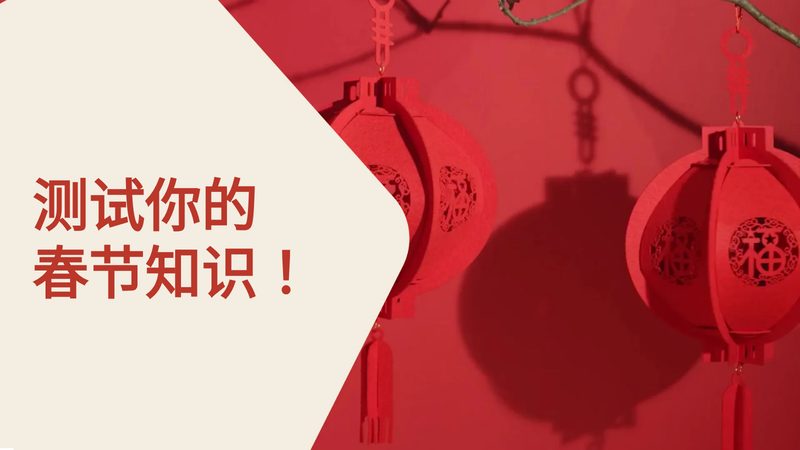
红色、守岁、福字和祝福语背后的含义。
除夕和元宵的食物,以及春节的历史起点。
Every question, grouped by round. Answers stay hidden until you tap.
中国新年期间,最常与好运相关的颜色是什么?
红色
Fun fact: 传说中年兽害怕红色和巨响,所以人们穿红衣、挂红灯笼、贴红春联。
中国新年期间熬夜迎新的传统习俗叫什么?
守岁
Fun fact: 西晋周处的《风土记》已有“至除夕达旦不眠”的记载,可见守岁至少有一千七百多年的历史。
将以下春节习俗与其对应的含义匹配:
Fun fact: 民间传说中,恶鬼“祟”与“岁”谐音,所以红包才叫“压岁钱”。这个说法没有可靠的史料出处。
春节期间将“福”字倒贴的意义是什么?
象征好运到来。
Fun fact: 倒贴福字的来历有好几种民间传说,涉及明朝马皇后和清朝慈禧等,史料依据都不充分。
“年年有余” 这句话的含义是什么?
希望年年富足。
Fun fact: “鱼”与“余”谐音,年夜饭上的鱼常常故意不吃完,留下“年年有余”的好兆头。
中国北方地区在除夕午夜通常吃的传统食物是什么?
饺子
Fun fact: 北方饺子常被捏成元宝的样子,寓意财富;清代文献还把子时吃饺子解释为“更岁交子”。
庆祝满月的传统中国新年节日是什么?
元宵节
Fun fact: 元宵节在农历正月十五,常被视为新年庆祝活动的最后一天。
元宵节的传统食物是什么?
汤圆
Fun fact: 同样是糯米团子,北方多叫元宵,南方多叫汤圆,圆圆的形状寓意团圆。
哪个朝代正式确立了农历新年的庆祝活动?
汉朝
Fun fact: 太初历在公元前104年颁行,把一年的开端从十月改为正月。
以下哪一项不是传统的春节禁忌?
吃面条
Fun fact: 在不少家庭,长面条象征长寿,吃的时候常常不剪断。
Press View and claim to open the slides, then make your own copy.
Add team names, a prize and any questions of your own.
Start the quiz on your big screen or share your screen.
Players join on their phones and play live.
About 10 minutes for all 10 questions.
Yes. This quiz is written for all ages.
Yes. Share your screen on Zoom or Teams and put the join code in the chat. Everyone answers on their own device.
Yes. Once you have your own copy, every question is yours to edit.
More for Lunar New Year.
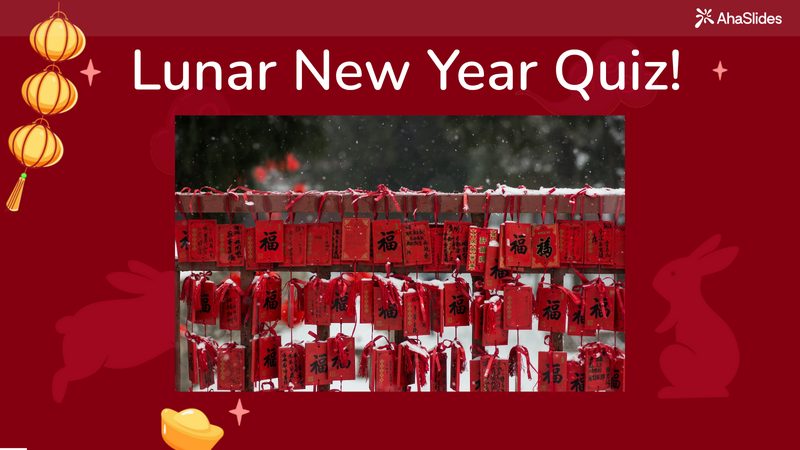
Zodiac animals, traditions and food in a 20-question Lunar New Year quiz.
A Lunar New Year team session with six open prompts (favourite things, games, food, decorations, challenges) and four quiz questions on the zodiac, Seollal and festive food. Suits a workplace or class; mostly discussion.
A back-to-work discussion template: seven open prompts (wishes, holiday stories, childhood games, favourite foods) plus five short Lunar New Year questions on customs and the zodiac. Mostly conversation, not a scored quiz.