
If you want a free AI presentation maker, check the limits first: Slidesgo gives you 3 AI presentations a month, Presentations.AI's free Starter plan gives you 200 credits and up to 20 slides, PopAi gives you 500 credits in total, about 1 presentation, and AhaSlides gives you a monthly AI allowance and up to 50 live participants at a time. Plus AI and Storydoc have no free plan, only free trials.
This guide compares 6 AI presentation makers, with their free limits and who each one suits. AhaSlides is ours, and its entry says where it falls short. Every other tool is described from its own website, checked on 7 November 2026.
Building a good presentation takes time and design skill. AI presentation tools help with both: they shorten the time it takes to build a structured deck and make many of the design decisions that slow most people down. You still decide what the deck says and how you run the session.
The 6 tools at a glance
Free plans and prices change often, so each row links to the vendor's own page (checked 7 November 2026). Tools with a free plan come first.
| Tool | Best for | Free option | Lowest paid plan | Source |
|---|---|---|---|---|
| Slidesgo | Design quality | Free plan: 3 AI presentations a month | Premium: €0.67 a month, billed annually (€7.99 a year) | Slidesgo pricing |
| AhaSlides | Live polls, quizzes and Q&A | Free plan: up to 50 live participants at a time; a monthly AI allowance | Essential: $7.95 a month, billed yearly | AhaSlides pricing |
| Presentations.AI | Data-heavy, branded decks | Free plan: 200 credits, up to 20 slides | Pro: $20 a month, billed annually ($240 a year) | Presentations.AI pricing |
| PopAi | Drafting a deck from a prompt or file | Free plan: 500 credits in total, about 1 presentation | No price shown on its pricing page | PopAi pricing |
| Plus AI | Working inside Google Slides or PowerPoint | No free plan: 7-day free trial | Basic: $10 per user a month, billed annually | Plus AI pricing |
| Storydoc | Sales and marketing documents | No free plan: 14-day free trial | Starter: $19.80 a month, billed annually ($237.60 a year) | Storydoc pricing |
1. Slidesgo: best for design quality
Slidesgo's strength is its template library. The designs are polished and cover a wide range of styles and uses. If visual quality is your main concern and you're willing to do more of the content work yourself, Slidesgo's templates are a good-looking starting point.

The AI maker builds slides from a topic, and you can refine them afterwards. It runs on Slidesgo's own site and exports a PPTX file that opens in PowerPoint and Google Slides.
The free plan includes 3 AI presentations a month and 3 template downloads a month. Premium is €0.67 a month, billed annually at €7.99 (Slidesgo's pricing page, checked 7 November 2026).
2. AhaSlides: best for getting your audience involved live
AhaSlides is an all-in-one engagement platform for teams and classrooms. Our view: a session sticks better when people do something with what they're hearing.
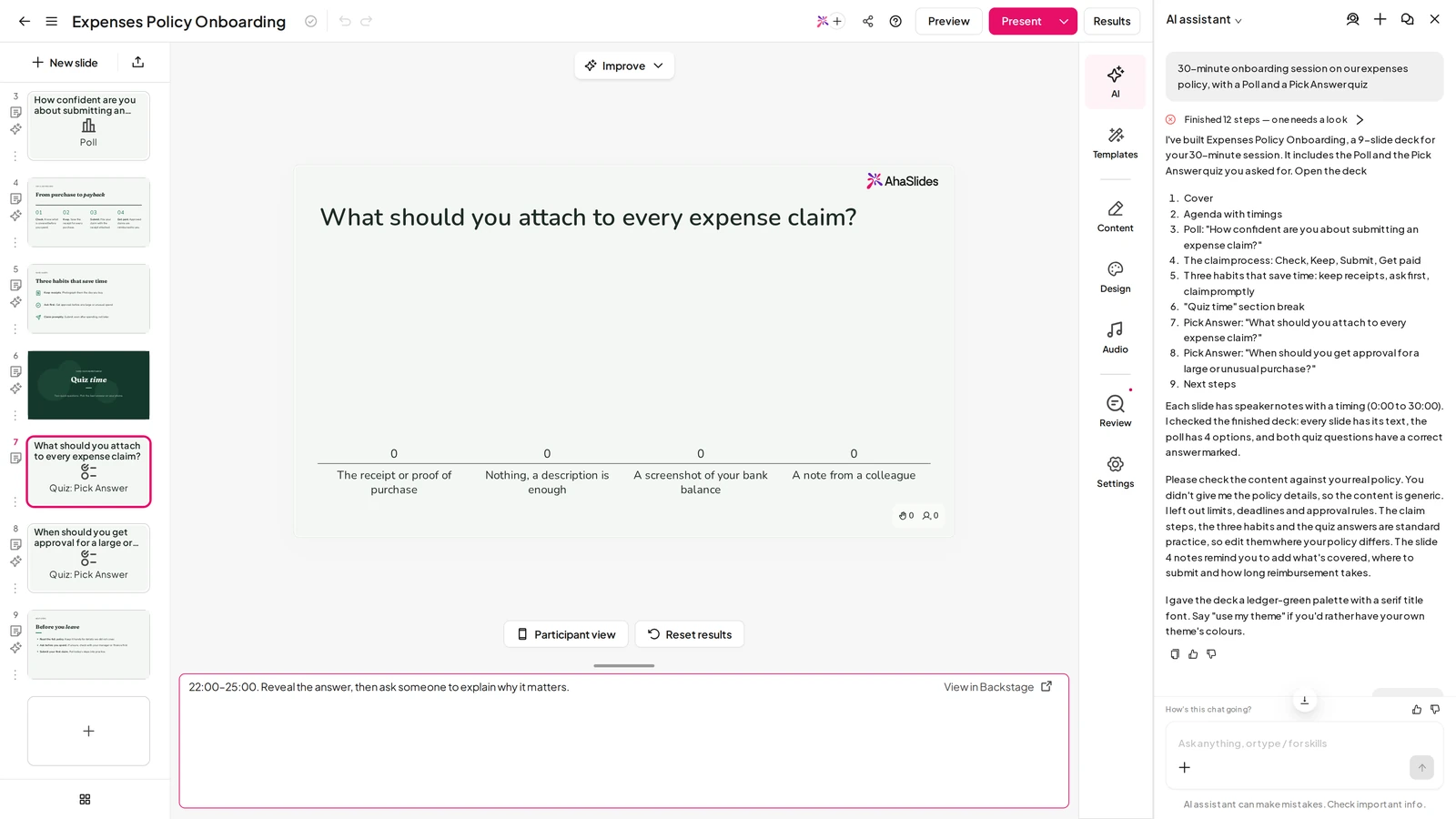
The AI assistant drafts a deck from a prompt with interactive slides, such as a Poll or a Pick Answer quiz, alongside your content slides, so your audience can vote, answer and ask from their phones as you present. Upload a PDF or images to the AI assistant, and it suggests interactive slides from your content. Review them before you present.
Free and Essential have a monthly AI allowance; Pro has the most generous AI. Paid plans start with Essential at $7.95 a month, billed yearly (AhaSlides pricing, checked 7 November 2026).
Where it falls short: if you need highly polished visual design or detailed data visualisation, there are better options on this list. Our templates are clean and functional. They're not the most visually distinctive.
One practical note: AhaSlides needs an internet connection for the interactive features to work. If you're presenting somewhere with unreliable connectivity, factor that in.
3. Presentations.AI: best for data-heavy presentations
Presentations.AI can pull your logo, colours and fonts from your company's website address, a feature its FAQ calls Brand Sync. It doesn't say which plan includes that, though it lists brand customisation among what paid plans unlock. For teams that present data regularly and want visuals that match their brand, check this first.
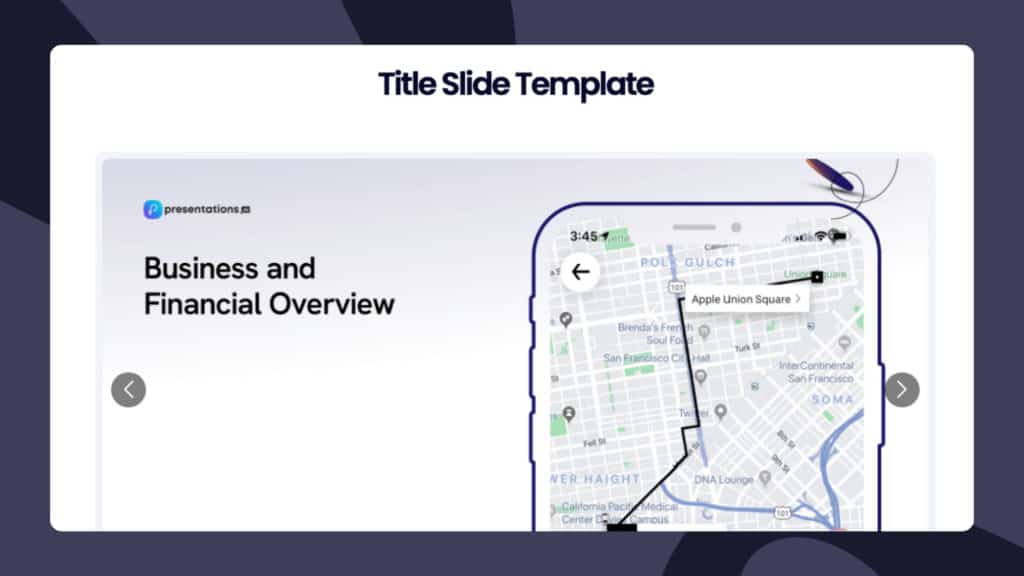
The free Starter plan lists 200 credits and up to 20 slides, and the page doesn't say whether the credits renew. PowerPoint export is among what paid plans unlock. Its homepage says layouts adapt to your content automatically and lists data connections such as Google Sheets and Salesforce, without naming the plan. Pro is $20 a month and Gold is $100 a month, both billed annually, at US prices that can vary by country (Presentations.AI's pricing page, checked 7 November 2026).
4. PopAi: best for drafting a deck from a prompt or file
PopAi turns a prompt, or a PDF, Word file, PowerPoint file or web page, into slides. You review the outline, then edit online.
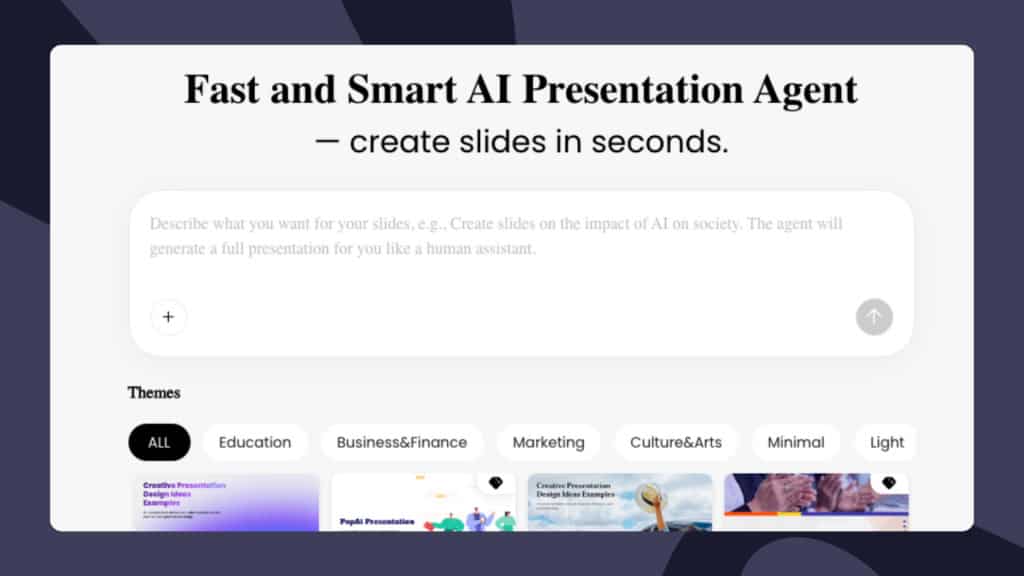
Plan time to edit the draft. For internal presentations or quick pitches, that can be enough.
The free plan gives you 500 credits in total, about 1 AI presentation, and full export and watermark removal are listed from the paid Plus plan. Its pricing page showed plans but no prices when we read it, so check PopAi's pricing page before you start (checked 7 November 2026).
5. Plus AI: best for teams already using Google Slides or PowerPoint (no free plan)
Plus AI has no free plan: you get a 7-day free trial instead. It works inside the tools you're already using, so there's no new app to learn. If your team lives in Google Slides or Microsoft PowerPoint, that matters. The AI generates content and suggests layouts without you leaving the app where you'll eventually present.
Its homepage and pricing page list no live audience features, so it suits documents and decks rather than sessions where you need the audience taking part. After the trial, the Basic plan is $10 per user a month billed annually, or $15 billed monthly (Plus AI's pricing page, checked 7 November 2026).
6. Storydoc: best for sales and marketing documents (no free plan)
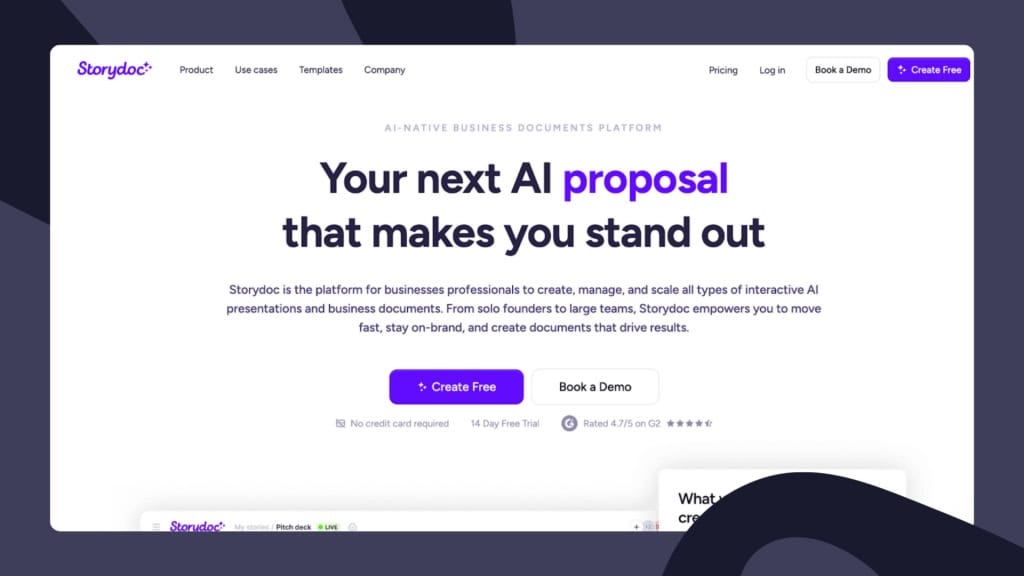
Storydoc lists no free plan: you get a 14-day free trial instead. It also works in a different format from the others. Its output is a scrollable interactive document designed for sharing, not a traditional slide deck. Think proposals, sales decks sent by email, or investor materials that need to work without a presenter in the room.
Built-in analytics show who viewed the document, how long they stayed and where they dropped off. For sales teams that want to know whether their deck is being read, that's useful.
You can build embedded videos, forms, e-signatures and scheduling links into the document. Its homepage says the trial needs no credit card. After it, the Starter plan is $19.80 a month, billed annually (Storydoc's pricing page, checked 7 November 2026).
How to choose a free AI presentation maker
- If visual design is your priority and you're comfortable doing more content work yourself, Slidesgo is worth a look for its templates.
- If you're presenting live and want your audience involved, AhaSlides is built for that.
- If you regularly present data and need consistent branding, Presentations.AI's paid plans fit.
- If you want a first draft from a prompt or an existing file, PopAi does that, and its free credits cover about 1 presentation.
- If you're working inside Google Slides or PowerPoint and want AI help without switching apps, Plus AI fits. For a wider list, see our guide to AI tools for PowerPoint.
- If you're creating documents meant to be read without a presenter, Storydoc's scrollable format is worth exploring.
All 6 tools list a free plan, free option or free trial.
Taking it further with AhaSlides
AI tools make a professional-looking deck quicker to build. Getting people involved is a different job, and design alone doesn't do it. If you want people taking part during your presentation, interactive slides are a practical way to do it.
Start with a Poll and you see what your audience already thinks before you tell them what you think. A Word Cloud mid-session shows you which ideas people share. An anonymous Q&A captures the questions people have but won't ask out loud.
If you're already using another tool for your slides, AhaSlides works with Google Slides and PowerPoint through its add-ons, so you can add interactive slides without rebuilding your deck (the PowerPoint add-in isn't available on EU accounts). If you're starting from scratch, the AI drafts interactive slides for you to review, so you can put your time into running the session. For a ready-made example, try the How AI-ready are you? template or the AI fake or real quiz.
And if you want people taking part, build the interaction in from the start rather than adding it as an afterthought.
The free plan supports up to 50 live participants at a time and unlimited presentations. AI use still counts towards its monthly AI allowance.