

Disengaged students, low quiz scores, and employees who tune out halfway through a training session are problems every educator and L&D professional knows well. Gamification learning platforms address this by layering game mechanics (points, leaderboards, badges, timed challenges) onto learning content, making participation feel rewarding rather than obligatory.
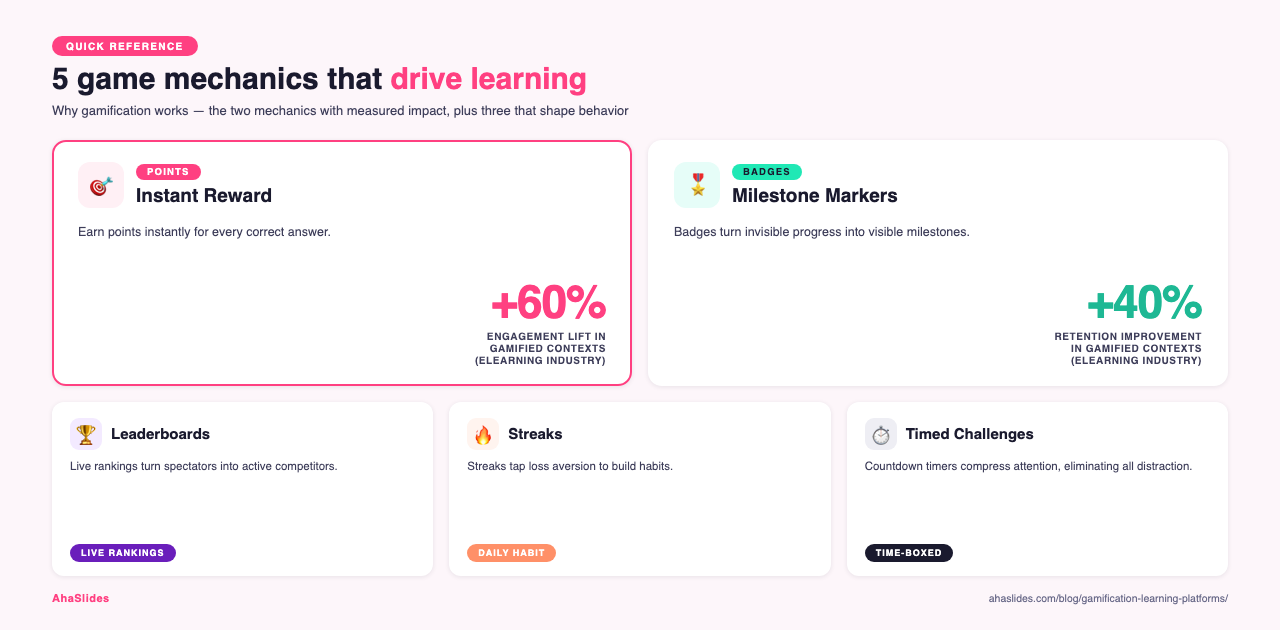
Research consistently shows that gamified instruction improves engagement and learning outcomes compared to traditional approaches. A widely cited eLearning Industry analysis reports engagement gains of up to 60% and retention improvements of around 40% in gamified contexts. [1] The challenge is choosing the right platform for your context, budget, and audience.
This guide covers 15+ of the best gamification learning platforms available in 2026, split by use case: individual learners and classrooms first, then business and enterprise tools.
What are gamification learning platforms?
Gamification learning platforms apply game design principles to educational or training content. Rather than passive reading or lecture, learners earn points for completing activities, collect badges for reaching milestones, and compete on leaderboards against peers.
The mechanics vary by platform: some focus on quiz-based competition, others on role-playing progression systems, and others on spaced repetition with challenge streaks. What they share is a design philosophy that makes progress visible and achievement satisfying.
For a deeper look at the theory behind these tools, see our guide to gamification for learning.
How to choose the right platform
Before picking a tool, answer three questions:
- Who is the audience? K-12 students, university learners, and corporate employees each need different mechanics and interfaces.
- What is the primary use case? Live classroom sessions favor real-time quiz platforms. Self-paced training favors LMS-style tools with progress tracking and streaks.
- What is the budget? Several platforms offer full-featured free tiers. Enterprise tools (Docebo, TalentLMS) are priced for organizations, not individual teachers.
Best gamification learning platforms for classrooms and individuals
These platforms work well for teachers, tutors, and individual learners. Most offer free plans.
1. AhaSlides
Pricing: Free for up to 50 live participants. Paid plans from $7.95/month (Essential).
AhaSlides is a live presentation platform built around audience interaction. Teachers and trainers create slide decks that include live quizzes with leaderboards, word clouds, open-ended questions, polls, rating scales, and spinner wheels, all responding to participants in real time.
Where AhaSlides stands out among gamification learning platforms is flexibility: it gamifies every part of a lesson, not just the quiz at the end. A vocabulary lesson can become a word cloud race; a review session becomes a scored quiz with a live leaderboard counting down. Students join from any device using a code, with no app download required.
AhaSlides ships 30+ interactive slide types and adds new ones roughly every month. The gamification-relevant formats alone span standard types - Pick Answer (multiple-choice quiz), Categorise, Match Pairs, Correct Order, Type Answer, Word Cloud, Open Ended, Q&A, Rating Scale, Spinner Wheel, Brainstorm and Idea Board - alongside newer ones like True or False, This or That, Fill in the Blanks, Draw Answer, 2x2 Matrix, Split the Points, Duck Race and a YouTube-to-quiz tool.
A handful of these map neatly onto classroom goals:
- True or False is a fast quiz where students swipe true or false on each statement. Use it as a quick misconception check before a lesson; more creatively, as a myth-busting round to close one.
- Fill in the Blanks shows a sentence with missing words that students free-type or pick from a drop-down. Use it for vocabulary and definition recall; more creatively, to rebuild the steps of a process or a formula from memory.
- YouTube Quiz is a newer, in-development format: paste a YouTube URL and AI drafts questions from the video. It suits a flipped-classroom check on an assigned clip; more creatively, turning a documentary segment into an instant comprehension task.
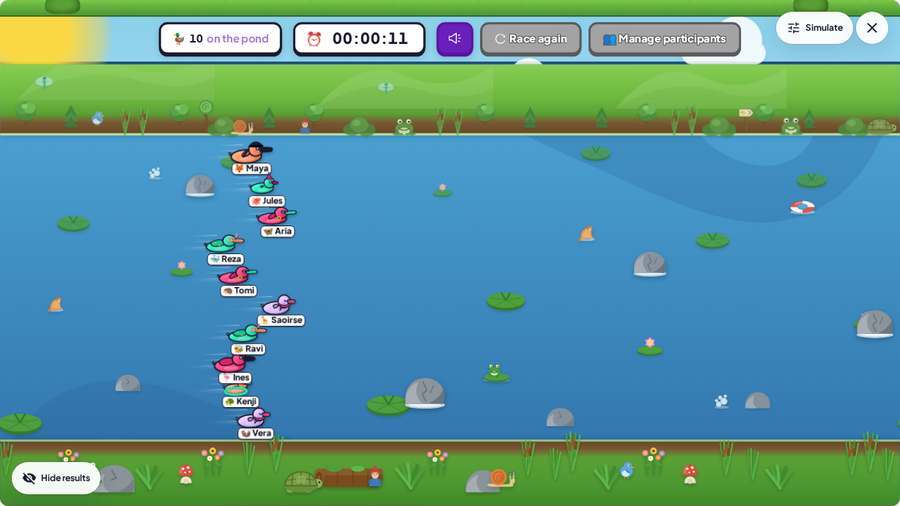
- Duck Race is a playful random picker: a row of cartoon ducks races across the screen and one wins at random. It is a fun, fair way to break the ice, pick who answers next, give away a reward, or just choose a winner, and it is live in AhaSlides now. Use it to call on students at random or draw a classroom reward, keeping energy high without more marking; more creatively, run it as a whole-term "lucky duck" draw so slower learners stay in contention.
Ready-made templates cut setup time, and pricing includes a discounted education tier for schools.
Best for: Live classroom sessions, interactive training, corporate L&D presentations.
Try AhaSlides free, no credit card needed →
2. Kahoot!
Pricing: Free for up to 10 players per game. Kahoot! 360 Pro Start from $19/month, billed annually, for classroom hosts.
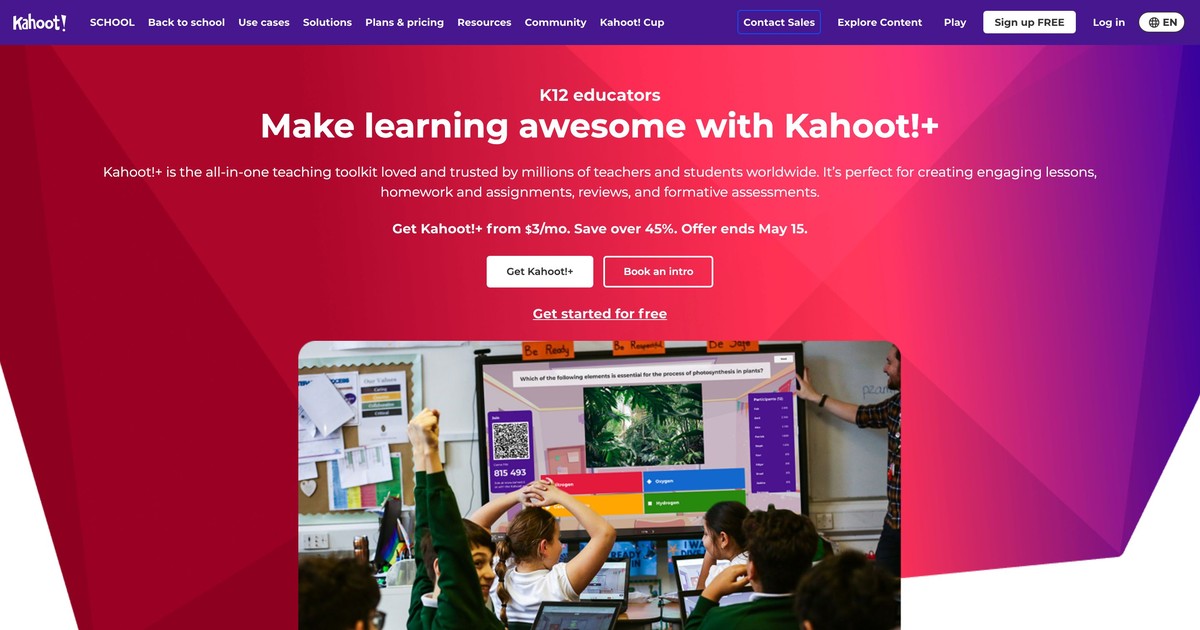
Kahoot! is a popular classroom quiz platform. Teachers create multiple-choice question sets; students join a live game with a shared PIN and compete on a shared leaderboard. It supports images and videos in questions, discussion prompts, and team modes.
Kahoot! is fast to set up and works in any browser. Its limitation is format: it is primarily a multiple-choice quiz tool and does not support open-ended responses or collaborative slide formats. Note that the free plan is capped at 10 players per session.
Best for: Quick review quizzes, classroom warmups, trivia-style competitions.
3. Quizlet
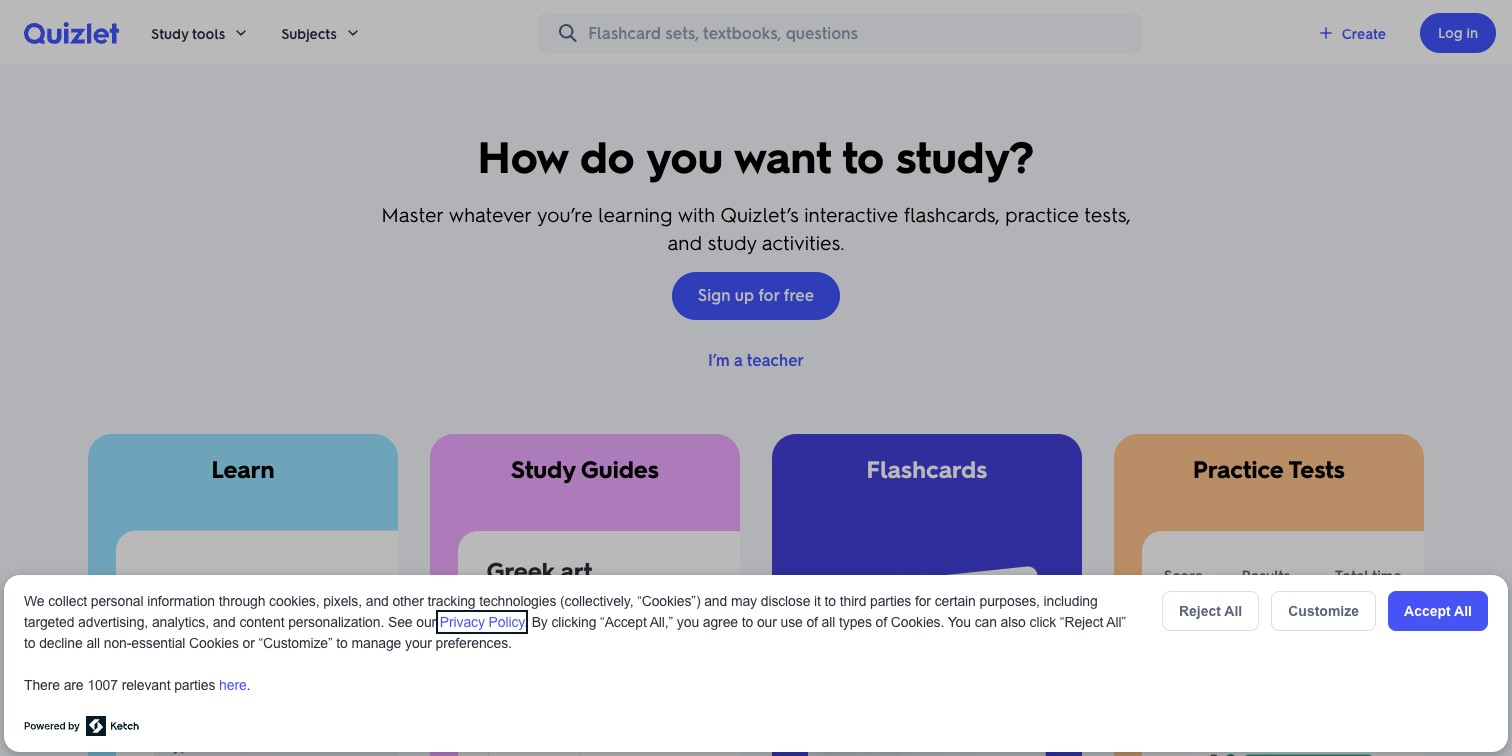
Pricing: Free for core features. Quizlet Plus at $35.99/year.
Quizlet specializes in vocabulary and flashcard-based learning with built-in game modes: Match (flip cards against a timer), Gravity (type answers before asteroids land), and Blast (a team-based quiz). It supports 20+ languages and is widely used in language learning and memorization-heavy subjects.
Best for: Vocabulary, language learning, fact memorization.
4. Duolingo
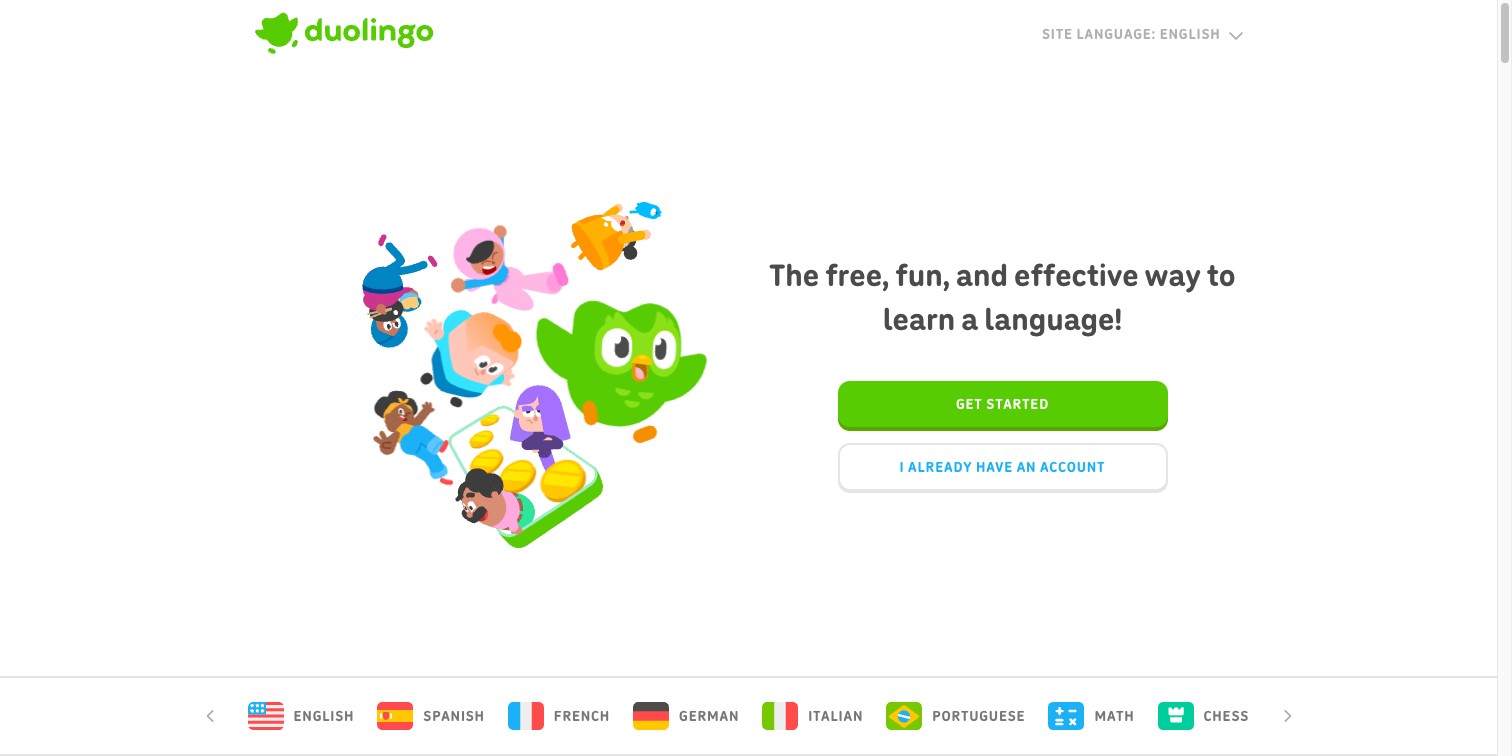
Pricing: Free. Super Duolingo at $83.99/year, or $12.99/month billed monthly.
Duolingo is a well-known gamified language-learning app. It uses streak tracking, XP points, league leaderboards, and heart systems to drive daily practice. The mobile-first design and short lesson format make it effective for habit formation.
Best for: Self-paced language learning, daily practice habits.
5. Khan Academy
Pricing: Free for all content.
Khan Academy covers math, science, history, computing, and more with exercise-based mastery progression. Students earn energy points and badges as they complete exercises, and the platform tracks mastery level per skill. It has dedicated teacher and parent dashboards.
Best for: K-12 supplemental learning, homeschooling, subject mastery tracking.
6. CodeCombat
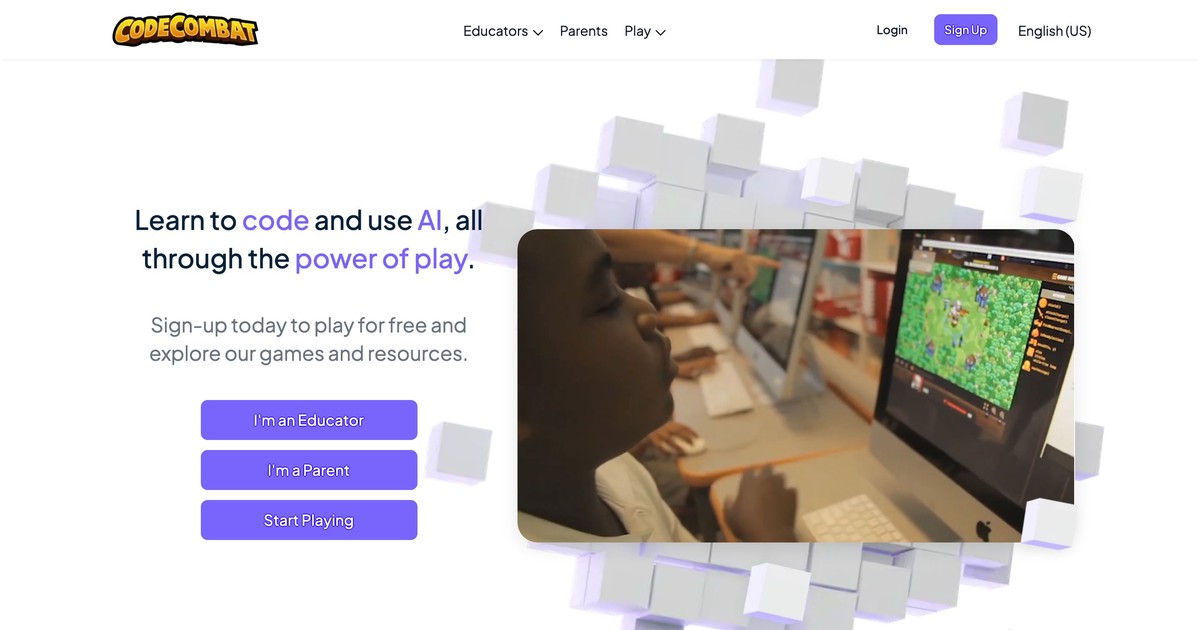
Pricing: Free for core levels. $9.99/month for full access.
CodeCombat teaches programming through a role-playing game (RPG). Students write real code to move characters, solve puzzles, and progress through levels. It supports multiple languages including Python, JavaScript, and CoffeeScript, and targets learners aged 9 and up.
Best for: Coding education for ages 9 and up, CS class supplementation.
7. Memrise
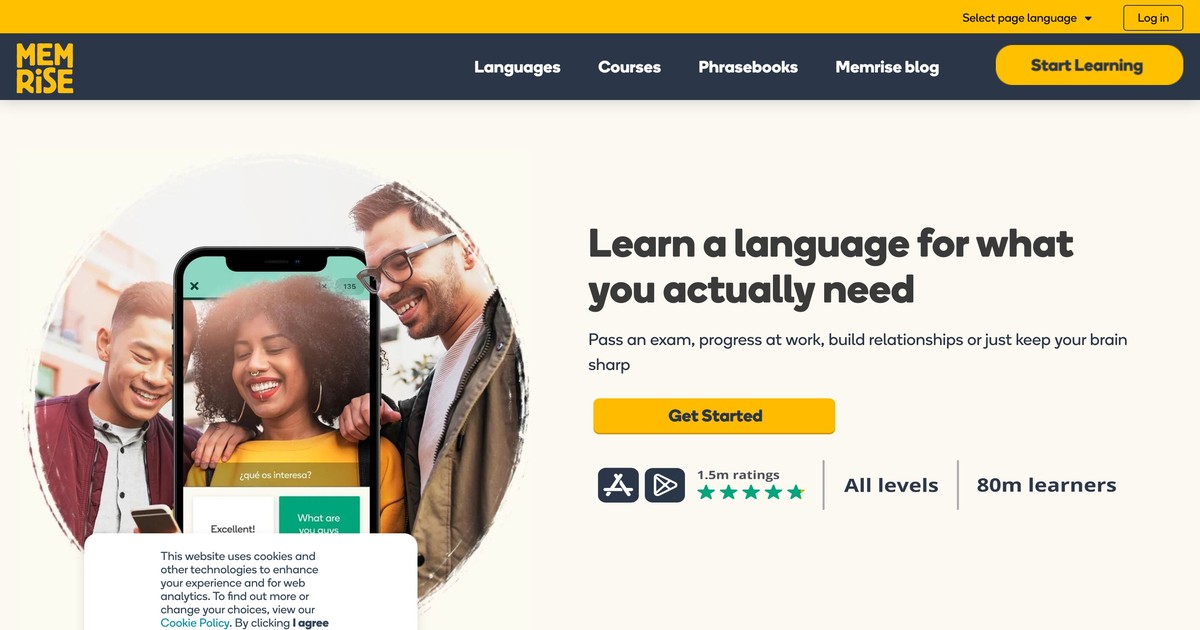
Pricing: Free for core features. Memrise Pro from $24.99/month, or $89.99/year.
Memrise is a language learning platform built on spaced repetition and memory science. It uses video clips of native speakers, mnemonic-style memory hooks, and streak challenges to help learners build vocabulary in context. It supports 20+ languages and suits self-directed learners who want a more narrative experience than pure flashcard drilling.
Best for: Language learning, vocabulary building, self-paced study.
8. ClassDojo
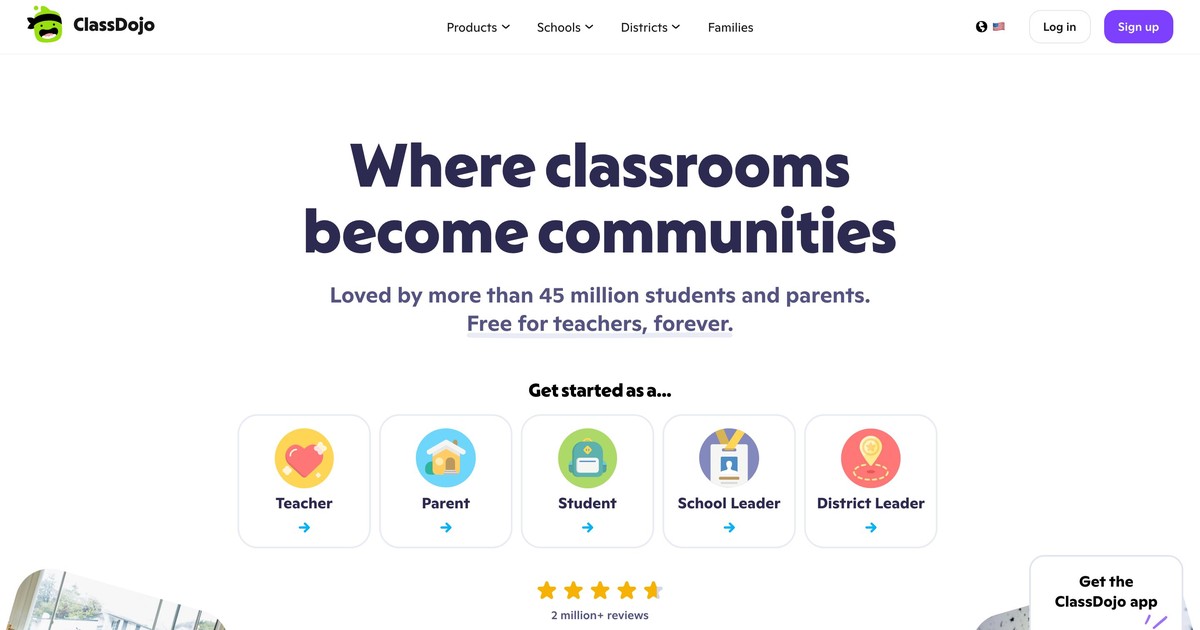
Pricing: Free for teachers, students, and families. ClassDojo Plus at $15.49/month or $109.99/year.
ClassDojo is a classroom management and communication platform with a light gamification layer: teachers award and remove points for student behaviors in real time, visible on a class display. Students build portfolios of their work, visible to parents. It is not a quiz tool but a behavior and engagement system.
Best for: Elementary classroom management, parent-teacher communication.
9. Blooket
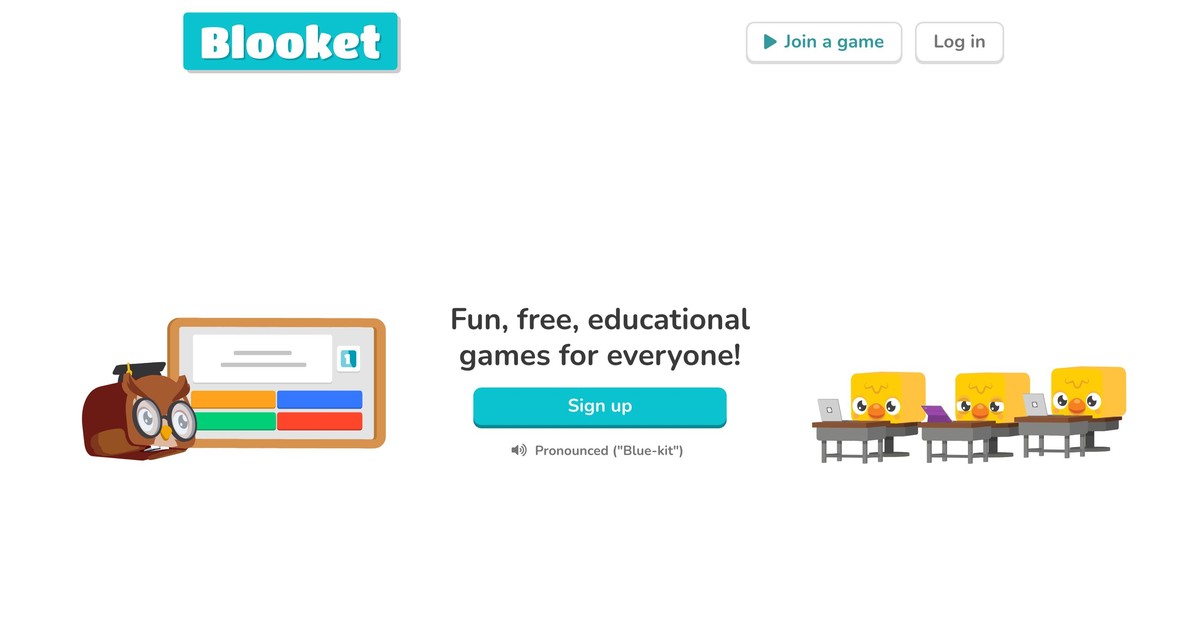
Pricing: Free with a 60-player limit. Plus plan (up to 300 players) at $4.99/month, billed annually.
Blooket is a K-12 game platform where teachers create question sets and students compete inside a choice of game modes: Tower Defense, Gold Quest, Café, Factory, and more. Unlike single-format quiz tools, the same question set can be played in multiple game formats across different sessions, keeping repeat use fresh. Students join with a code and play individually in real time.
Best for: K-12 review games, vocabulary practice, formative assessment in multiple formats.
10. Nearpod
Pricing: Free plan with storage and reporting limits. Gold plan at $159/year per teacher.
Nearpod is an interactive lesson platform for K-12 and higher education. Teachers build slide-based lessons that include live quizzes, polls, open-ended questions, simulations, and virtual field trips. Students join via a code and interact in real time on any device. Where Nearpod adds gamification is through its Time to Climb feature: a ranked, timed quiz competition embedded within a lesson.
Best for: K-12 and higher education, lesson-integrated live quizzes, blended learning.
Best gamification learning platforms for businesses
These platforms are designed for teams, L&D departments, and enterprise training programs.
11. TalentLMS
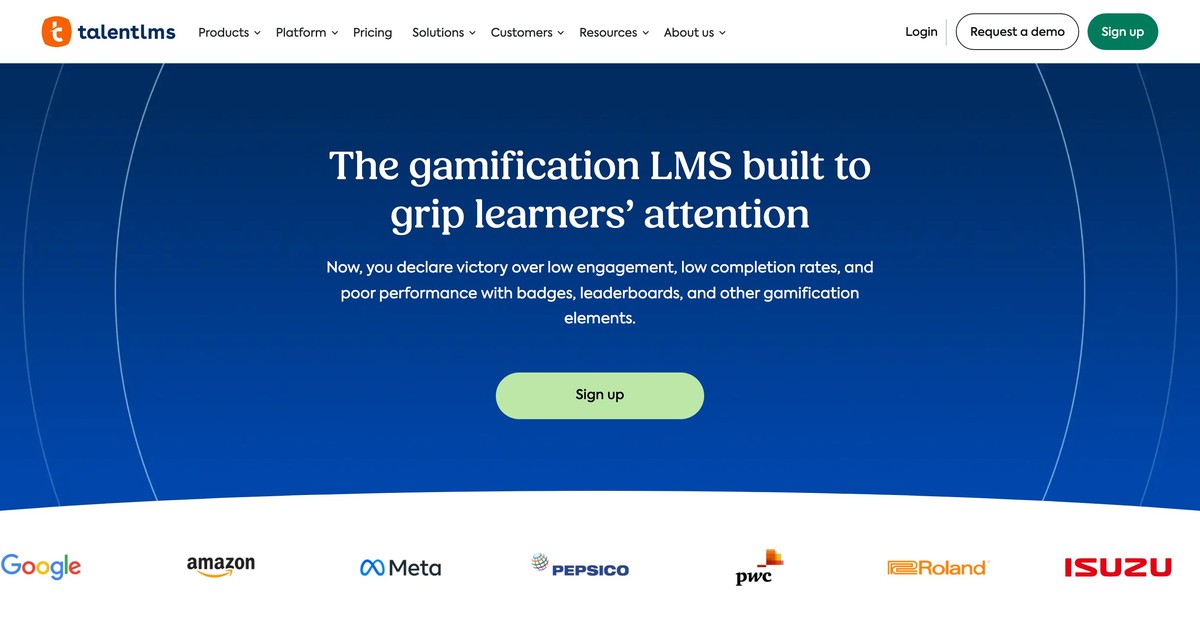
Pricing: Free plan for up to 5 users and 10 courses. Paid plans (Core, up to 100 users) from $119/month, billed annually.
TalentLMS is a cloud-based LMS with a strong gamification module: points, badges, leaderboards, levels, and rewards are built into the platform alongside course creation, SCORM support, and completion certificates. It is one of the more approachable enterprise options for mid-sized businesses.
Best for: SMB and mid-market L&D teams, compliance training, onboarding.
12. Docebo
Pricing: Custom pricing. Enterprise contracts typically start around $25,000/year, with larger organizations often paying well above that.
Docebo is an AI-powered learning suite for large organizations. It includes a gamification engine, a content marketplace, social learning features, and deep analytics for measuring training ROI. Not suited to small teams or individual educators.
Best for: Large enterprise L&D programs, global training rollouts.
13. Seesaw
Pricing: Free for teachers, capped at 1 active class and 35 students. School and district plans available from around $2,500/year.
Seesaw is a digital portfolio and assignment platform used widely in K-12 schools. Teachers assign activities; students respond with photos, drawings, videos, or text, and build a portfolio of their work that families can view. Gamification is light: students earn badges for completing activities and teachers track participation. It is more of an engagement and portfolio tool than a competitive quiz platform.
Best for: K-12 schools, district-wide deployments, portfolio-based learning.
14. Code of Talent
Pricing: From €7.99/user/month for starter plans.
Code of Talent is a mobile learning platform that has broadened from pure corporate training into customer-experience software for multi-location brands, while keeping its gamified microlearning core. It delivers personalized e-learning content in short, gamified modules with built-in peer feedback and messaging. Learners complete micro-lessons on mobile, on their own schedule.
Best for: Field teams, mobile-first corporate training, peer learning programs.
15. Mambo.IO
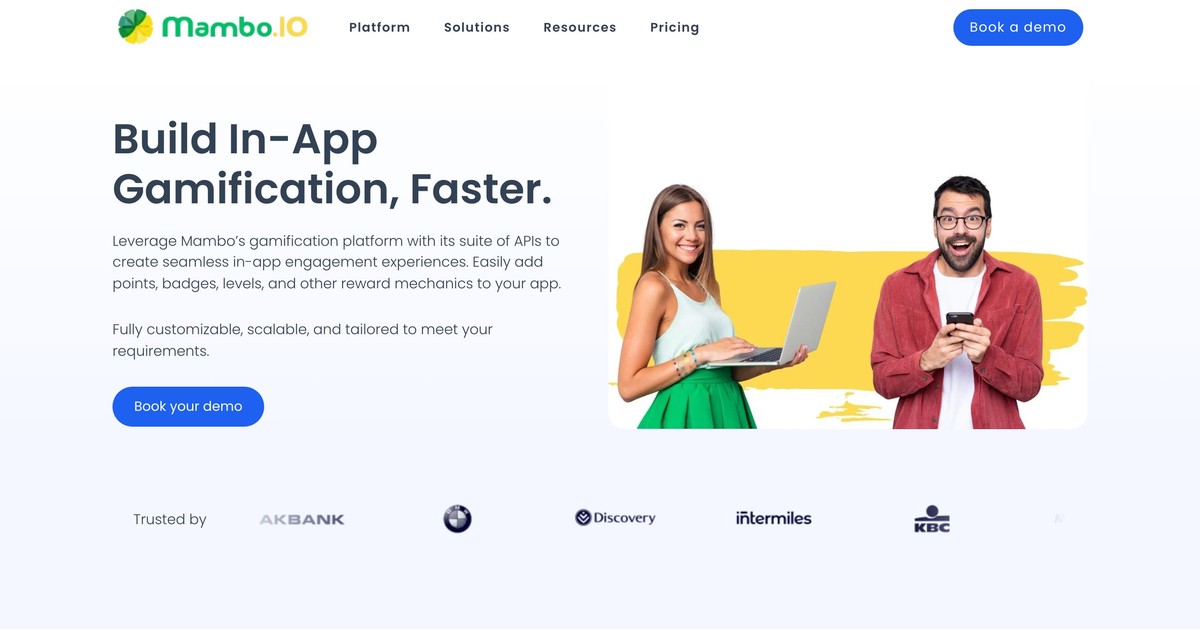
Pricing: Custom pricing.
Mambo.IO is a gamification API and engagement platform for businesses that want to build custom gamification into existing tools (LMS, HR platforms, apps). Features include activity streams, points, badges, leaderboards, and detailed analytics. It is a platform for developers and organizations building their own gamified experiences, not an out-of-the-box learning tool.
Best for: Engineering teams, custom gamification builds, enterprise HR platforms.
Get started with AhaSlides
For educators and trainers looking to gamify live sessions without a steep learning curve, AhaSlides is the quickest path from setup to engagement. Create a free account, pick a template, and run your first live quiz with a leaderboard in under five minutes.
It works for in-person classrooms, hybrid sessions, and remote teams. Students and participants need only a browser, no app, no account.
Frequently asked questions
What is a gamification learning platform?
A gamification learning platform applies game mechanics (points, badges, leaderboards, challenges, and rewards) to educational content or workplace training. The goal is to increase engagement, motivation, and knowledge retention.
Which gamification platform is best for teachers?
AhaSlides and Kahoot! are both popular classroom options. AhaSlides supports more question types (polls, word clouds, open-ended, rating scales) in addition to scored quizzes. Kahoot! is faster to set up for simple multiple-choice quiz games.
Are gamification learning platforms free?
Most of the platforms in this list offer free tiers. AhaSlides, Kahoot!, Khan Academy, ClassDojo, and Blooket all have free plans with enough features for classroom use. Enterprise tools like Docebo and Mambo.IO are priced for organizations.
How does gamification improve learning?
Game mechanics make progress visible and achievement tangible. Immediate feedback (scores, correct answers, level-ups) helps learners correct mistakes in the moment. Competition and rewards activate motivation systems that passive instruction does not. For more detail, see our guide to game-based learning.
Sources
[1] eLearning Industry: Gamification statistics and research on engagement and retention impact (elearningindustry.com)