



A good work party gives people a reason to turn up, talk to colleagues they rarely see and leave feeling the year meant something. The activities make the difference.
Here are 20 work Christmas party ideas, which also work as company or year-end party ideas: 10 activities, 5 office Christmas ideas and 5 themes. Each has a time, a cost, steps and a remote or hybrid tip. If your whole team is remote, our virtual Christmas party ideas go further on online formats.
Updated October 2026. Prices and statistics were checked against the sources at the end.
Why work Christmas and year-end parties matter
A year-end event does three jobs at once.
- It recognises the people who did the work. Recognition is scarce: in an October 2025 survey of 2,500 employees and 1,500 HR professionals across eight countries, the Achievers Workforce Institute found that just 25% of employees feel appreciated and engaged [1].
- It closes the chapter, so teams start January with more momentum.
- It is a low-pressure moment for leaders to share what is next. To look back on the year first, our year-end review examples give you the words.
20 work Christmas party ideas at a glance
Group sizes and costs are typical ranges, and times are planning estimates.
| Idea | Best for | Office or remote | Time | Cost |
|---|---|---|---|---|
| 1. Live quiz | Mixed teams | Any setting | 20 to 30 min | Free |
| 2. Board game corner | Groups of up to 30 | In person | 30 to 60 min | Low cost |
| 3. Escape room | Mixed teams of 4 to 8 | In person or online | About 1 hour | $28 to $38 each (US) |
| 4. Scavenger hunt | Any size, as a warm-up | Any setting | 20 to 30 min | Free |
| 5. Awards ceremony | Recognising individuals | Any setting | 20 to 30 min | Free |
| 6. Talent show | Groups of up to 50 | Any setting | 30 to 45 min | Free |
| 7. Tasting session | Groups of up to 30 | In person or remote | 30 to 45 min | Low cost |
| 8. Mocktail or cocktail class | Groups of up to 30 | In person or remote | 45 to 60 min | Medium cost |
| 9. Token auction | Any size | Any setting | 20 to 30 min | Free |
| 10. Painting challenge | Groups of up to 40 | In person or remote | 30 to 45 min | Low cost |
| 11. Christmas jumper showdown | Any size | Any setting | 15 to 20 min | Free |
| 12. Guess the colleague | Any size | Any setting | 10 to 15 min | Free |
| 13. Emoji decoding | Any size | Any setting | About 10 min | Free |
| 14. Festive would you rather | Any size | Any setting | About 10 min | Free |
| 15. Secret Santa reveal | Groups of up to 50 | Any setting | 20 to 30 min | Low cost |
| 16. Charity night | Purpose-led teams | In person or hybrid | Afternoon or evening | Low cost |
| 17. Office Olympics | Competitive teams | In person | 60 to 90 min | Low cost |
| 18. Heroes and villains | Costume lovers | In person or hybrid | An evening | Low cost |
| 19. Masquerade ball | Elegant, formal events | In person | An evening | Medium cost |
| 20. Victorian Christmas | Smaller teams | In person | About 2 hours | Low to medium cost |
10 work party activities for any year-end event
1. Live quiz
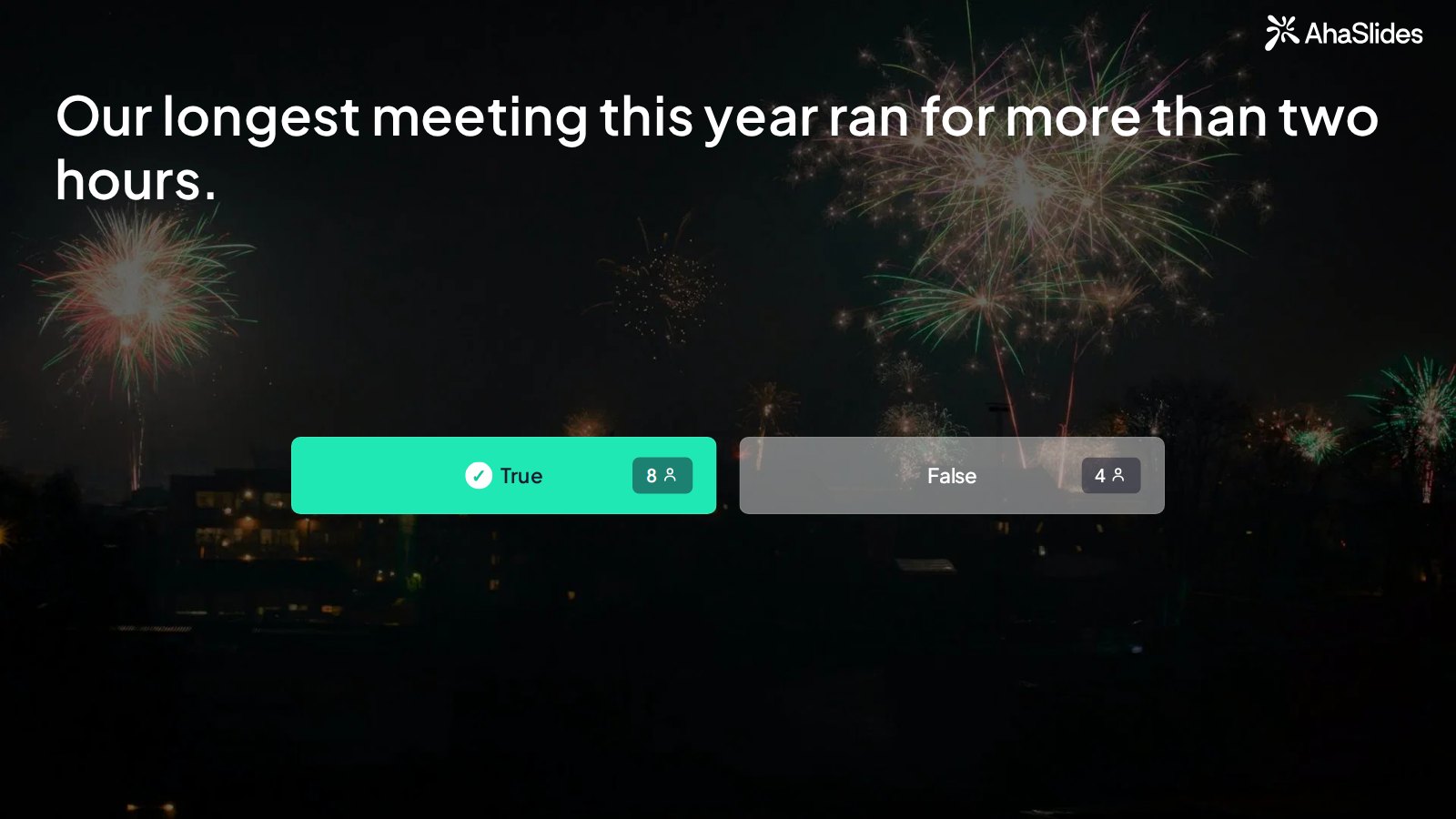
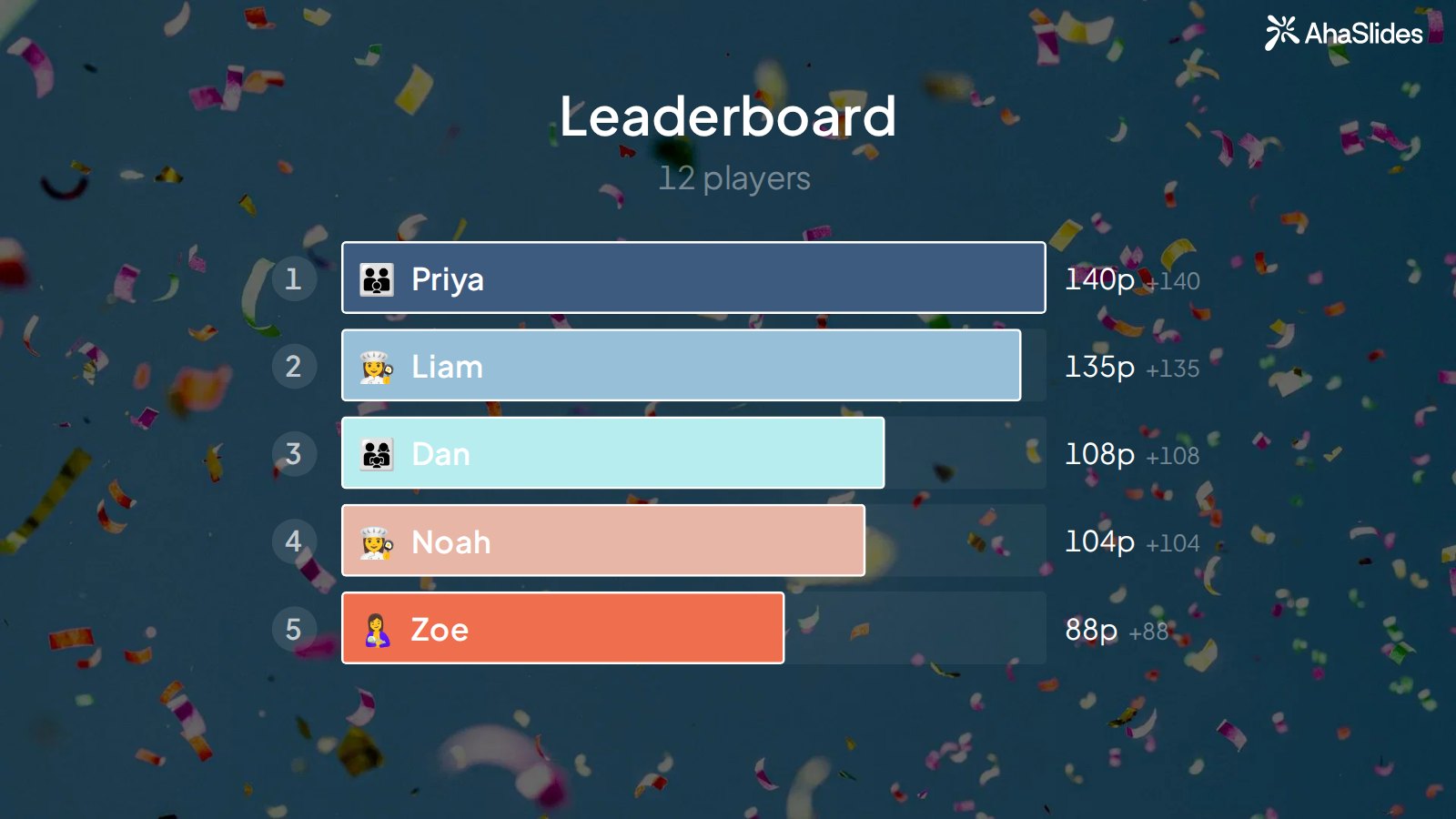
A company quiz is competitive without being physical and gives quieter people an equal voice. Good year-end rounds: company milestones, team in-jokes, pop culture from the year, a “who in the office” round and a fast True or False round of company myths. Everyone joins by scanning a QR code, with nothing to download. For ready-made rounds, use our family Christmas quiz, Christmas music quiz, Christmas movie quiz or Christmas picture quiz.

- Suits: Mixed teams of any size
- Time: 20 to 30 minutes
- Cost: Free
How to run it: Add a QR join slide and 8 to 10 questions, and finish on the leaderboard.
Remote or hybrid tip: Remote players join with the same code.
2. Board game corner
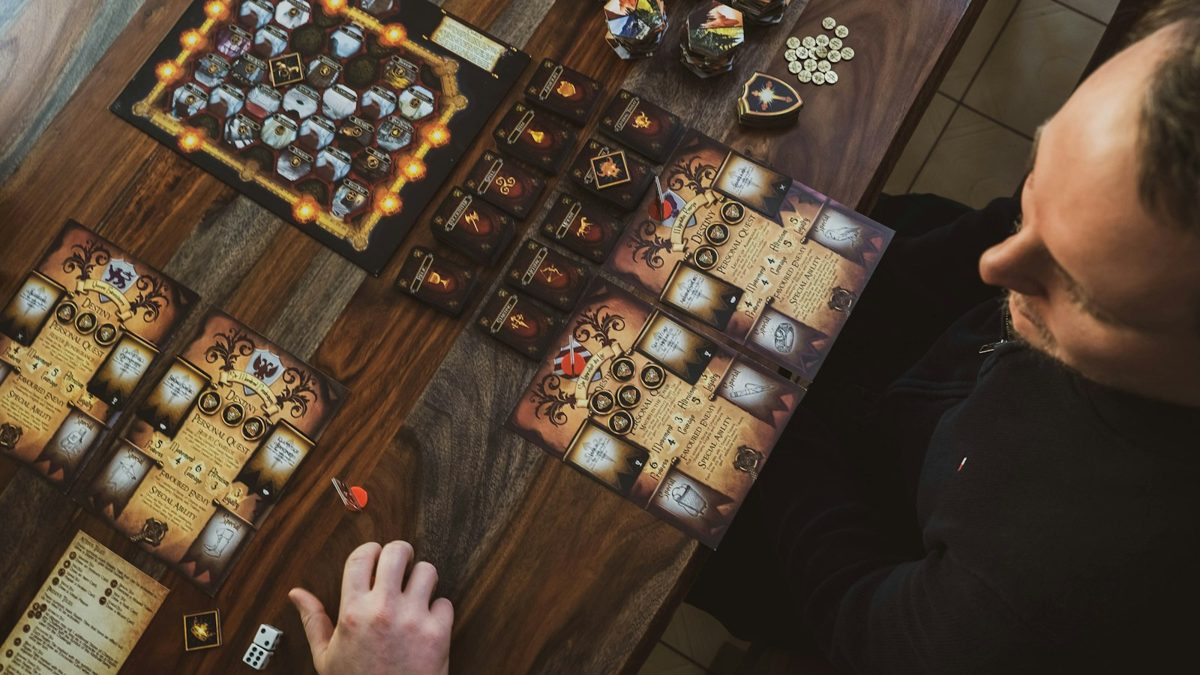
Set up a corner with three to five games of different complexity. Quick party games such as Codenames suit people who want fast interaction, and heavier games such as Catan suit smaller groups settling in for an hour.
- Suits: Groups of up to 30
- Time: 30 to 60 minutes
- Cost: Low cost
How to run it: Give each table a one-line rules card.
Remote or hybrid tip: Keep one physical table and run a phone-based online game for remote colleagues, such as a Jackbox party pack.
3. Escape room
Escape rooms bond mixed departments through a shared goal under time pressure. In the US, a physical room typically costs $28 to $38 per person, and most groups of 4 to 8 pay $120 to $280 per room, according to Breakout Games [3].

- Suits: Mixed teams of 4 to 8
- Time: About 1 hour
- Cost: $28 to $38 per person (US)
How to run it: Book early, as December slots fill up. Mix departments in each team.
Remote or hybrid tip: An online escape room works; check the provider is still trading before you book.
4. Scavenger hunt
A scavenger hunt is a good warm-up while people are still arriving. Teams of three or four complete challenges against a time limit: photo-based (a selfie with someone who joined this year), knowledge-based (a teammate's hometown) or physical (build something from office supplies). Photo Share on AhaSlides collects the proof live on the big screen.

- Suits: Any size, as a warm-up
- Time: 20 to 30 minutes
- Cost: Free
How to run it: Write 8 to 10 challenges. Teams send photos to a Photo Share slide; download them from the report (Slides tab, then Download photos) as a keepsake album.
Remote or hybrid tip: Remote teams play the same hunt with screen-based tasks.
5. Awards ceremony
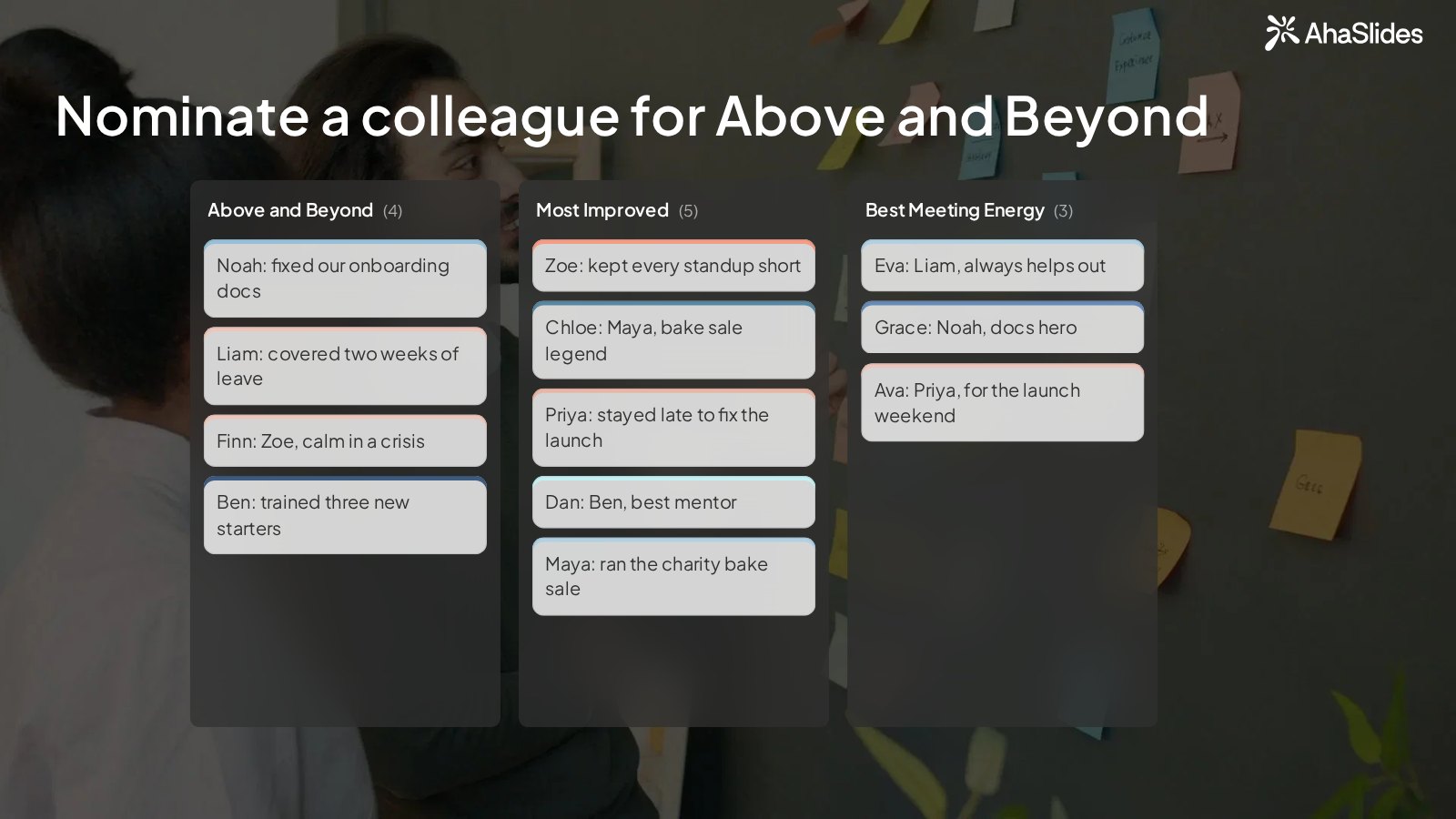
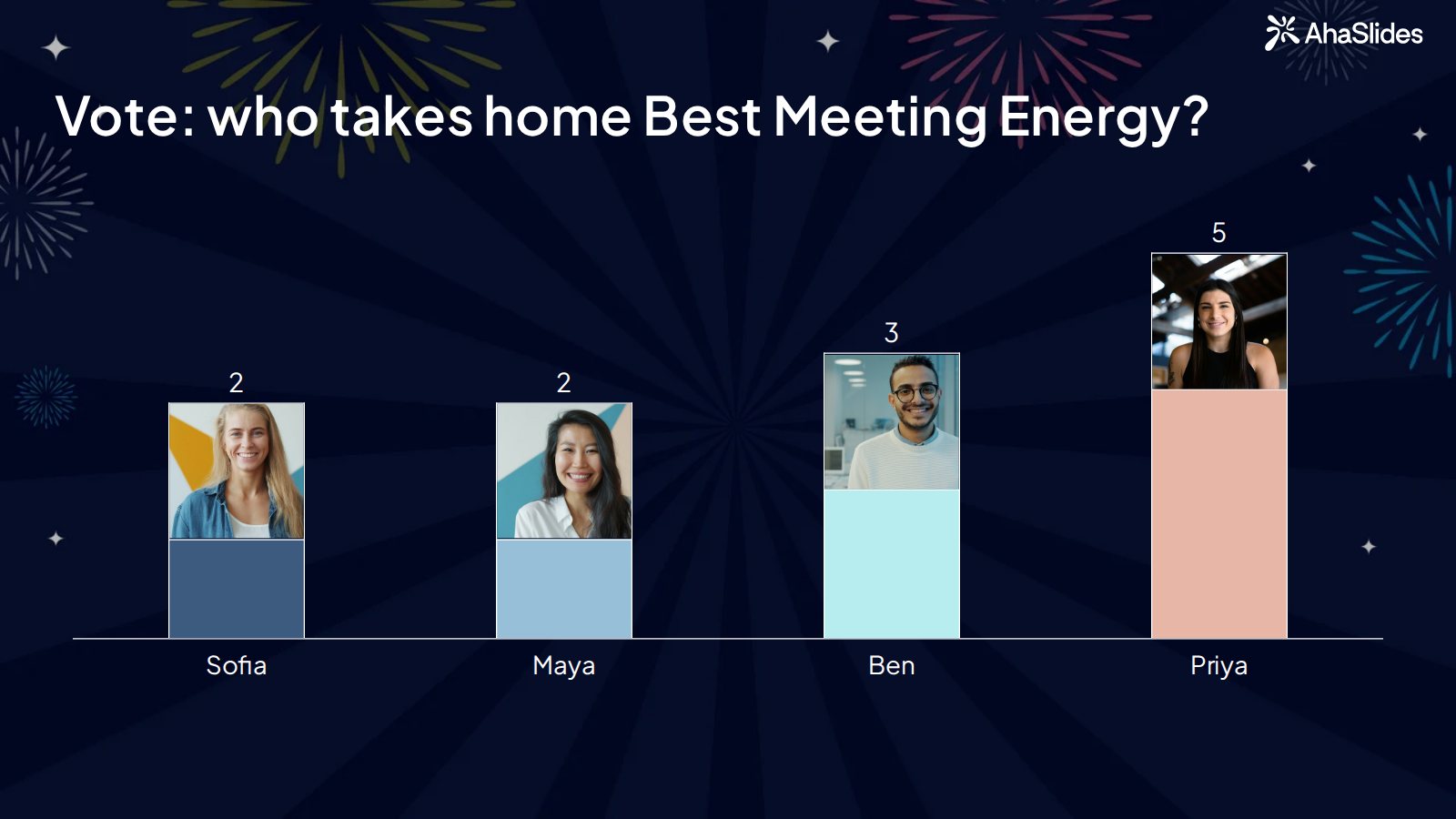
An awards ceremony is one of the most reliable ways to make individuals feel seen. Categories that land well: Above and Beyond, Most Improved, Best Meeting Energy and Calming Presence. Keep acceptance speeches optional and to one minute. For more categories, see our guide to funny awards for employees.
- Suits: Any size, to recognise individuals
- Time: 20 to 30 minutes
- Cost: Free
How to run it: Collect nominations on an idea board slide. Run one poll slide per award, then reveal the winners.
Remote or hybrid tip: Remote guests vote from their phones. The Free plan allows up to 3 poll questions per presentation, so keep votes to a few slides or upgrade for the night.
6. Talent show
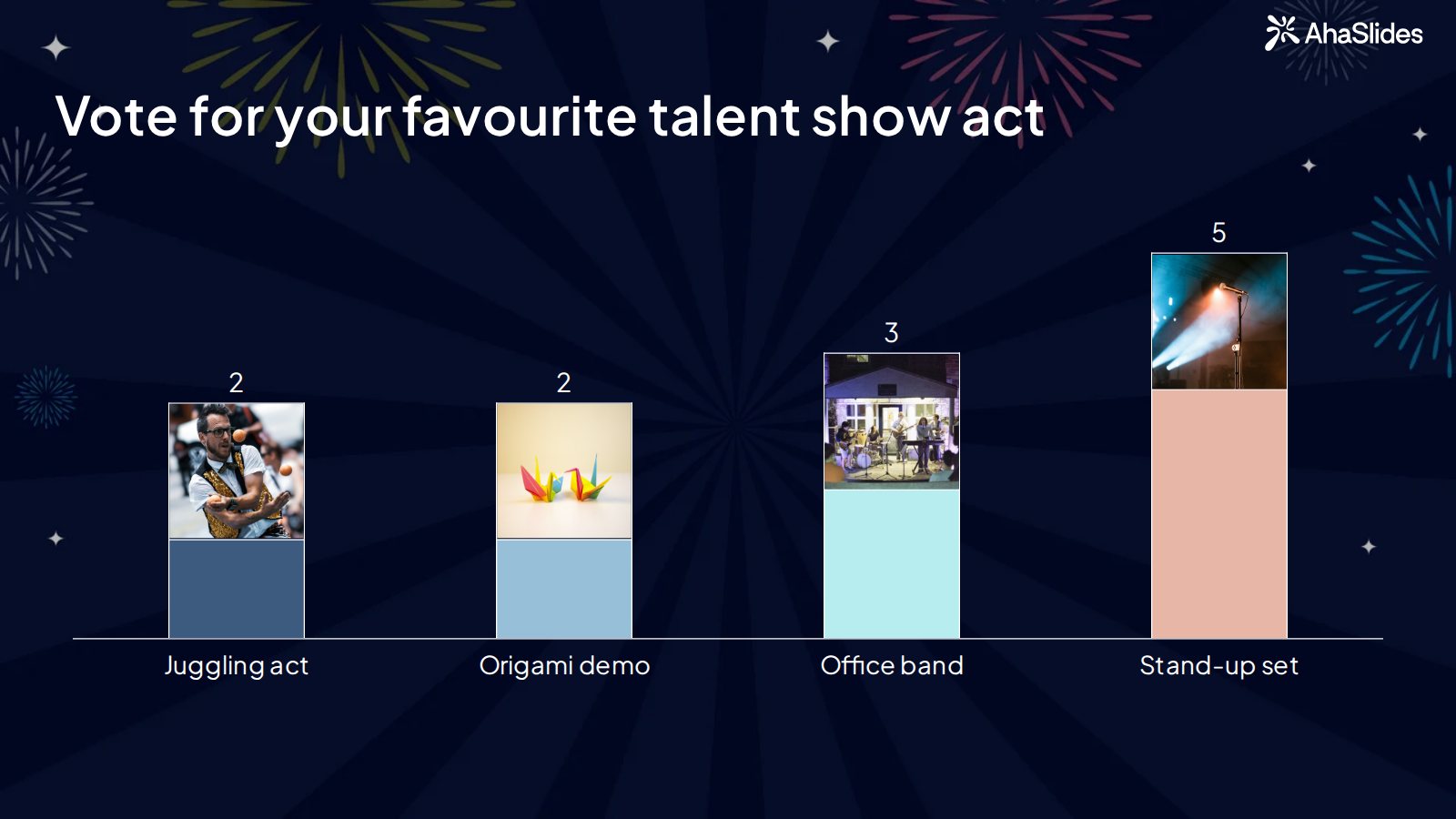
A voluntary talent show shows a different side of your colleagues: a band, a stand-up set, an origami demonstration and a juggling act in one line-up tell you more than a year of meetings. Keep each act to two to five minutes.
- Suits: Groups of up to 50
- Time: 30 to 45 minutes
- Cost: Free
How to run it: Set the running order, then let the audience vote in a poll.
Remote or hybrid tip: Pre-record acts or run it live over video.
7. Tasting session
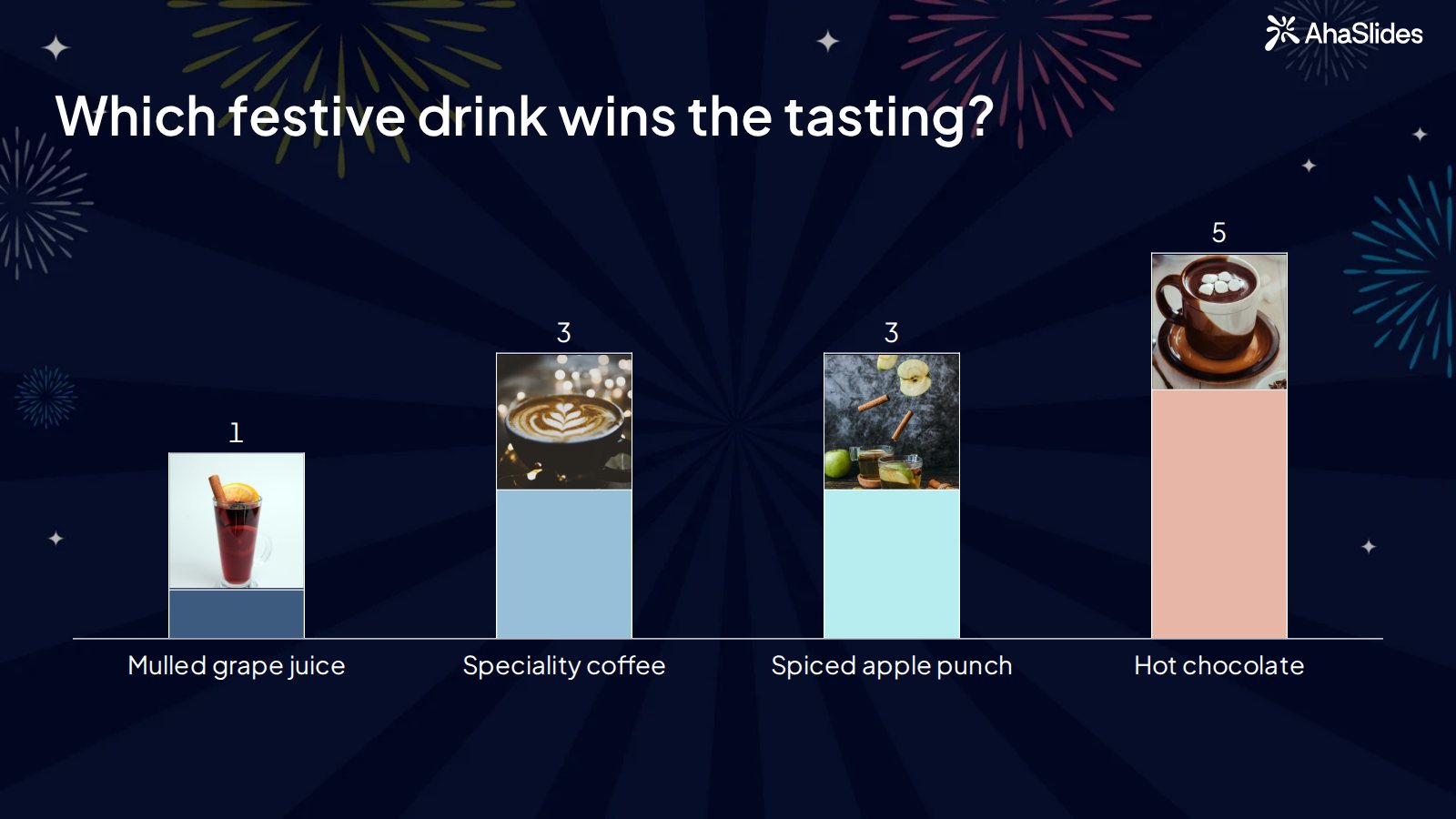
A guided tasting suits a team that has earned a sit-down: someone walks through four to six options while people talk to each other for once. Make alcohol-free the default (speciality coffee, tea, hot chocolate or festive treats), with wine or beer as an optional extra.
- Suits: Groups of up to 30
- Time: 30 to 45 minutes
- Cost: Low cost
How to run it: Run a short poll after each round to pick the favourite.
Remote or hybrid tip: Ask everyone to buy the same items in advance and run it over video.
8. Mocktail or cocktail class
A making class is more hands-on than tasting. A bartender teaches two or three recipes, and each person makes and drinks them. Plan 45 to 60 minutes and pick drinks with few ingredients so the class stays on time.

- Suits: Groups of up to 30
- Time: 45 to 60 minutes
- Cost: Medium cost
How to run it: Give everyone the same two or three recipes. Ask about allergies and keep a non-drinking track in every round.
Remote or hybrid tip: Send the shopping list in advance, demonstrate each step slowly on camera and poll for the favourite after each drink.
9. Token auction
Give each person 100 tokens, then let them bid on items in a live auction. Items can be practical (an extra day of annual leave, a month of Fridays working from home, a reserved parking space) or novelty (the manager does your coffee run for a week, or you choose the next team lunch).
- Suits: Any size
- Time: 20 to 30 minutes
- Cost: Free
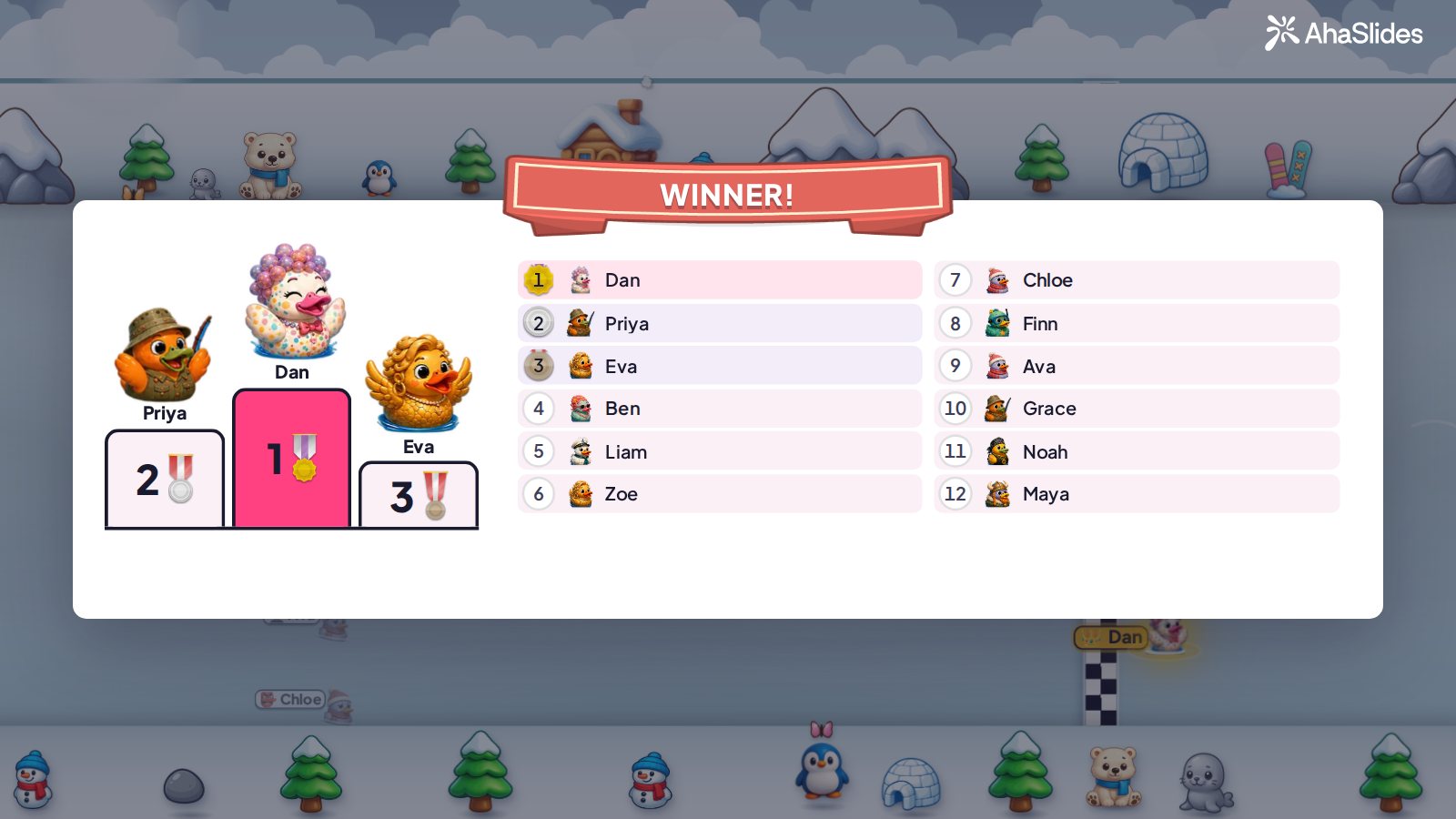
How to run it: Auction each item. For a raffle the same night, add a Duck Race slide: everyone who joins becomes a duck.
Remote or hybrid tip: Remote colleagues type bids in the call chat.
10. Painting challenge
Give everyone a reference image, basic supplies and 30 to 45 minutes, then display the paintings and vote on categories: most accurate, most abstract, best use of colour. Keep the brief light and silly, such as “paint our office as a seasonal postcard” or “draw your team as animals”. Seat people in teams of four.

- Suits: Groups of up to 40
- Time: 30 to 45 minutes
- Cost: Low cost
How to run it: Hand out the brief and supplies, then display the paintings and vote.
Remote or hybrid tip: Remote teams paint at home on camera and share a photo. For a no-supplies version, use a Draw Answer slide so everyone sketches on their phone, and add a poll slide to pick the winner, as Draw Answer has no voting.
5 office Christmas party ideas (with a remote option)
These five ideas add a festive touch without needing a budget. All run from phones, so remote colleagues can join in.

11. Christmas jumper showdown
Everyone sends a photo of their festive jumper (or desk decorations) through a Photo Share slide, then the room votes in a poll for categories such as Most Festive, Best Pun and Most Likely to Be Worn Ironically.

- Suits: Any size
- Time: 15 to 20 minutes
- Cost: Free
How to run it: Open a Photo Share slide for jumper photos, then run a poll for each category.
Remote or hybrid tip: Remote colleagues send a photo from home.
12. Guess the colleague
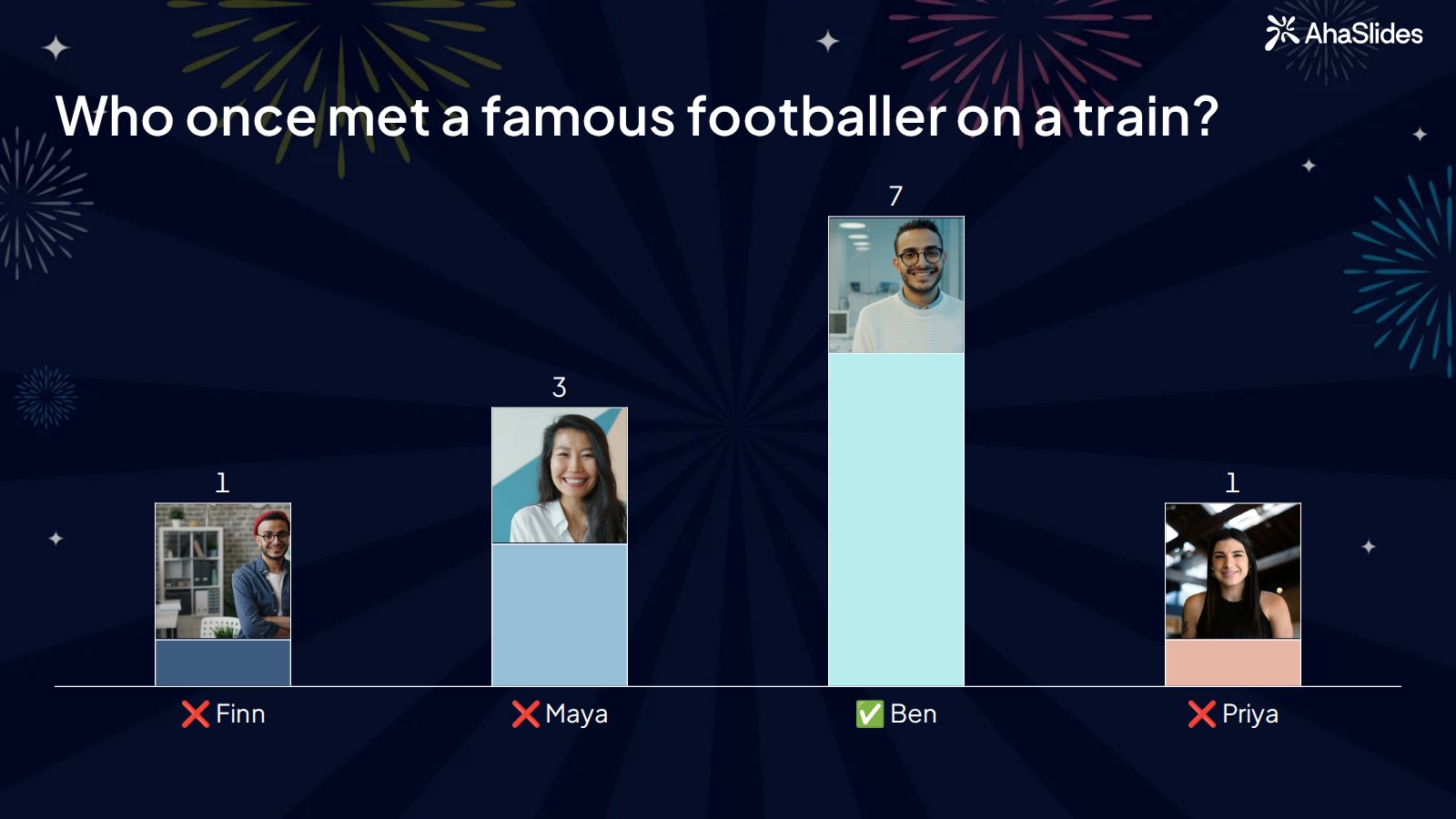
Ask colleagues in advance for a baby photo or a fun fact, such as “I once met a famous footballer on a train”. Show each as a multiple-choice question and let the room guess who it is.
- Suits: Any size
- Time: 10 to 15 minutes
- Cost: Free
How to run it: Add one multiple-choice question per photo or fact.
Remote or hybrid tip: Everyone answers on their phone.
13. Emoji decoding
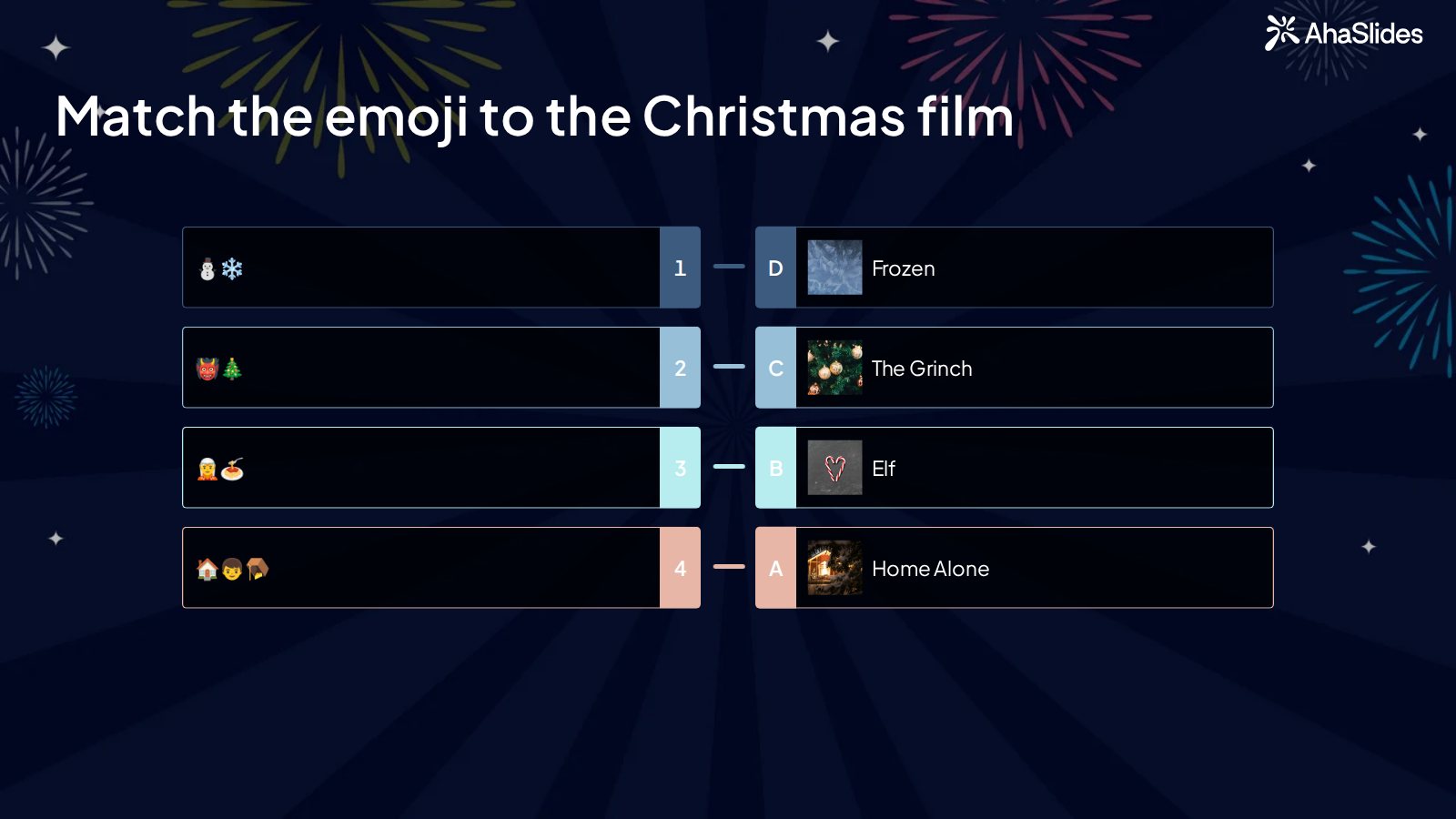
Ask the room to match emoji strings to Christmas films or songs. A match pairs question is ideal: four emoji clues on the left, four titles on the right.
- Suits: Any size
- Time: About 10 minutes
- Cost: Free
How to run it: Add four emoji clues and four titles as one match pairs question.
Remote or hybrid tip: Match pairs runs on phones, so remote guests play too.
14. Festive would you rather
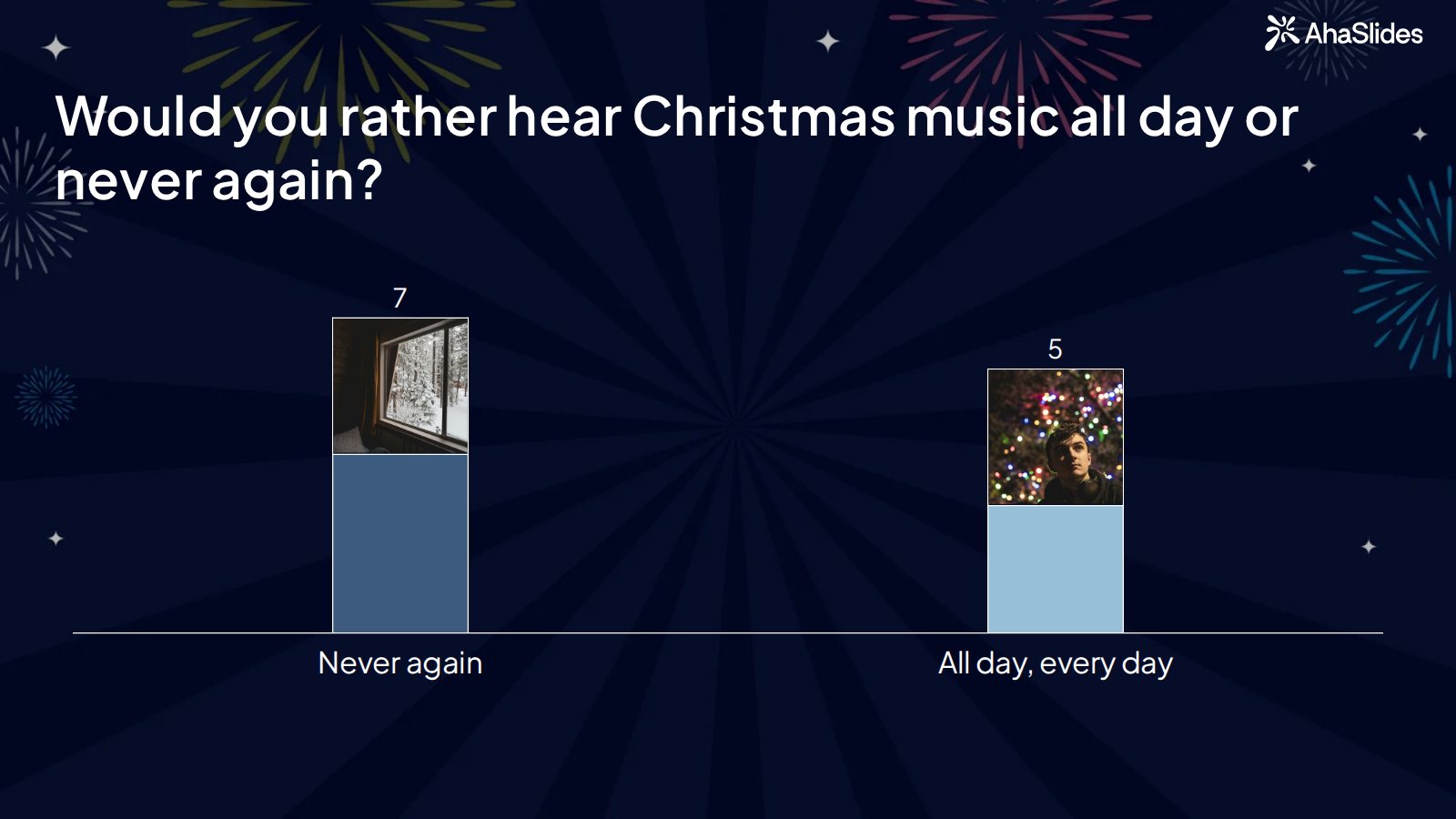
Run quick polls such as “Would you rather have Christmas music stuck in your head all day or never hear it again?” Keep the questions work-friendly and ask people to explain their vote to their neighbour.
- Suits: Any size
- Time: About 10 minutes
- Cost: Free
How to run it: Add one poll slide for each of five or six festive dilemmas.
Remote or hybrid tip: Remote guests explain their vote in the chat.
15. Secret Santa reveal
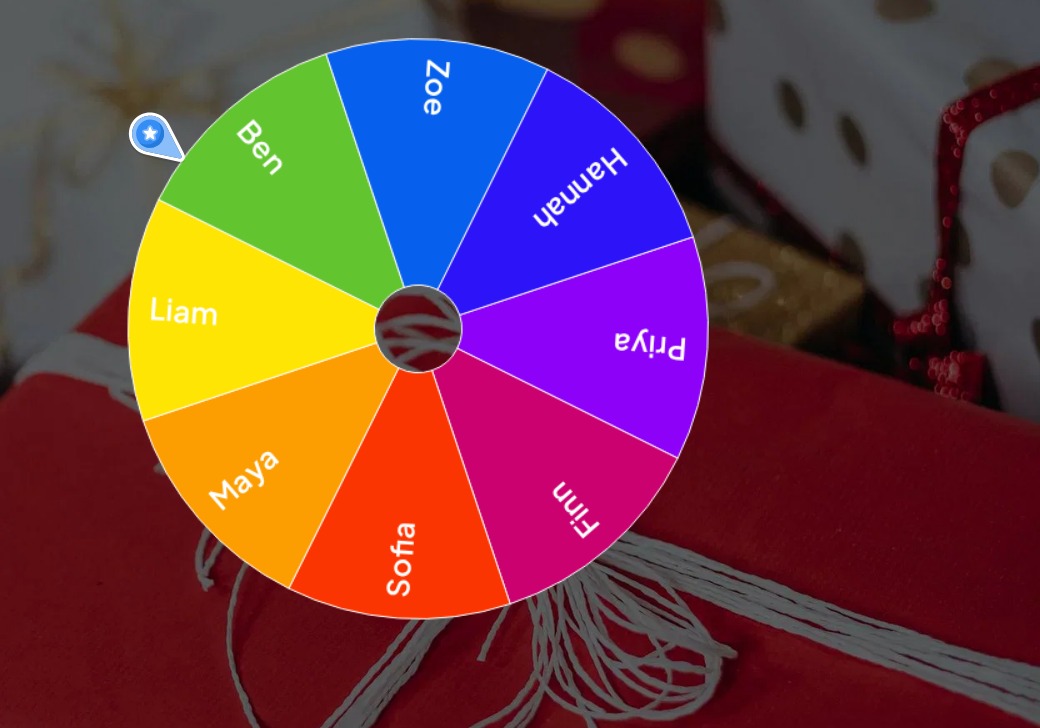
If your team does Secret Santa, make the reveal a moment. Put every name on a spinner wheel slide and spin to decide who opens a gift next. See our spinner wheel for a free version.
- Suits: Groups of up to 50
- Time: 20 to 30 minutes
- Cost: Low cost
Remote or hybrid tip: Post gifts in advance and open them on camera.
5 company Christmas party themes
A theme makes a party feel like an event.
16. Charity night
Turn the party into a fundraiser. Charge a small entry for activities (auction bids, quiz entry, raffle tickets) and donate the proceeds to a cause the team chooses in advance, or pair an afternoon volunteering shift with an evening party. INTOO lists a volunteer or give-back day among its end-of-year ideas [2].

- Suits: Companies wanting a purpose beyond the office
- Time: An afternoon or evening
- Cost: Low cost
How to run it: Choose the cause, set the entry fee and run the auction or raffle on the night.
Remote or hybrid tip: Run the auction on a call and take donations online.
17. Office Olympics
Country teams compete in low-stakes events through the evening, such as paper aeroplane distance, speed typing or a desk-chair relay, and medals are awarded at the end.

- Suits: Active, competitive teams
- Time: 60 to 90 minutes
- Cost: Low cost
Remote or hybrid tip: Swap in screen-based events such as speed typing.
18. Heroes and villains
Teams take hero or villain identities and compete across the activities for points. It suits a costume contest, a trivia round and a final showdown.

- Suits: Teams that love dressing up
- Time: An evening
- Cost: Low cost
Remote or hybrid tip: Remote players wear a mask or cape on camera.
19. Masquerade ball
A formal, elegant option: hand-held masks, black tie and a structured programme of a drinks reception, dinner, a short awards ceremony and dancing.

- Suits: Companies wanting something elegant
- Time: An evening
- Cost: Medium cost
Remote or hybrid tip: Hybrid guests join the awards by video.
20. Victorian Christmas
Period decorations, high tea and parlour games such as charades and tableaux vivants, with an outfit competition judged on authenticity.

- Suits: Smaller teams who enjoy tea and games
- Time: About 2 hours
- Cost: Low to medium cost
Remote or hybrid tip: Remote guests join the games and outfit vote by video.
Work Christmas party planning checklist
A few things decide whether any year-end party works.
- Timing. Schedule it during work hours if you can. Evenings disadvantage people with childcare duties or long commutes; if one is unavoidable, finish by 9 PM and make attendance optional.
- Inclusivity. Make alcohol-free options the default. Give every activity a way to opt out for people who do not want to perform, compete or be physically involved.
- Recognition. Build in at least one recognition moment. A specific thank-you from a senior leader lands better than a generic “great year, everyone”.
- Hybrid balance. If part of your team is remote, give them the same experience, not a lesser one: separate video breakout rooms with a dedicated host work better than one camera pointed at the office. For more, see our virtual Christmas party ideas, our free virtual party ideas and icebreaker games.
- Feedback. Ask afterwards what worked; our post-event survey questions give you a ready list.
Run your party activities with AhaSlides
AhaSlides runs the quiz, the awards vote and every live poll in one shared session, so remote colleagues see what the room sees. Start with this deck: a QR join slide, a multiple-choice question, a True or False round, a word cloud, a Photo Share jumper wall, an awards vote, an emoji match round, a Duck Race and a leaderboard. Swap in your own company moments.
The Free plan allows up to 50 participants, 5 quiz questions and 3 poll questions per presentation. The starter deck has 3 quiz questions plus a word cloud, Photo Share, poll and Duck Race, so on the Free plan trim it to fit, or use a paid plan for the night.
Work Christmas party ideas: FAQ
What are the best work Christmas party ideas for the office?
A live quiz, an awards ceremony, a jumper showdown and a Secret Santa reveal suit most offices: they are free or low cost and need no special skills.
What are fun work Christmas party activities for adults?
A company quiz, a token auction, a scavenger hunt or a mocktail class. Keep every activity optional.
How do you run a company Christmas party for remote or hybrid teams?
Use phone-based activities such as polls, quizzes and Photo Share, and separate video breakout rooms with a dedicated host. For online-only formats, see our virtual Christmas party ideas.
How much does a work Christmas party activity cost?
Many ideas above are free, and tastings, painting and a Secret Santa reveal cost little. An escape room typically costs $28 to $38 per person in the US [3].
When should a year-end party take place?
During work hours if you can. If an evening is unavoidable, finish by 9 PM and keep attendance optional.
Sources
[1] Achievers Workforce Institute. (2025, 3 December). 2026 Engagement and Retention Report announced. https://www.achievers.com/press/awi-report-us-attrition-and-employees-overlooked-trends/
[2] INTOO. 11 Creative End-of-Year Celebration Ideas for Workplaces. https://www.intoo.com/us/blog/end-of-year-celebration-ideas-at-work/
[3] Breakout Games. (2026, 23 July). How much does an escape room cost for a group? https://breakoutgames.com/blog/how-much-does-an-escape-room-cost-for-a-group