Has the conversation gone flat? A good conversational game fixes that fast. It gives everyone a reason to speak, a simple rule to follow and, usually, something to laugh about within the first minute.
Below are 15 conversational games with clear rules: five that work online, five for friends and five for couples. Most need nothing but your voices. A few work even better with phones and a live poll, which is how we run them in our own AhaSlides team calls and workshops.
If you are after ready-made things to talk about rather than games to play, our guide to conversation topics has 140 prompts sorted by setting. This post is about the games themselves.
Why conversational games work
Most people hold back from deeper conversation because they assume others would rather stick to small talk. Research suggests that assumption is usually wrong. Across a dozen experiments, Kardas, Kumar and Epley (2022) found that conversations with strangers felt less awkward and more connecting than people predicted, and that people underestimated how interested their partner would be in a deeper exchange. The Chicago Booth Review has a readable summary.
A game lowers that barrier. The rules give people permission to ask a bolder question or share a funnier story than they would in normal chat, which is the same point the Society for Personality and Social Psychology makes: skipping the small talk tends to pay off.
Conversational games to play online
Friends or teammates far away? These five work on any video call, and just as well round a table.
1. Two Truths and a Lie
Players: 3 or more. Best for: meetings and events where people don't know each other well.
- Each player prepares three statements about themselves: two true, one false.
- They read all three aloud.
- Everyone else votes on which one is the lie.
- The player reveals the answer and tells the story behind the truths.
Crafting a lie that sounds plausible is half the fun, and guessing is harder than it looks: a meta-analysis by Bond and DePaulo (2006) found people sort lies from truths correctly only about 54% of the time. Online, we put each player's three statements on a poll so everyone votes at once. For 50 statement ideas and five variations, see our full guide to Two Truths and a Lie.
2. Fictionary
Players: 4 or more. Best for: word lovers and quick-witted groups.
Also known as Weird Word, and the idea behind the board game Balderdash.
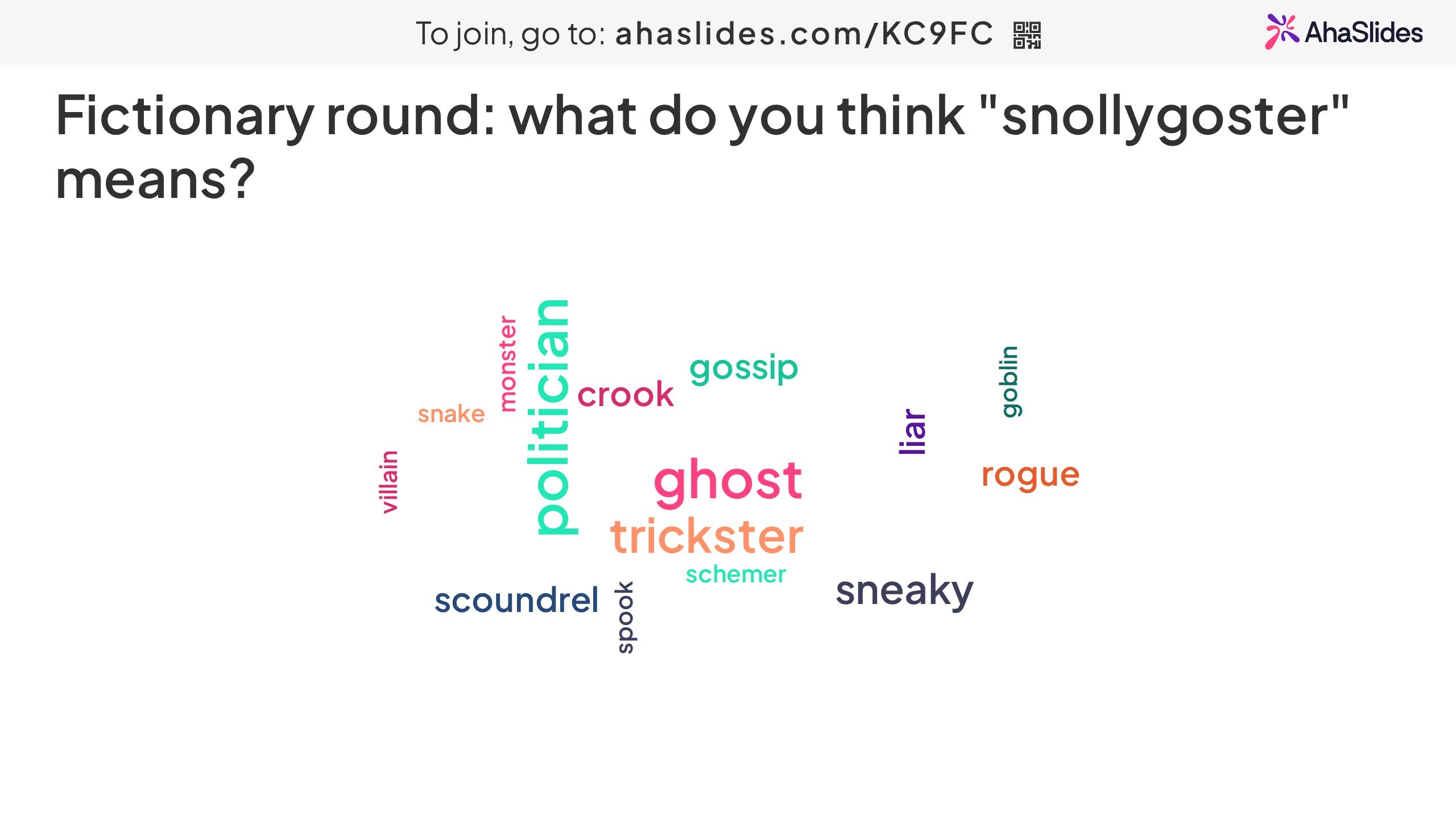
- One player picks an obscure word from a dictionary and says it aloud, without the meaning.
- The picker writes down the real definition. Everyone else writes a made-up definition that sounds convincing.
- The picker reads all the definitions aloud in a random order.
- Everyone votes for the one they think is real, then the picker reveals it.
Scoring: 1 point for picking the real definition, and 1 point every time someone votes for your fake one. The picker scores 3 if nobody finds the real meaning.
3. Just a Minute
Players: 3 or more. Best for: confident talkers and anyone who likes a challenge.
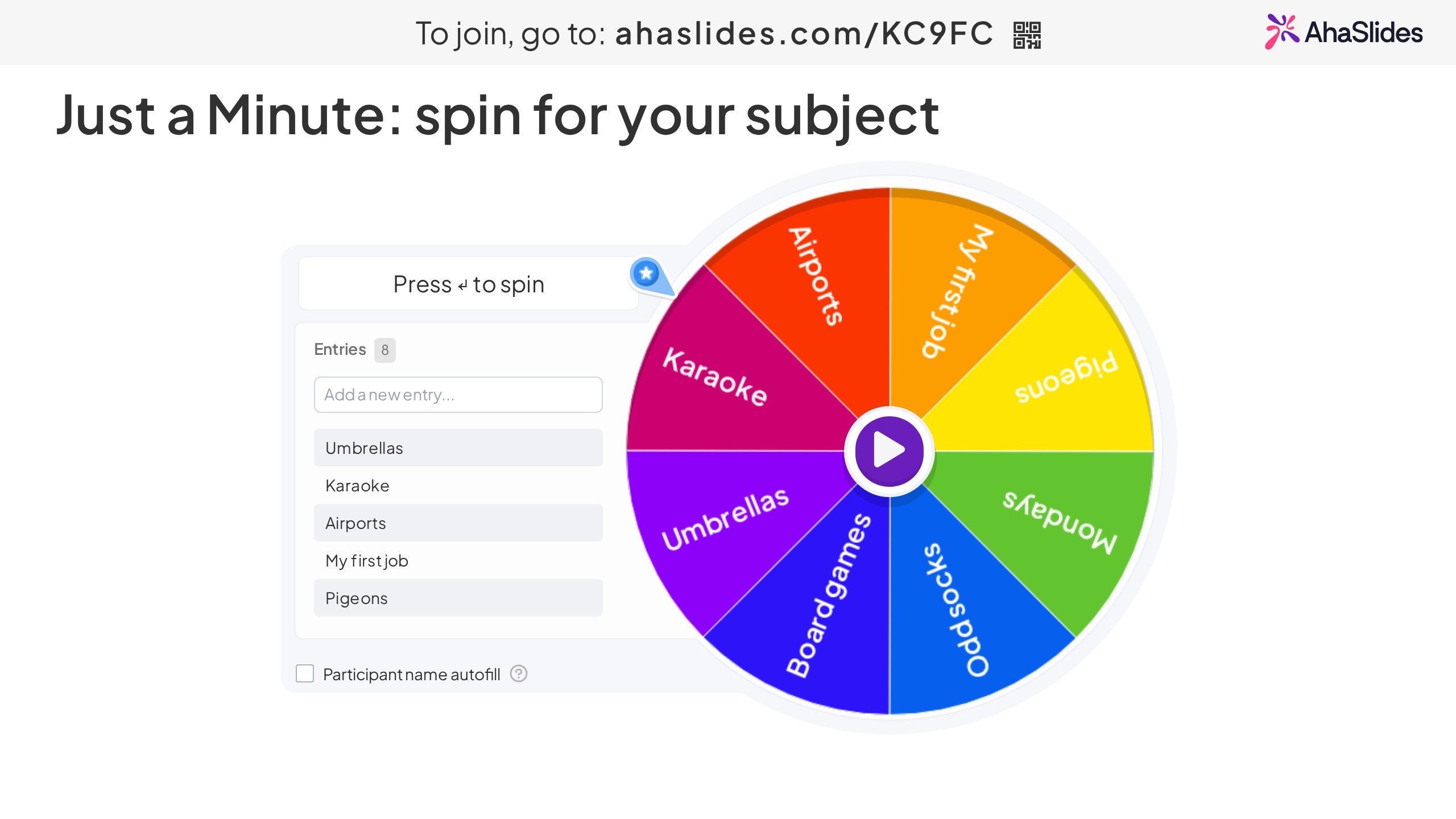
Based on the long-running BBC Radio 4 panel game (on air since 1967), the rules are simple:
- A player is given a random subject.
- They must talk about it for 60 seconds without repetition, hesitation or deviation.
- Anyone can challenge a slip. A correct challenge wins a point and takes over the subject for the rest of the minute.
- Whoever is speaking when the minute ends scores a bonus point.
The trick is to keep talking confidently, even about a subject you know nothing about. In our sessions a spinner wheel picks the subject, so nobody can accuse the host of choosing a hard one on purpose.
4. Hot Takes
Players: 3 or more. Best for: groups who enjoy a friendly debate.
- Pick a topic, such as food, holidays, TV or everyday life.
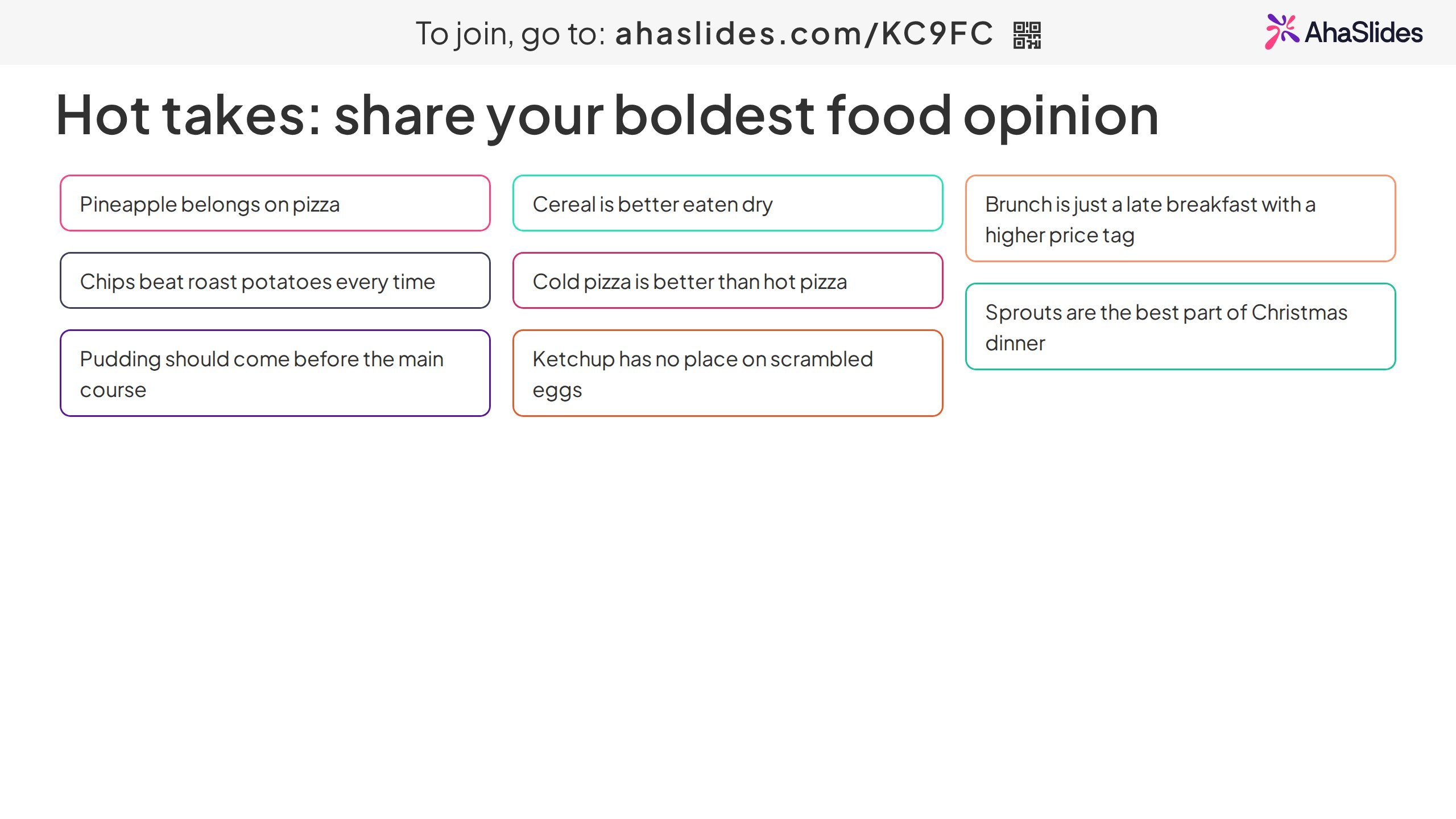
- Each player shares a hot take: a bold, debatable opinion on it.
- The group votes on the spiciest take that still sounds defensible.
Some hot takes to get you going. Our pick: brunch is just a late breakfast with a higher price tag, because everyone has an opinion on it.
Food and drink4 hot takes
- Breakfast is the most overrated meal of the day.
- Cold drinks beat hot drinks in every season.
- Brunch is just a late breakfast with a higher price tag.
- Pineapple belongs on pizza.
Everyday life4 hot takes
- Voice notes should come with a time limit.
- Watching films at home beats going to the cinema.
- Socks with sandals are perfectly fine.
- The aisle seat is the best seat on a plane.
Keep it light. The aim is a lively argument, not a fall-out.
5. This or That
Players: any number. Best for: warm-ups and big groups.
- The host offers two options on one theme.
- Everyone picks one, fast.
- Ask one person from each side to defend their choice, then move on.
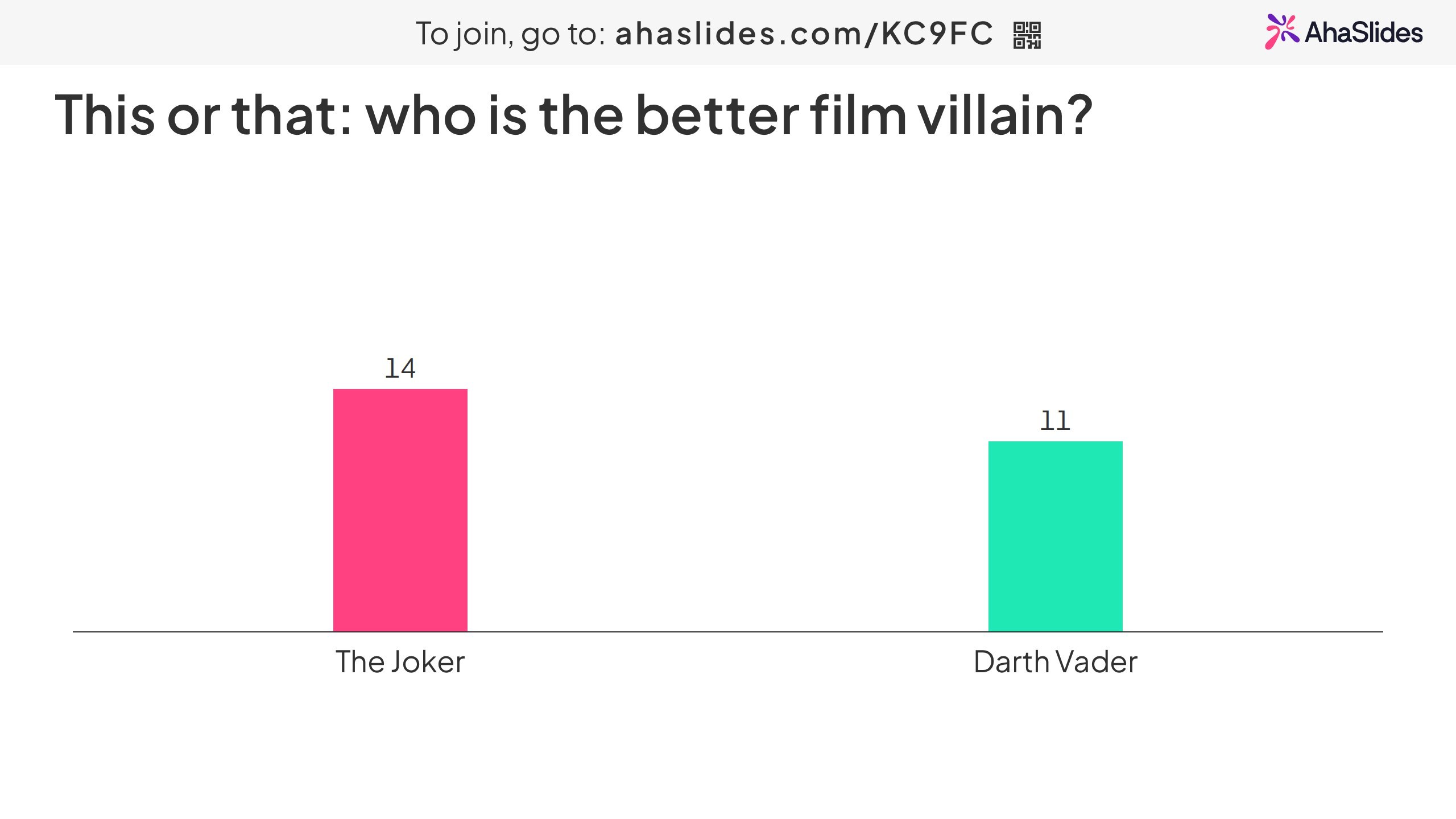
It is the gentler cousin of Hot Takes, and ten quick rounds on one theme, such as film villains, are enough to get a quiet group talking. For ready-made pairs, see our this or that questions.
Conversational games for friends
Quality time with your closest friends? These five turn a quiet evening into a proper catch-up.
6. The Alphabet Game
Players: 2 or more. Best for: car journeys and dinner tables.
- Agree on a category: animals, countries, foods, famous people or a mix.
- The first player names something beginning with A (ant, Argentina, apple).
- The next player takes B, and so on through the alphabet.
- Hesitate for more than three seconds and you are out. The last player standing wins.
7. Life Chapters
Players: 3 or more. Best for: close friends who trust each other.
- Choose a period of life: childhood, school years, your first job.
- Go round the circle. Each person shares a defining moment from that time: an adventure, a challenge or a memory that shaped them.
- Everyone else asks one follow-up question, then move on to the next person.
The goal is an honest story, not a confession anyone regrets, so anyone can pass.
8. Would You Rather
Players: 2 or more. Best for: any group, any age.
- A player poses a question with two tricky options.
- Everyone picks one and explains their reasoning.
- The next player asks the next question.
The explanations are where the good conversation happens, so pick questions with no obvious answer. Our pick: always know when someone is lying, or always get away with lying?
Dreams and adventures4 questions
- Would you rather explore the deep ocean or outer space?
- Would you rather spend a year travelling or a year mastering any skill you choose?
- Would you rather have a house by the sea or a cabin in the mountains?
- Would you rather relive your favourite day or see one day of your future?
Talents and quirks4 questions
- Would you rather be the best cook in your friendship group or the best storyteller?
- Would you rather have dinner with a figure from history or a character from a book?
- Would you rather always know when someone is lying or always get away with lying?
- Would you rather remember everything you read or everything you hear?
Want more? Our funny would you rather questions have plenty of sillier ones.
9. 20 Questions
Players: 2 or more. Best for: logical thinkers.
- One player secretly thinks of a person, place or thing.
- The others ask up to 20 questions that can only be answered yes or no.
- If nobody guesses within 20 questions, the thinker wins and reveals the answer.
Starting broad (“Is it alive?”) and narrowing down is the winning strategy.
10. Telephone
Players: 5 or more. Best for: big groups and a guaranteed laugh.
- Sit or stand in a line.
- The first person whispers a short phrase to the next.
- Each player whispers what they heard to the next person, once only.
- The last player says the phrase aloud and the first reveals the original.
Also called Broken Telephone, it is a funny demonstration of how messages change as they pass along. The final version is rarely anything like the original.
Conversational games for couples
Want more from date night than “how was your day?” These five are for two players and build closeness and plenty of laughs.
11. I Like You Because
- Take turns saying “I like you because...” and finishing with an honest reason.
- No repeats allowed.
- The first person who runs out of compliments loses.
It starts sweet and gets sillier as the easy answers run out, which is exactly the point.
12. Ask Me Anything
- Agree on a funny penalty for passing, such as doing the washing-up or singing a song.
- Take turns asking each other anything, random or thought-provoking.
- The person answering can pass on any question, but must pay the penalty.
A few openers if you get stuck:
Date-night openers6 openers
- Which fictional couple are we most like?
- What’s one tradition you’d like us to start?
- What’s the best meal we’ve ever shared?
- Where should we go on our next trip?
- Which of my habits secretly drives you mad?
- What have you always wanted to ask me but never have?
13. Never Have I Ever
- Both players hold up ten fingers.
- Take turns saying “Never have I ever...” followed by something you have never done.
- If the other person has done it, they put a finger down (and, in the adult version, take a sip).
- The first to put all ten fingers down loses.
It is a quick way to learn things you never knew about each other. For 104 prompts sorted by group, see our never have I ever questions.
14. Orange Flags
You know green flags and red flags. Orange flags sit in between: quirks that aren't dealbreakers but might raise an eyebrow.
- Take turns confessing an orange flag about yourself.
- Your partner rates it: green, orange or red.
- Defend your quirk if you dare.
Orange flags to confess6 flags
- I own more than a hundred candles.
- I reply to texts days later, then apologise at length.
- I rewatch the same series instead of starting a new one.
- I keep 40 browser tabs open at all times.
- I eat the same lunch every single day.
- I have named all my houseplants.
15. Association
- Choose a theme, such as words that start with “de” (detour, desert, dentist).
- Take turns saying a word that fits.
- Anyone who can't come up with a word within five seconds loses the round.
Change the theme each round to keep it fresh.
Run conversational games live on AhaSlides
Verbal games work well in a small circle. With a bigger group, or on a video call, it helps to give everyone a way to take part at once. In our own workshops and team calls we use four slide types:
- Polls for Two Truths and a Lie, This or That and Would You Rather, so everyone votes at the same time.
- Word clouds for Fictionary guesses and Association, so every answer appears on screen.
- Open-ended slides for Hot Takes, where people type a full sentence.
- A spinner wheel to pick a Just a Minute subject or the next player.
Participants join on their phones with a code, so there is nothing to install.
Frequently asked questions
What is a conversational game?
A conversational game is an activity that uses questions, prompts or structured turns to get people talking. The rules give everyone a reason to speak and a little permission to share more than they would in small talk.
What are some verbal games to play?
Popular verbal games include word games (the Alphabet Game, Association, Fictionary), question games (20 Questions, Never Have I Ever, Would You Rather), speaking challenges (Just a Minute) and party classics such as Telephone and Taboo.
What games can I play with friends face to face?
Every game in this list works face to face. If you want something with cards or a board, Taboo, Pictionary and Balderdash suit groups who like talking, and a quick round of the Quiet Game (the last person to make a sound wins) calms a room down.
Which conversational games work best for work meetings?
Two Truths and a Lie, This or That and Would You Rather are the safest bets. They are quick, easy to explain and don't ask anyone to share anything too personal.