


Most of us spend more waking hours with colleagues than with family. A good office game is the cheapest way to make those hours feel less like a shift and more like a team.
Office parties fail for a predictable reason: everyone stands in a circle holding a drink, waiting for someone braver to start a conversation. A game removes that first-move problem. It gives people a reason to talk, a structure to talk inside, and a way to look slightly silly together, which is what builds a team.
The 14 games below run the range from two-minute warm-ups to full-afternoon competitions. Most need nothing but people, a few need a screen, and none need a budget. Pick one that fits your room and run it this week.
14 office game ideas for your next work party
1. Live trivia
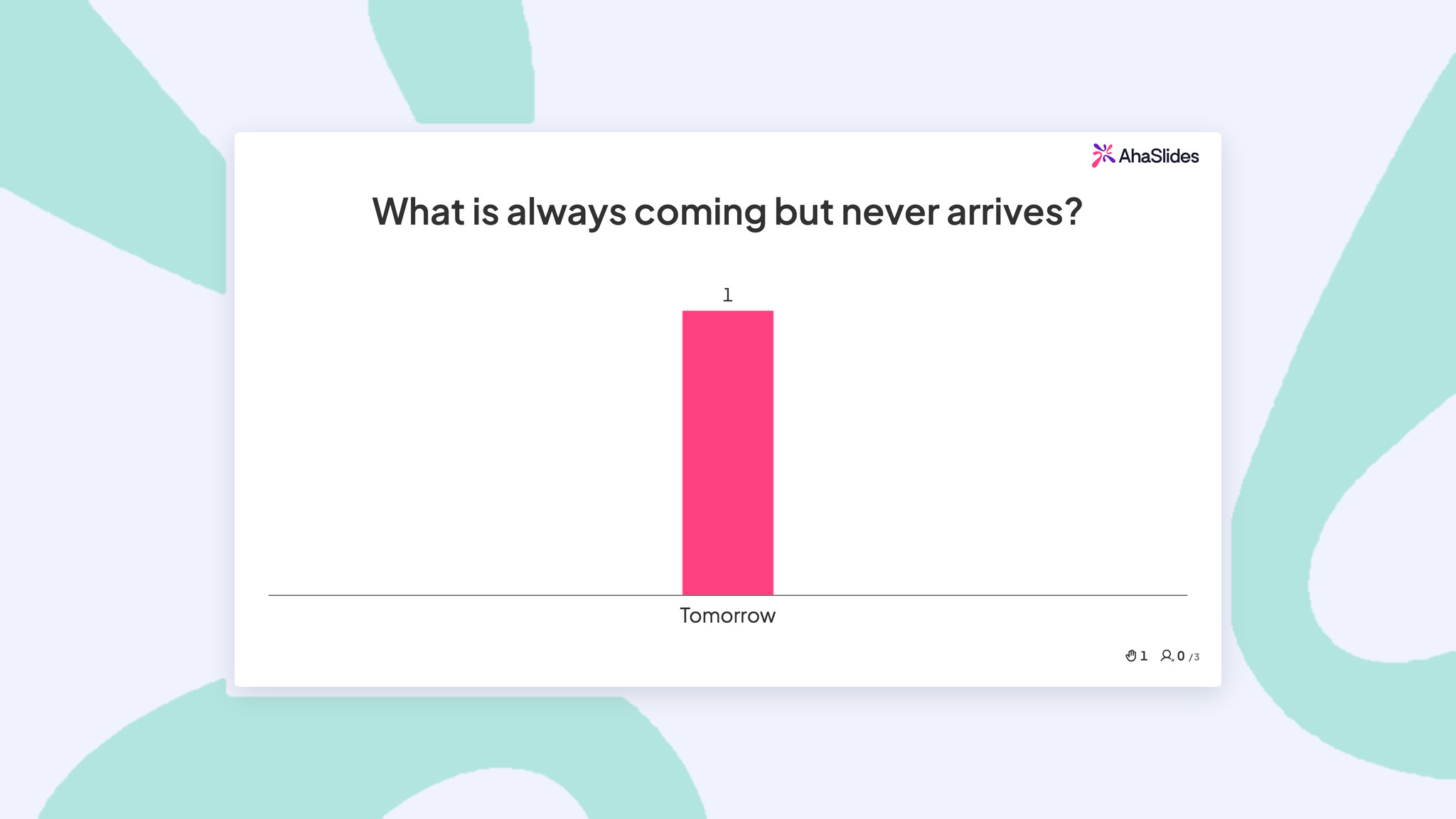
A live quiz is the fastest way to get a whole room engaged, because everyone has a stake and the pace is quick. Rather than write questions from scratch, open the AhaSlides template library and load a ready-made quiz into your account. Colleagues join from their phones by scanning the QR code on the shared screen, and a live leaderboard does the rest.
Work-friendly formats that land well: a “know your team better” round, a light teambuilding set, movie trivia, or a pub-quiz series across several weeks.
2. Who am I?
Give each person a sticky note and have them write a famous name, anyone from a historical figure to a celebrity, then stick it on the forehead of the person to their left. Everyone asks the room yes or no questions until they guess who they are. Add a time limit or points to raise the stakes. It rewards curiosity over confidence, so quieter people tend to do well.
3. Minute to Win It
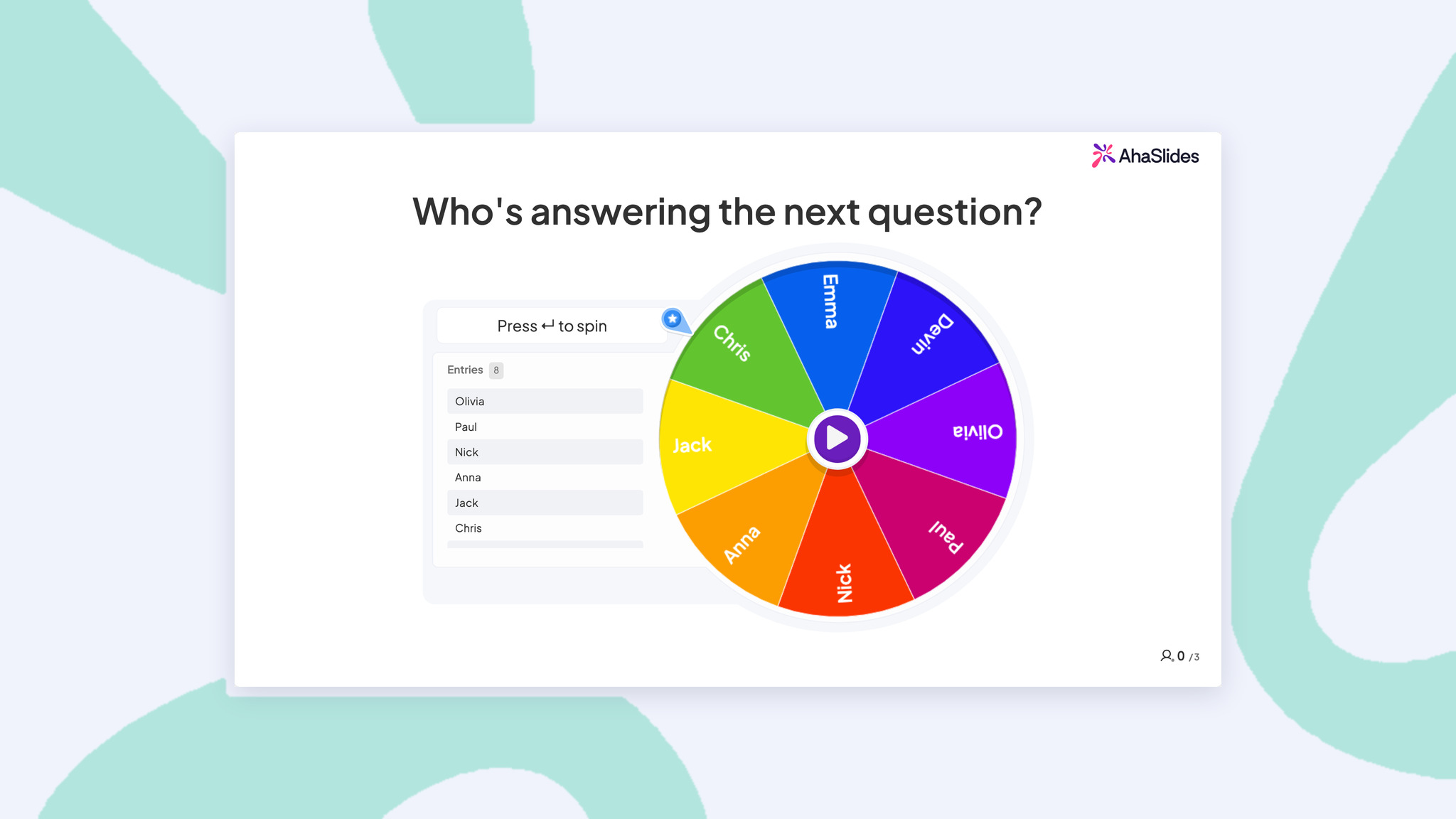
Run a series of one-minute challenges built from office supplies: stack cups into a pyramid, launch paper clips into a mug with a rubber band, move cookies from forehead to mouth with no hands. Play in teams or individually, and use a spinner wheel to pick which challenge comes next so nobody can prepare.
4. Two Truths and a Lie
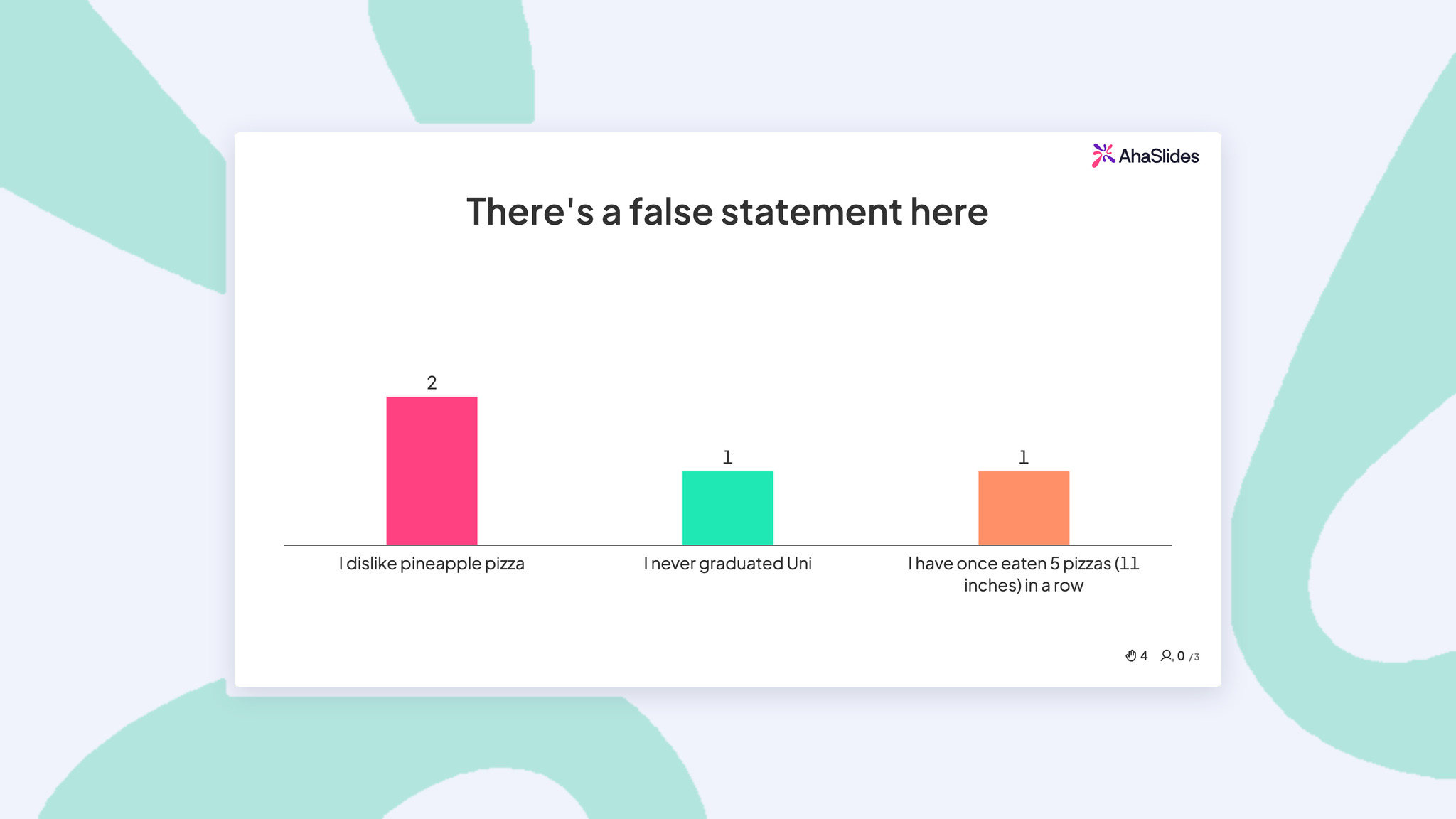
Each person shares three statements about themselves, two true and one false, and the group guesses the lie. It is the classic way to help a team get to know each other, and it works especially well for new hires who need a low-stakes way in. Collect the guesses on a live poll so the reveal becomes a moment rather than a mumble.
5. Office bingo
Make bingo cards from office phrases and moments: “conference call,” “deadline,” “coffee break,” “someone says let’s take this offline.” Hand them out and have people mark items off as they happen through the day or week. For a party version, turn it into a mixer where people have to talk to a colleague to tick a square.
6. Speed chatting
Borrowed from speed dating, minus the dating. Pair people up facing each other, set a two-minute timer, and let each pair talk about anything. When the timer sounds, everyone rotates to a new partner. The goal is to meet as many colleagues as possible in a short window, which makes it ideal after a reorg or when two teams merge.
7. Scavenger hunts
Write a set of clues and riddles that send people to spots around the office, from the break room to the CEO’s office. Add a task at each stop, like a group photo or a small puzzle, before the next clue unlocks. It gets people out of their chairs and into corners of the building they never visit.
8. Typing race
A quick competition to type a set phrase fastest with the fewest errors. Use a free online typing test or write your own sentences about your company or industry, and post a leaderboard so the friendly rivalry has somewhere to live. It is a two-minute filler that people ask to replay.
9. Cooking competition
Split into teams and give each a dish to make, a salad, a sandwich, a simple pasta, within a set time. Run it in the office kitchen or book a local cooking studio for an off-site version. Managers taste and score on presentation, flavor, and creativity. It builds teamwork and, usually, a shared lunch.
10. Charades
Split into two or more teams. One member acts out a word or phrase with no talking while their team guesses against the clock. Use office-themed prompts like “client meeting,” “budget report,” or “team building activity” to keep it on brand and funny. No equipment, no prep, endlessly repeatable.
11. Pitch a desk item
An improv game that flexes marketing and sales muscles. Each person grabs any object on their desk and delivers a 60-second elevator pitch selling it to the room, however dull the object is. The harder the item is to sell, the funnier and sharper the pitch. Play in teams or solo.
12. Office survivor
Divide into teams and set a sequence of challenges, one per round. Teams earn points, and the lowest-scoring team is eliminated each round until a winner remains. Because survival depends on the whole team, it pushes people toward shared responsibility fast, which is the point.
13. Blind drawing
Pair people back to back. One describes an image using only words while the other draws it from the description alone, no peeking. The worse the drawing, the better the game. All it needs is paper and a pen, and the reveal is reliably the best part.
14. Pictionary
Split into teams. One person draws while teammates guess what it is before the timer runs out. It rewards fast thinking over artistic skill, and the hidden drawing talent that surfaces is half the fun. A whiteboard or a shared screen is all you need.
Why office games are worth the 20 minutes
Skeptical managers tend to file office games under “nice but optional.” The research says otherwise. Google’s Project Aristotle, its multi-year study of what makes teams effective, found that psychological safety, the shared belief that it is safe to speak up and take a risk, was the single strongest predictor of high-performing teams. Games build that safety directly: they normalize participation before anything important is at stake, and they let people be wrong together in a low-stakes setting.
Beyond that, a well-run game does a handful of concrete things:
- Boosts morale. A short burst of fun lifts the mood of the whole room, and the effect outlasts the game.
- Builds teamwork. Cooperation and friendly competition create bonds that a meeting never will.
- Restores focus. A deliberate break from the workflow helps people recharge and return sharper.
- Lowers stress. Play is one of the cheapest stress valves a workplace has.
- Sparks creativity. Silly constraints push people to think sideways, a habit that carries back to real problems.
The other reason to run them is how little they ask of you. Most cost nothing, need no special equipment, take under 20 minutes, and can be reshaped to fit any team or room. We use several of these at AhaSlides to open team calls, and the two-minute ones earn their place every time.
Frequently asked questions
What are quick one-minute games to play in the office? Fast fillers work best: the gravity game, “scoop it up,” and “lonely socks” all run in about a minute and need almost no setup.
What is a 10-second game? A rapid-fire round where players decide whether a statement is true or false in 10 seconds flat. It is a good palate cleanser between longer activities.
How often should we run an office game? Once a week is a sensible floor, folded into a regular meeting so it never feels like an extra commitment. The best cadence is the one your team looks forward to.
Turn any of these into a live game
Half the games above run better with a shared screen and everyone’s phone as a buzzer. AhaSlides gives you a template library of ready-made quizzes, a Spinner Wheel for random picks and challenge selection, live polls for guessing games, and a leaderboard to keep score, all joinable by QR code with no app to install. Grab a free template and run your first round at the next party.