


If you're new to AhaSlides, or you've been using us for years but haven't poked at the menu in a while, this guide is the one we wished existed. The product has grown a lot in the last twelve months, and we now ship 30+ slide types — and we're still adding new ones almost every month — covering everything from live polls and quizzes to full surveys, diagrams, image pinning and brainstorm boards, right through to point-allocation polls, opinion matrices and a random-winner duck race.
But feature lists don't help. Workflows do. So we organized this tutorial the way a person plan sessions: before, during, and after. For each phase, we'll show you which slide type to reach for and how to set it up well.
Quick map: which slide type does what - download the cheat sheet here.
Before the session: setup that pays off
The best interactive trainings we see start before anyone joins the call. Two slide types make this part easier.
The Survey slide: collect pre-work without chasing people
The Survey slide is one of the newer additions to AhaSlides, and it's quietly become one of our most-used features for L&D teams. It lets you build a multi-question form that runs multiple questions at once. You can mix question types in a single survey: multiple choice, open text, rating scales, ranking. It's a real survey, not one poll dressed up.
How to use it the AhaSlides way
- On a presentation, choose the Survey slide type
- Create a new Survey with 3 to 5 questions max: their familiarity with the topic, their top question, what they hope to learn
- Publish the Survey and link it to the presentation
- When you are presenting a live session and move to this slide, participants will see a form on their devices to fill it out
We've seen pre-session surveys turn training kickoffs from cold openings into "I read your responses and here's what we're going to focus on" moments. That alone changes the whole tone of the room.
Opening: break the ice
First two minutes of a session set the emotional tone for the next sixty. Three slide types do this well.
Spinner Wheel: keep everyone alert
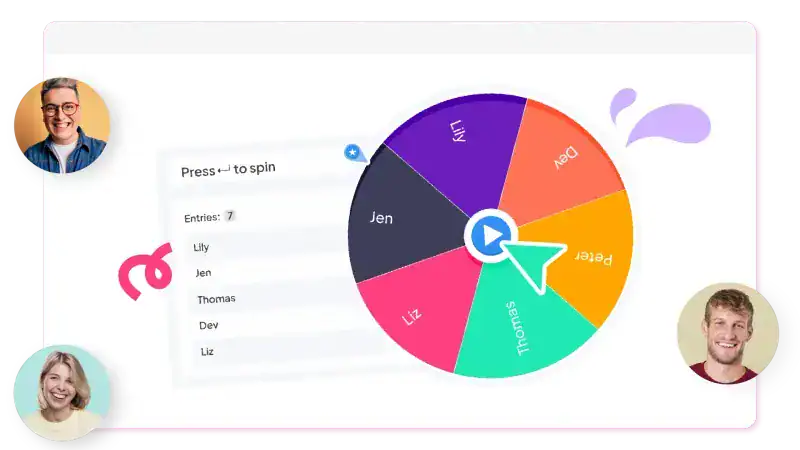
Load participant names into the wheel, spin it, and ask whoever it lands on to share something. The randomness is the whole point. Everyone knows they might be picked, so everyone stays present.
Good examples
- Corporate training: "What's the most surprising thing about your role that someone outside your team wouldn't guess?"
- Onboarding: "What's one tool you couldn't live without in your last job?"
Word Cloud: surface the room's mood in 30 seconds
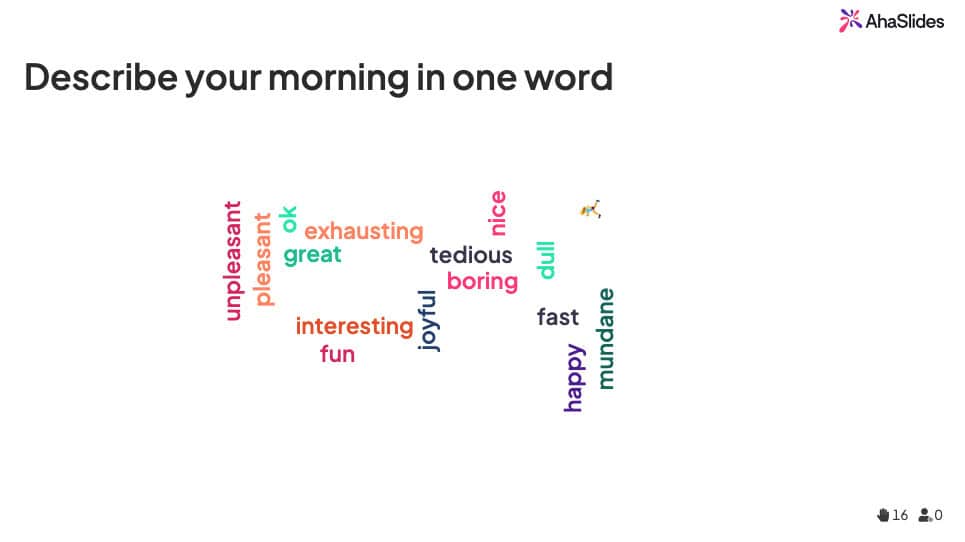
A Word Cloud asks for one or two words and grows them into a visual where bigger = more popular. Our favorite opener for groups bigger than 15. Read it out loud as it grows; the words that emerge usually tell you exactly where to focus your energy.
Poll: get a fast vote going
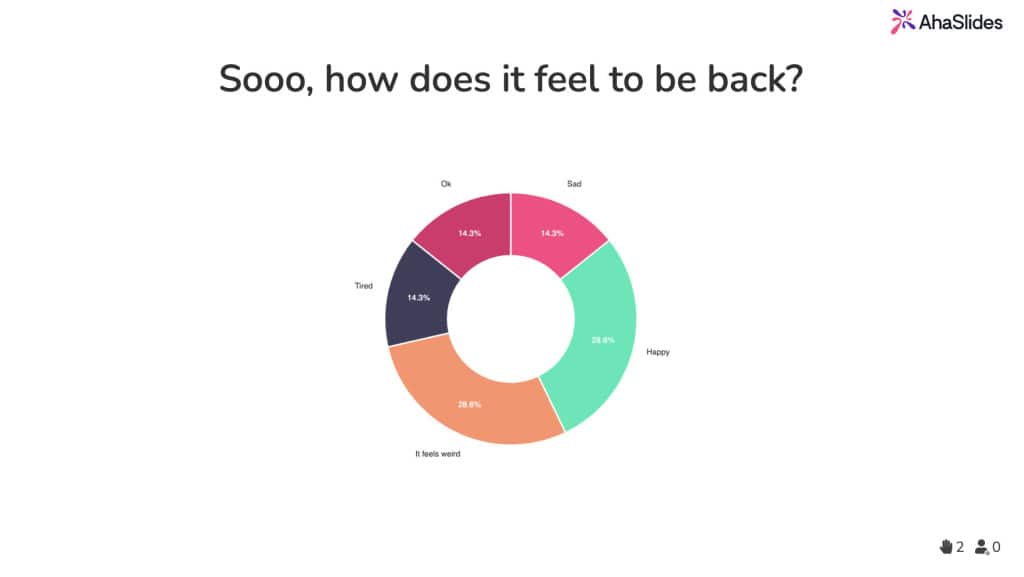
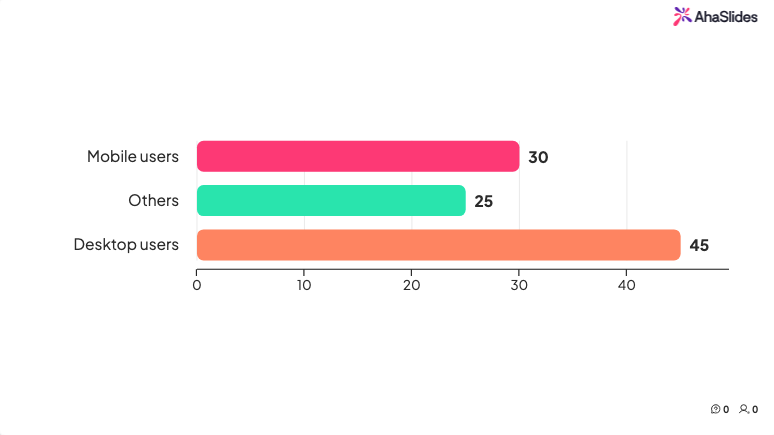
Polls are the workhorse. Multiple choice, displayed as a bar, donut, or pie chart. Use them when you want a quick yes/no, a temperature check, or a vote between specific options.
Opening poll examples
- "What's your experience level with [topic]? Beginner / Some experience / Pretty experienced / Expert"
- "How are you feeling about this training? Excited / Curious / Skeptical / Just here for the certificate" (lean into honest options, you'll get more honest answers)
Duck Race: pick a winner at random (and get a laugh)
Duck Race is the most fun, silly way to break the ice, hand out a task, give away a prize, or just find a random winner. Everyone gets a duck, the ducks race, and the winner is drawn purely by luck — no scores, no skill, just a bit of shared chaos to warm the room up.
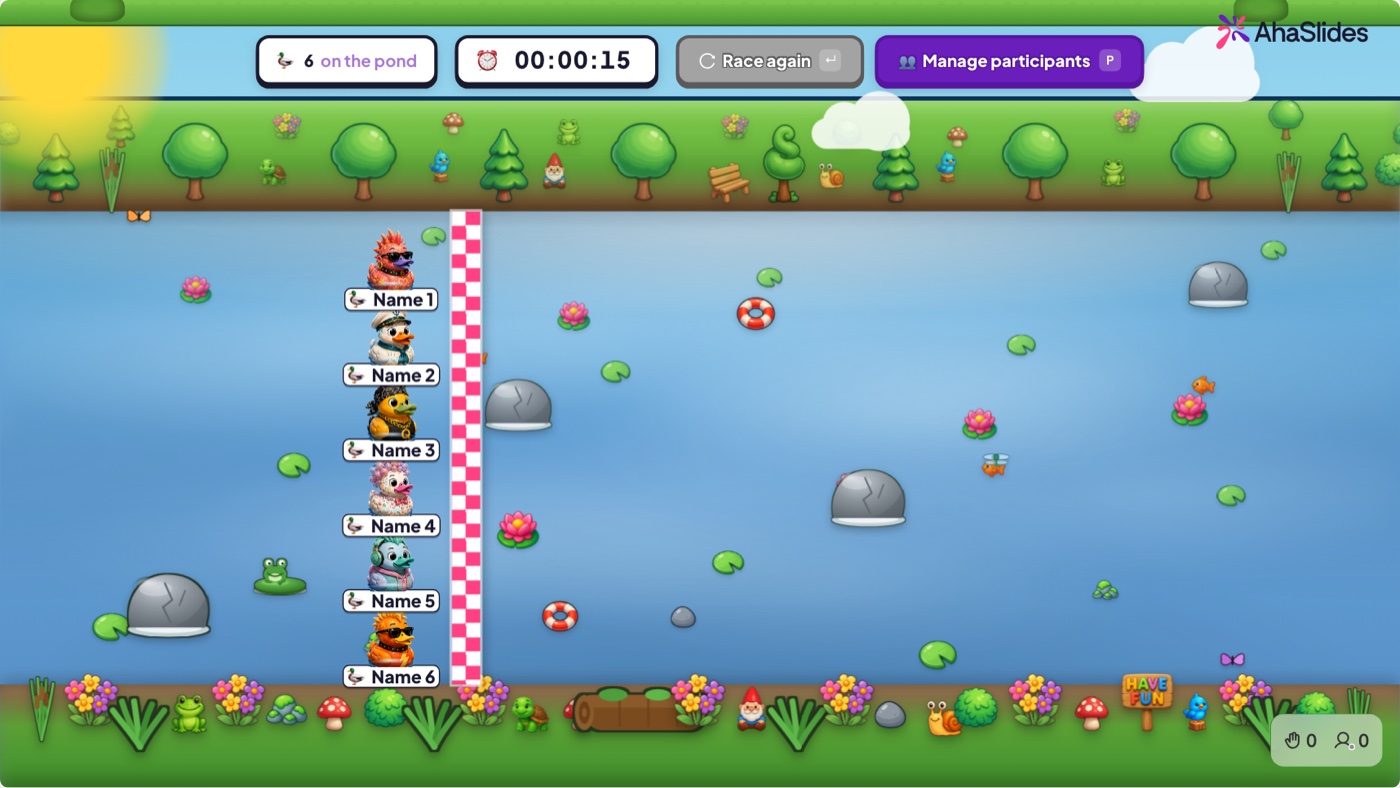
Photo Share: a live wall of photos
Photo Share invites the audience to send photos straight from their phones onto a shared wall. It's a lovely opener — "show us your desk, your view, or your pet" — and just as handy mid-session for snapping the whiteboard, the prototype, or a real-world example so everyone's photo lands on screen at once.
Teaching: keep them with you
This is the heart of the session. Five slide types do most of the heavy lifting here.
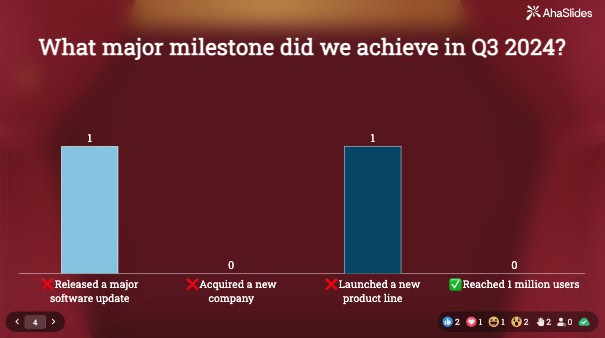
Quiz: Pick Answer for classic knowledge checks
The standard quiz. Multiple choice, time limit (15 to 30 seconds works well), points, leaderboard. Announce the leaderboard at the start and engagement stays higher all the way through.
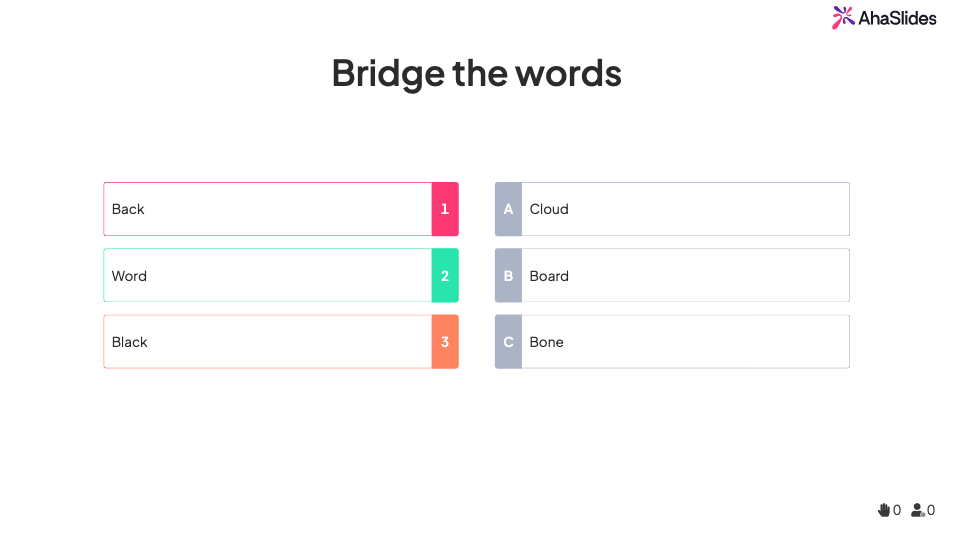
Quiz: Match Pairs for vocabulary and concepts
Drag items in column A to match items in column B. Great for terms and definitions, products and features, problems and solutions, departments and responsibilities.
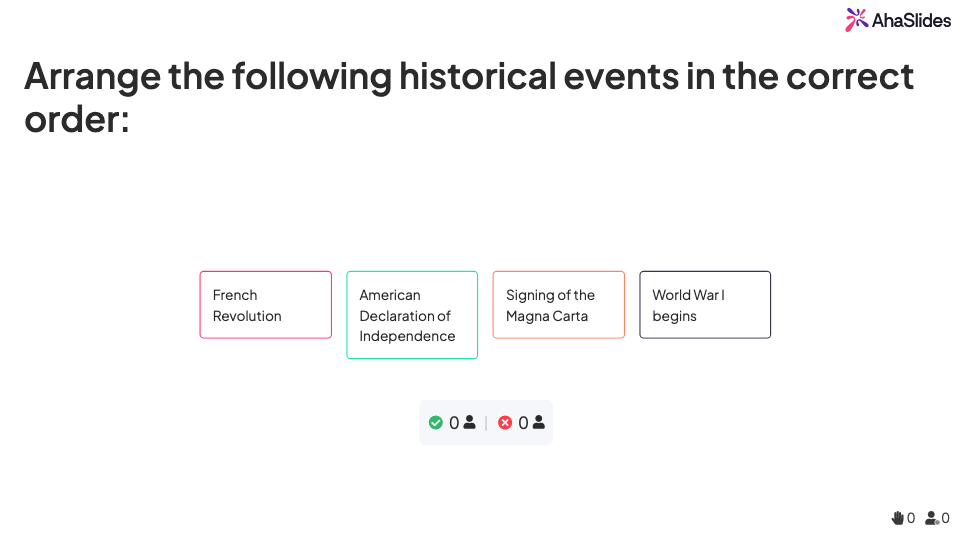
Quiz: Correct Order for processes and workflows
Drag items into the right sequence. If you're teaching any kind of process (onboarding steps, an SOP, a sales workflow, the order of historical events), this is the slide.
Quiz: Categorise for classification skills
Participants sort items into the right buckets. Use it for: which expenses go in which budget category, which symptoms map to which condition, which tasks belong to which role. It's a brilliant way to teach decision-making, not just facts.
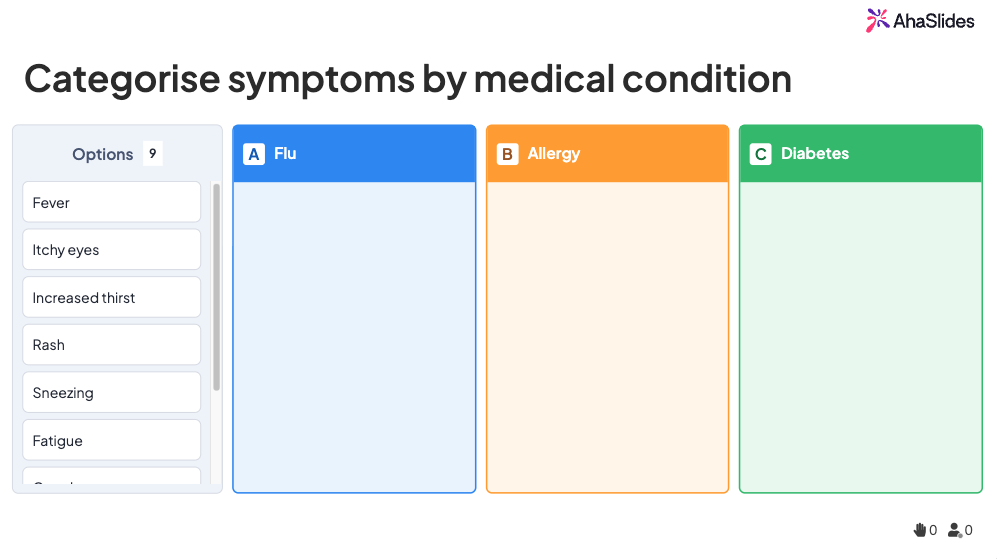
Diagram slide: show how things connect
The Diagram slide is one of our newest and one of the most underused. It lets you build and present visual structures: flowcharts, hierarchies, process maps, org structures, system diagrams. Instead of describing how something works in words, you show it.
Where it shines for L&D
- Compliance training: visualize approval workflows and escalation paths
- Onboarding: show the org chart, customer journey, or product architecture
- Process training: visualize an SOP as a flowchart instead of a wall of text
The diagram lives in the slide, so you don't need a separate Miro or Lucidchart link breaking the flow of your presentation.
Pin on Image: "show me where" questions
Upload an image. Participants drop pins on it. You see all the pins live on the presenter screen. It sounds simple, and it is, but it solves a specific teaching problem really well.
Use cases that work
- Software training: "Pin where you'd click to start a new project"
- Sales enablement: "Pin the part of this pitch deck that loses you"
- UX research: "Pin the most confusing part of this screen"
- Education: "Pin the country where the Industrial Revolution started"
When 30 people drop pins in the same wrong place, that's a learning gap you couldn't have spotted any other way.
Quiz: Short Answer for open recall
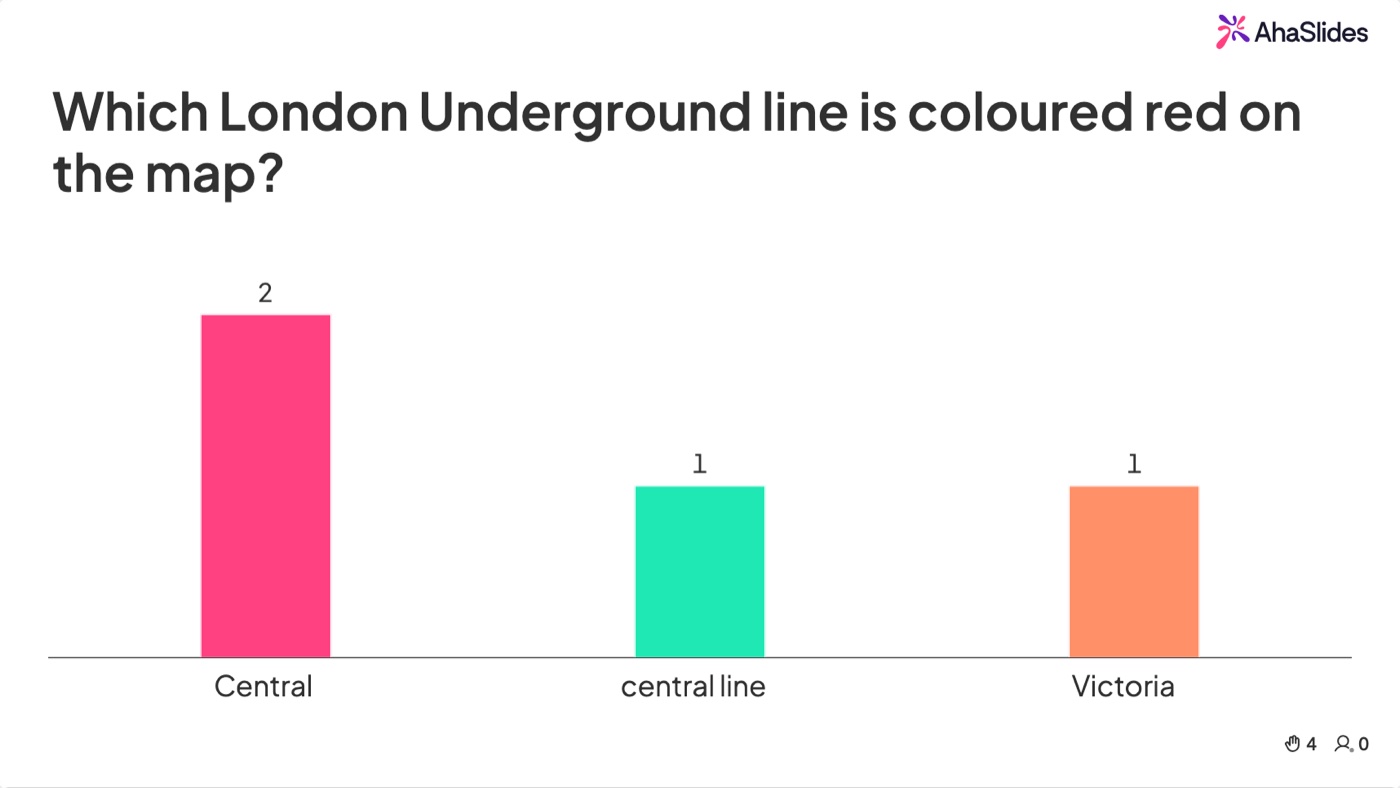
Short Answer is a quiz slide with nothing to choose from — participants type their answer and it's matched against the correct one, so they have to recall it rather than recognise it. It's a tougher, more honest knowledge check than multiple choice. Keep the accepted answer short and add a couple of sensible spellings so near-misses still score.
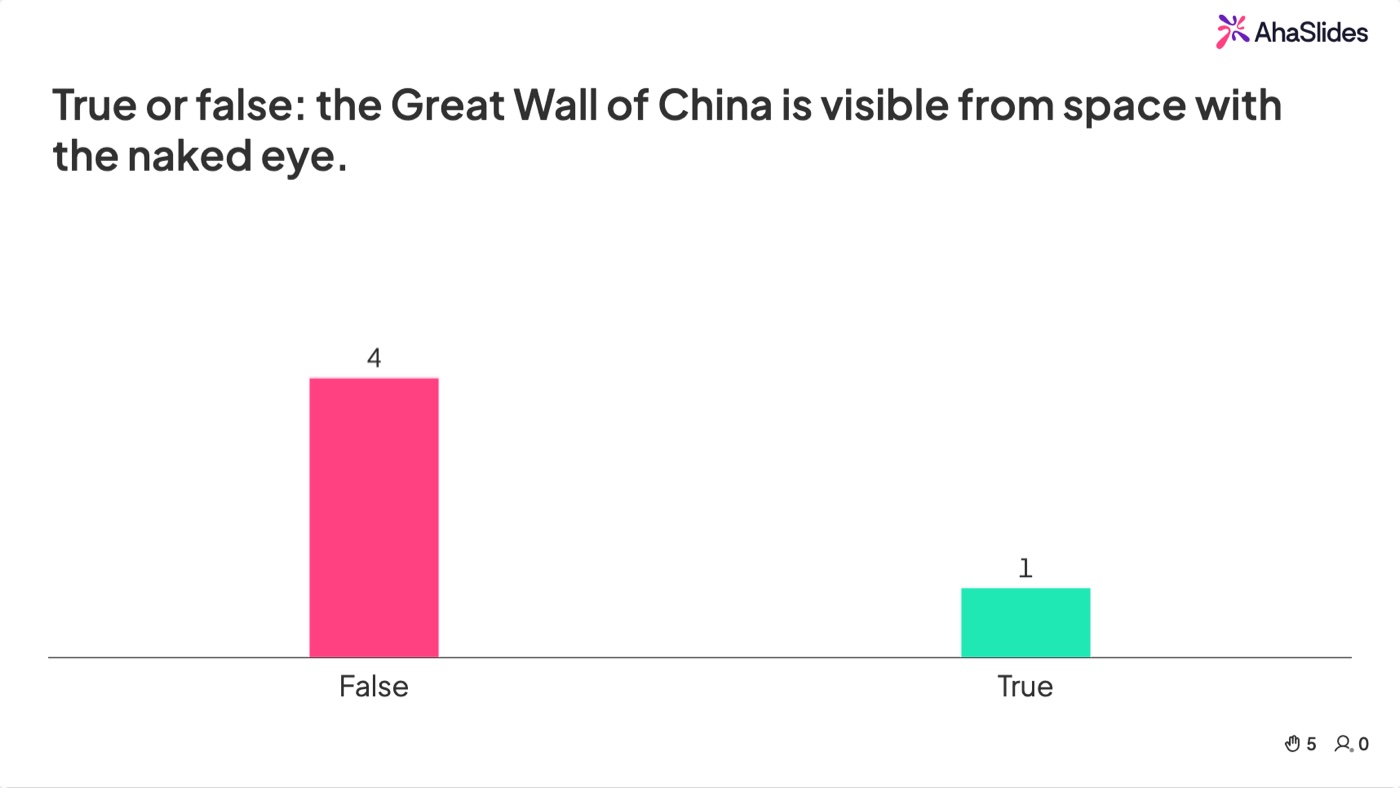
Quiz: True or False for a fast-fire round
True or False is one of our newest quiz formats, and it's brilliant for keeping the pace up. Participants swipe through a run of statements and call each one true or false against the clock, scoring as they go. With only two options every time, nobody freezes on a hard question — perfect for busting myths early or a quick "how well do you know this?" check.
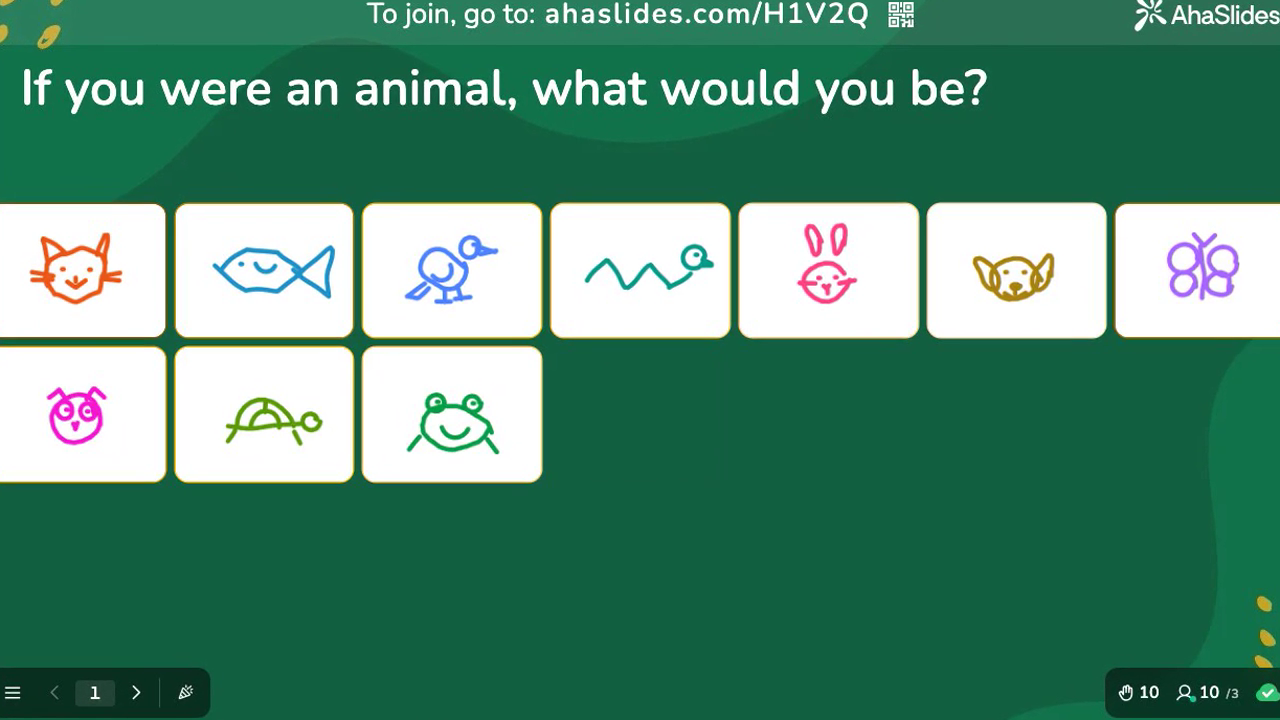
Draw Answer: let them sketch it out
With Draw Answer, participants draw their response on their phone and send it to the shared screen — ideal for anything a picture explains faster than words, like sketching a workflow, marking up a diagram, or showing how they'd solve something. It's a newer format still rolling out, so open it on your own phone to check it before you present.
Interactive Image: explore at their own pace
Interactive Image lets you pin notes to specific spots on an image; participants then tap each pin to read it on their own device, in their own time. Because it's self-paced, it suits detailed visuals — an annotated screenshot, a labelled diagram, a product shot — that reward a closer look than a live walkthrough allows.
Discussion: surface what they think
Halfway through the session, you want to open the floor. But "any questions?" almost never gets the real ones. These three slide types do.
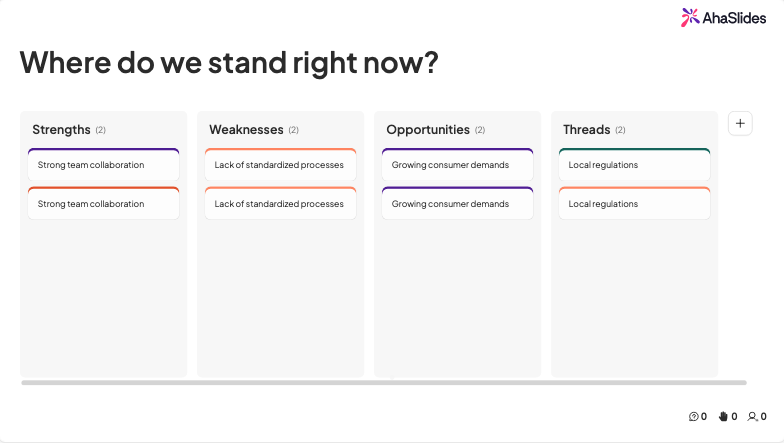
Idea Board: digital sticky notes
The Idea Board lets participants submit short ideas that appear as sticky notes on a shared canvas, then group and vote on them. (There's a lighter-weight Brainstorm slide too, if you just want the sticky notes and voting without the grouping step.) They can like each other's contributions, which surfaces the strongest ideas naturally.
Perfect for
- Retrospectives: "What worked? What didn't? What should we try?"
- Problem-solving: "How might we [solve this challenge]?"
- Strategy workshops: "What's one thing we should stop doing?"
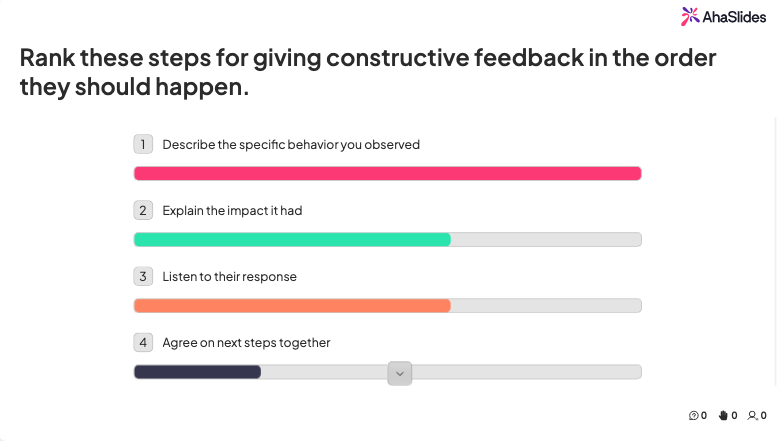
Ranking: force prioritization
The Ranking slide gives participants a list and asks them to drag items into priority order. Results aggregate into a single ranked list across the whole group. It's the fastest way to get a room to agree on what matters most.
When to use it
- "Rank these 5 customer pain points from most to least urgent"
- "Rank these training topics by what you most want covered next"
- "Rank these features by which would help your daily work most"
Where a Poll says "pick one," Ranking says "pick all in order." That matters when you need real prioritization.
Q&A: anonymous, upvoted, no awkward silences
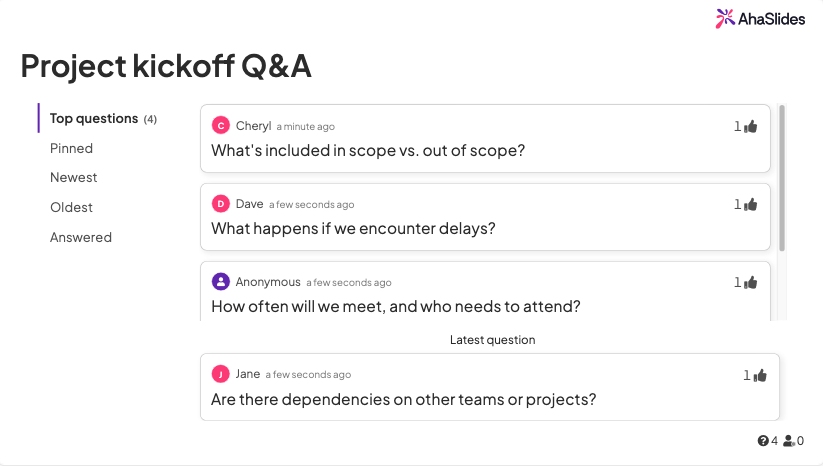
Open the Q&A slide at the start of your session and leave it open. Participants can submit questions anytime from their phones, anonymously if they want. Other participants can upvote, so the most pressing questions rise to the top.
How we use Q&A
- Open it before the session starts and tell people they can submit any time
- Address the top 2 to 3 upvoted questions at planned break points
- Mark questions as "answered" so the live list stays clean
Open Ended: answers in their own words
The Open Ended slide collects free-text responses and shows them on screen as they arrive. Where a Poll boxes people into set options, Open Ended lets them say exactly what they think — perfect for "what's your biggest challenge with this?" or "what would make this process better?". Read a few aloud as they land to keep the conversation moving.
2x2 Matrix: map ideas on two axes
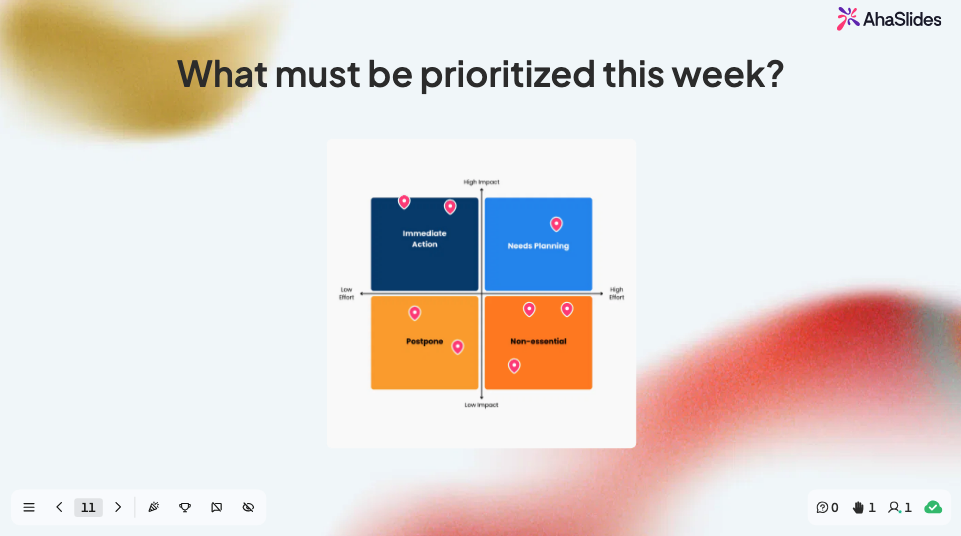
The 2x2 Matrix asks participants to plot items against two axes — effort against impact, urgency against importance, cost against value — and the group's placements build a shared map live. It's the fastest way to turn a vague debate into a picture everyone can point at and prioritise from.
Split the Points: force real trade-offs
Split the Points gives each participant a pot of points to spread across the options however they like. Because they can't back everything, you get a far truer read on priorities than a show of hands — ideal for divvying up a budget, weighing up features, or deciding where the team's time should go.
After the session: feedback that's actually useful
Email feedback forms hit 10 to 20% response rates. In-session feedback hits 70 to 90%. Timing is everything.
Rating Scale: fast, in-session feedback
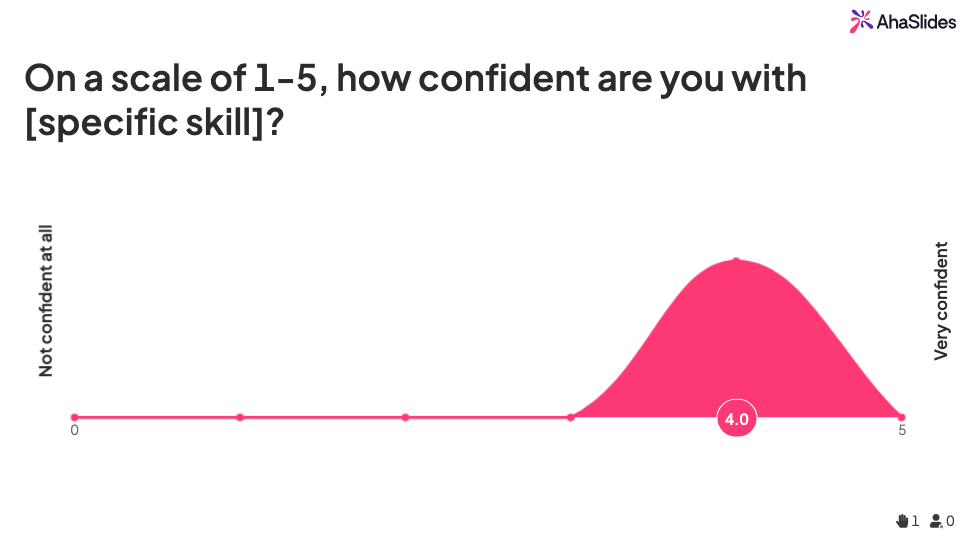
In the last 3 to 5 minutes of your session, drop in a Rating Scale slide. 1 to 5, 1 to 10, or smiley faces. Keep it to 2 to 3 questions max. The whole room responds while the experience is still fresh.
Three questions that consistently work
- "How relevant was this session to your work?" (1 to 5)
- "How likely are you to apply what you learned this week?" (1 to 10)
- "How likely are you to recommend this training to a colleague?" (NPS-style 0 to 10)
Survey slide: longer feedback they take with them
For deeper feedback, point participants to a Survey at the end of the session. Unlike a Rating Scale, the Survey is multi-question form that runs on one slide on participants' devices. Since it can happen right after your presentation, the audience will be more prone to taking it, improving the response rate.
What to put in a post-session survey
- Open text: "What's one thing you'll do differently as a result of this session?"
- Open text: "What's one topic you wish we'd covered in more depth?"
- Rating: "Rate these next-session topics by what you'd find most useful"
Report & Analytics: the receipts
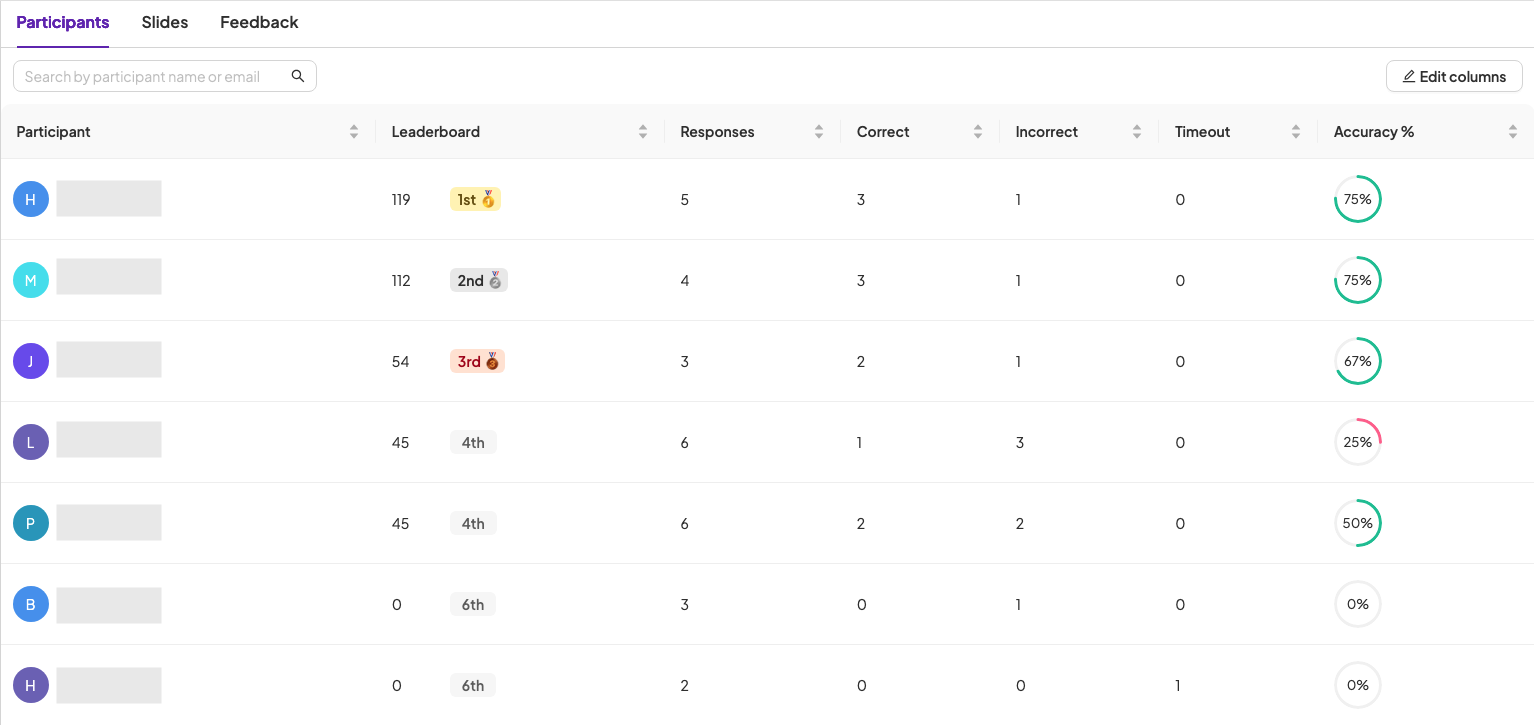
Every session you run generates a report: engagement rates, poll results, quiz scores, Q&A activity, individual responses. For L&D leaders justifying training budgets, this is the data that makes the case. "Engagement averaged 87% across 14 sessions this quarter" hits differently than "people seemed to like it."
Tips from the AhaSlides team
A few small habits we've picked up after watching thousands of sessions:
Use AI Slides Maker to draft, then customize
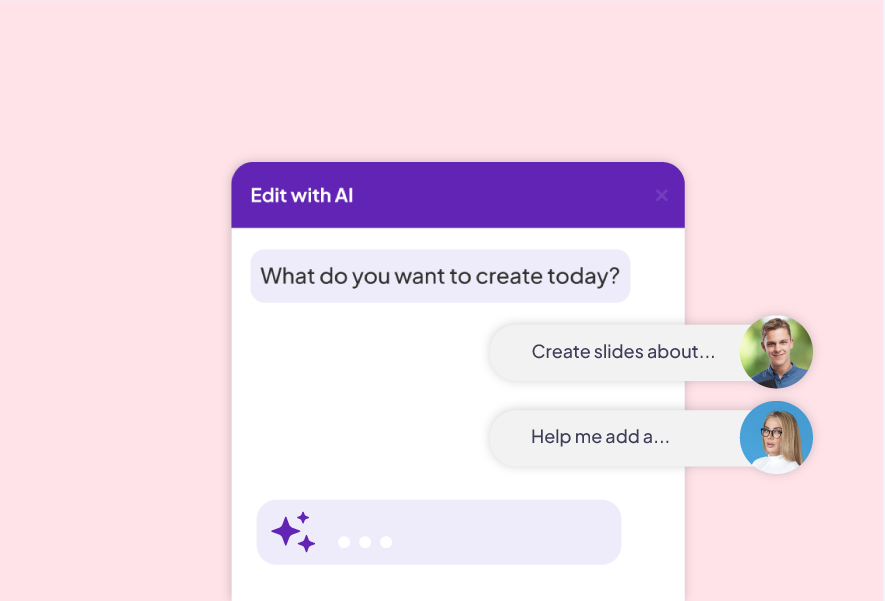
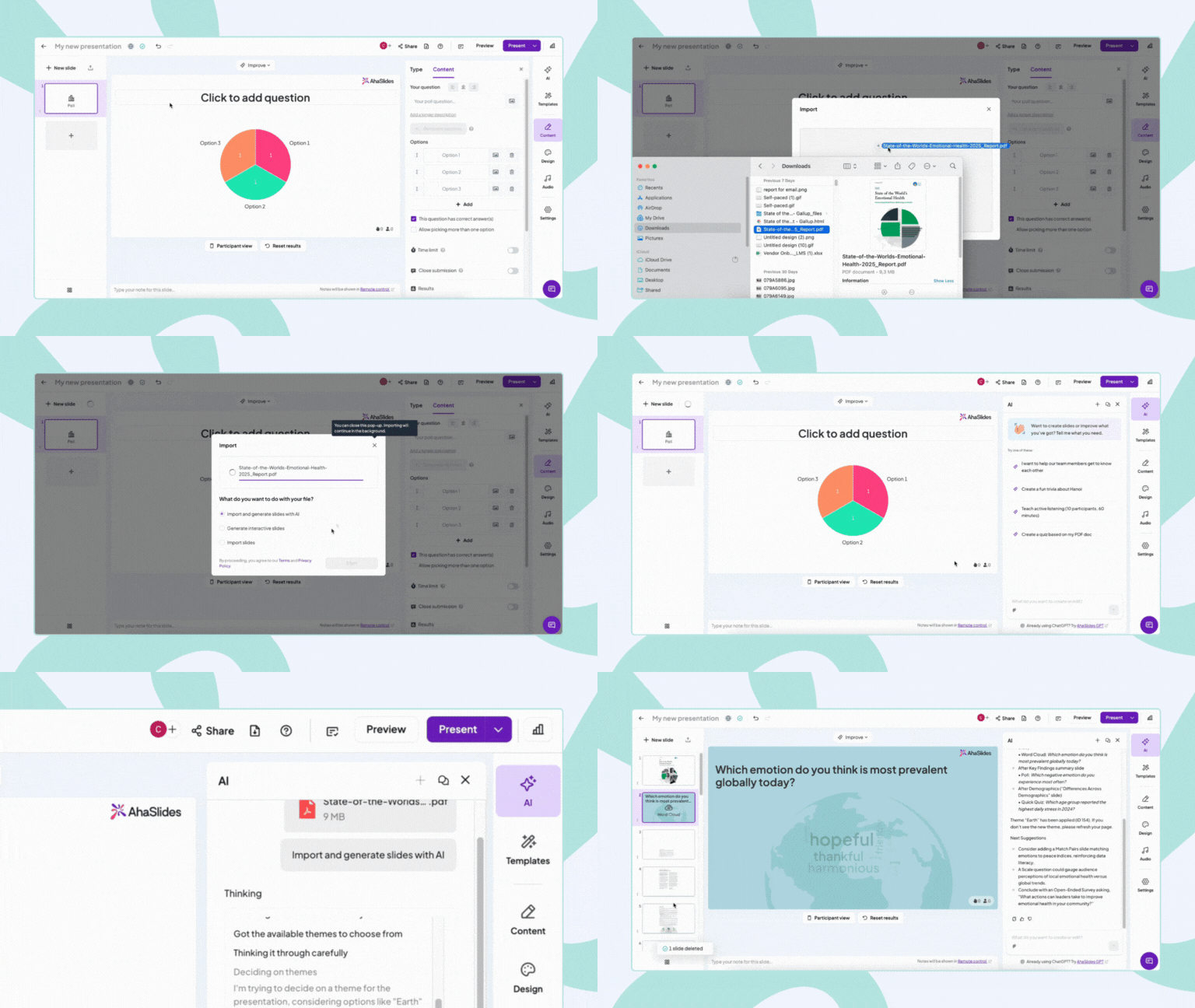
Feed your topic or a document into our AI Slides Maker and you'll get a full interactive deck in under a minute. It's not pixel-perfect, but it's a starting point that saves an hour. Treat it as a draft, not a final.
Don't over-interactivize
For a 60-minute session, 5 to 7 interactive moments is the sweet spot. More than that and you're constantly switching context. Less than that and people drift.
Pair the Remote Control/Backstage with a tablet
Our Remote Control or Backstage feature lets you advance slides from your phone or tablet. This sounds minor. It's not. The freedom to walk around the room (or wander away from your webcam in a hybrid session) changes your entire energy as a presenter.
Import your existing PPT
If you already have a PowerPoint deck, import it as editable slides, change anything you need, and add interactive slides where they belong. Don't rebuild. Most of our heaviest users started this way.
Common mistakes to avoid
Skipping the results
The poll results aren't a transition slide. Pause, read them out, and react to them. "Interesting, 60% of you said X. Let's spend an extra two minutes on that." That's the engagement move.
Forgetting to test on a phone
Open your session on your own phone before participants join. Walk through the join code experience as a learner would. Twenty seconds of testing prevents the "why isn't my answer showing up" derail.
Burying the join code
Tiny join code in the corner = low participation. Make it big, keep it on screen, repeat it out loud. Don't assume people who joined late saw it.
Getting started
Sign up at ahaslides.com. Browse the template library, pick a deck close to your use case, swap in your content, and run it. Start small. One Poll. One Quiz. Build from there.
If you're building a full training curriculum rather than a single session, take a look at the AhaSlides Online Course Builder, which packages these same interactive slide types into self-paced lessons learners can work through in their own time.