
Picking the wrong webinar platform costs more than a subscription fee. To get more from whichever you pick, take a free AI course for marketers. A tool that requires app downloads, drops audio mid-session, or caps attendance at 100 people will quietly kill participation rates before you even get to the agenda.
On average, about 40-50% of people who register for a webinar actually show up live [1]. The platform you choose affects that number directly — friction in the join experience, unreliable audio, and clunky interfaces push that attendance rate down further. For L&D and HR teams running compliance training, onboarding sessions, or all-hands meetings, that drop-off has real operational costs.
This guide compares five platforms on the factors that matter most: reliability, ease of joining, attendee capacity, engagement tools, and price.
What to look for before you commit

Before comparing platforms, nail down three numbers: your maximum expected attendance, your budget per event or per year, and whether attendees will join from locked-down corporate networks. That last one matters because some platforms require software installs that corporate IT blocks entirely.
Also decide whether you need live webinars only, or on-demand replay as well. Some platforms charge separately for recording storage or automated replay features.
1. Zoom Webinars
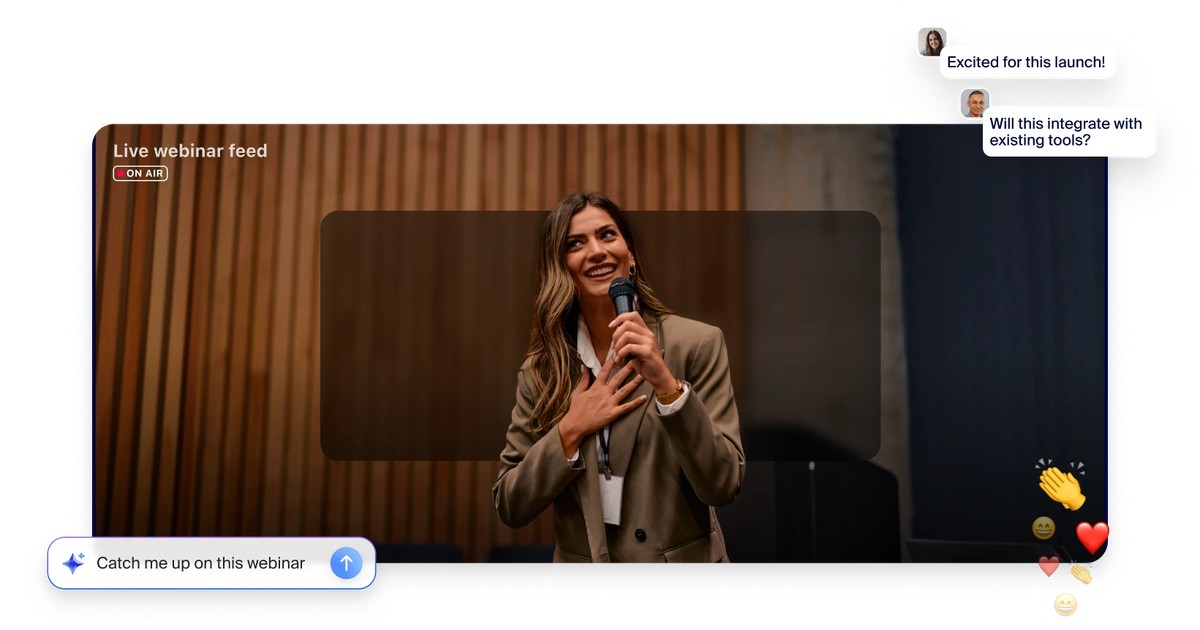
Zoom's main advantage is that most people already have it installed. That removes one of the biggest friction points in webinar attendance. The platform supports up to 1,000 attendees on its base webinar plan and integrates with most CRM and marketing automation tools.
For training teams, Zoom's breakout rooms are useful during large onboarding sessions where you want to split cohorts for small-group exercises. The platform also supports livestreaming to YouTube and Facebook if you want to extend reach beyond registered attendees.
Where it falls short: Zoom Webinar pricing requires a base Zoom One license ($149.90/year/user) plus a webinar add-on starting at $79/month for 500 attendees [2]. Costs compound quickly for large organizations running frequent events. Audio and video quality can also degrade under high attendee loads if bandwidth isn't managed.
Best for: Teams where attendees already use Zoom daily and need a familiar interface with no adoption curve.
2. Livestorm
Livestorm runs entirely in the browser — no downloads, no plugins. That matters a lot for external attendees joining from outside your company network, and it's a meaningful difference from Zoom and GoToWebinar, which still require app installations.
The platform includes built-in registration pages, automated email sequences (reminders, follow-ups), a CRM-compatible analytics dashboard, and engagement tools including polls, chat, and Q&A. On-demand mode lets you publish replays with the same registration workflow as live events.
Pricing starts with a free tier capped at 10 live attendees. The Premium plan at $99/month supports 100 live attendees [2]. For B2B training teams running customer education or partner enablement webinars, Livestorm's engagement scoring (which tracks how long each attendee stayed and what they interacted with) can help identify who needs a follow-up call.
A real-world example: teams at HubSpot have used Livestorm for customer onboarding webinars, citing the zero-install join experience and integrated analytics as the primary reasons for switching from a legacy platform.
Best for: Training and marketing teams that need a polished attendee experience without requiring IT support to get people in the room.
3. Microsoft Teams (with webinar mode)
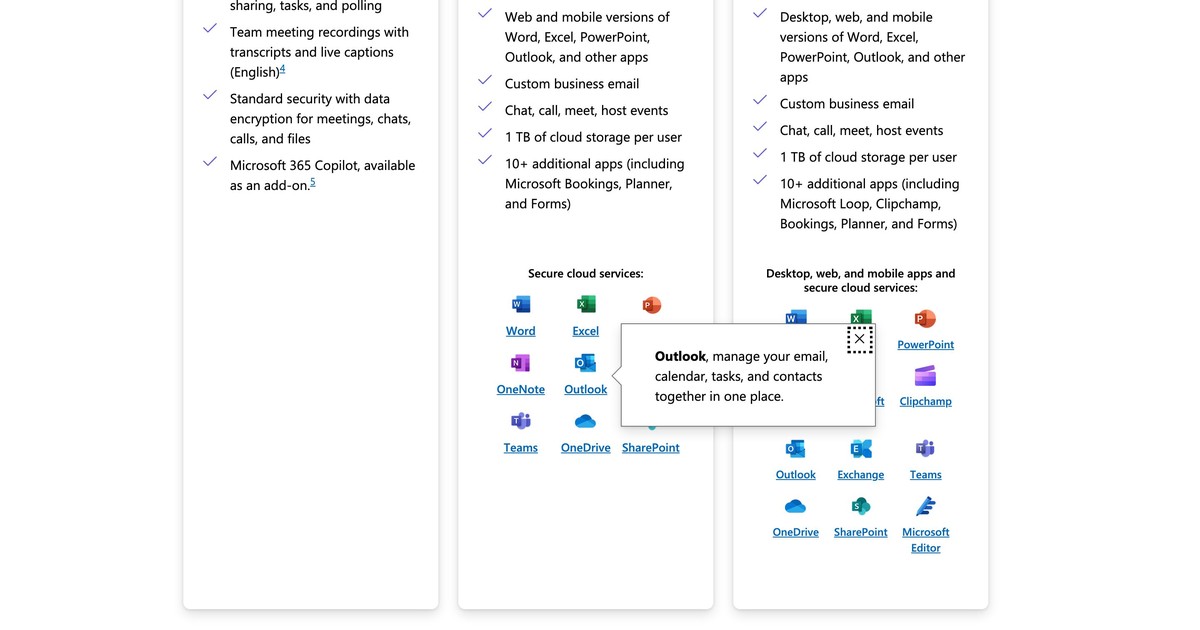
Teams added formal webinar functionality in 2021, distinguishing it from a regular Teams meeting. In webinar mode, attendees can only communicate through Q&A rather than open chat, the presenter controls the experience more tightly, and Teams generates registration pages with attendance reporting.
The real advantage is ecosystem integration. Organizations already paying for Microsoft 365 get Teams included, making it the lowest incremental cost option on this list. Scheduling integrates directly with Outlook calendars, which reduces no-shows because events appear in attendees' existing calendars automatically.
The limits are notable, though. Webinar mode tops out at around 1,000 attendees (with town hall mode supporting up to 10,000 for broadcast-style events). Screen sharing can lag, and the interface feels more like a meeting tool than a dedicated webinar platform. It also lacks the automated email sequences and landing page flexibility of Livestorm or GoToWebinar.
Best for: Internal training and HR communications for organizations already on Microsoft 365, where attendees are employees on the same tenant.
4. Cisco Webex Webinars
Webex is the choice for regulated industries and large enterprises. The platform handles up to 100,000 attendees, integrates with Cisco hardware infrastructure, and offers real-time translation for global audiences. Government agencies and financial services firms use it partly because it meets compliance requirements that consumer-grade tools don't.
For training purposes, Webex's polling and breakout functionality is solid. The platform also offers background blur and virtual backgrounds, high-quality audio even under load, and unique video-locking during screen share (so the presenter's face stays visible in a fixed position rather than being minimized).
The drawbacks are real: the interface is heavier than any other option here, pricing is not publicly listed and tends to run higher than competitors, and it is overkill for teams running internal training sessions under 500 people. Microsoft Office document support is also limited [3].
Best for: Enterprise and regulated-industry teams with large-scale broadcast needs or specific security and compliance requirements.
5. GoToWebinar
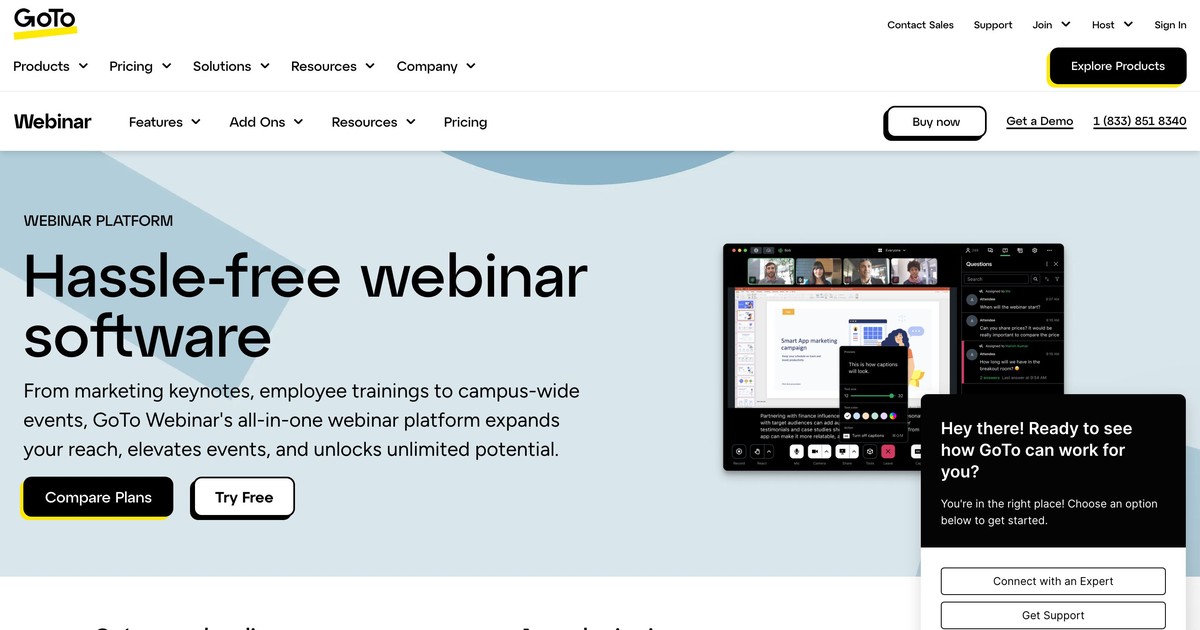
GoToWebinar has been around since 2006 and has earned a reputation for reliability that newer platforms are still working to match. Insurance companies, banks, and HR compliance teams use it specifically because it clears corporate firewall restrictions that block newer tools.
The platform includes pre-built registration workflows, robust analytics (source tracking, attendee engagement reports, and poll results), breakout sessions on higher tiers, and automated follow-up emails. Pricing is annual-only: the Starter plan at $49/month for 250 attendees, Standard at $99/month for 500 attendees, and Pro at $199/month for 1,000 attendees [2].
The downside is the attendee experience. GoToWebinar still requires a desktop app download, which adds friction for external attendees and can hit IT roadblocks. The interface also looks dated compared to Livestorm or Zoom, which can affect perceived quality in customer-facing webinars.
Best for: HR and compliance teams in regulated industries that need rock-solid reliability and pass corporate network restrictions, where the attendee experience is a secondary concern.
Side-by-side comparison

| Platform | Max attendees | Browser-based | Starting price | Best use case |
|---|---|---|---|---|
| Zoom Webinars | 1,000 | No (app required) | $79/mo add-on | Familiar interface, internal and external |
| Livestorm | 100 (Premium) | Yes | $99/mo | B2B training, customer education |
| Microsoft Teams | 1,000 (webinar mode) | Partial | Included in M365 | Internal HR and L&D, Microsoft shops |
| Cisco Webex | 100,000 | No | Custom pricing | Enterprise, regulated industries |
| GoToWebinar | 1,000 | No (app required) | $49/mo | Compliance teams, corporate firewalls |
Keeping attendees engaged once they're in
Getting people into the session is only part of the problem. Attendees are most focused in the first 30 minutes; after that, drop-off rates rise steadily [1]. Most webinar platforms include basic polling, but the question fields are minimal and results aren't visible to attendees in real time.
Teams that run training webinars often add AhaSlides alongside their webinar platform to handle the engagement layer. AhaSlides runs in the browser and supports live polls, word clouds, quizzes, Q&A, and rating scales that participants open on a second tab or their phone while the main webinar plays on screen. Results appear instantly for both presenter and audience, which makes mid-session knowledge checks and post-training evaluations more useful than a feedback form sent after the fact. Teams that want to turn a one-off webinar into a repeatable, self-paced module afterwards can package the same content with an online course creator.
For example, an L&D team running a compliance training webinar on Teams can use AhaSlides to run a knowledge-check quiz at the 20-minute mark, display aggregate results to the group, and collect satisfaction ratings at the end, all without asking IT to reconfigure anything in the Teams environment.
Common mistakes to avoid when choosing a webinar platform
Choosing based on presenter experience alone. It is easy to pick the platform your team finds comfortable to present from, without testing the attendee join flow. Ask a colleague outside your organization to attempt joining a test session before committing. If they hit a download prompt or a firewall block, that will happen to a percentage of your real attendees every time.
Underestimating recording and storage costs. Most platforms advertise a per-seat or per-month price, but recording storage is often capped or billed separately. If your L&D program relies on on-demand replays for employees who missed a live session, verify exactly how much storage is included and what the overage rate is before signing a contract.
Locking in annually before testing at scale. A platform that performs well in a pilot with 20 people can behave differently at 400. Audio sync issues, attendee management controls, and moderator tools all feel different at scale. If possible, run one full-size test event on a short-term plan before committing to an annual subscription at a higher tier.
Ignoring the follow-up data workflow. The analytics you collect during a webinar — attendance time, poll responses, Q&A questions — only have value if they can move into the tools your team already uses. Before choosing a platform, check whether it integrates natively with your LMS, your CRM, or at minimum exports data in a format your team can work with. A platform that traps engagement data inside its own dashboard adds a manual step every time you run a session.
Frequently asked questions
Can I run a webinar with a free plan?
Yes, but with significant limits. Livestorm's free tier supports up to 10 live attendees per session. Zoom's free Meetings plan is not a webinar product — it requires a paid webinar add-on. Microsoft Teams includes webinar functionality in many Microsoft 365 business plans at no extra charge, which makes it the most accessible free option for organizations already in the Microsoft ecosystem.
What is the difference between a webinar and a regular video meeting?
In a standard video meeting, all participants can turn on cameras, unmute, and interact freely. In a webinar, attendees are typically in view-only or listen-only mode by default, with interaction channeled through Q&A or polls that the host controls. That structure matters for training and HR use cases because it reduces background noise, keeps the agenda on track, and gives the host moderation control over a large group.
Do attendees need to create an account to join?
It depends on the platform. Livestorm allows attendees to join through a registration link with no account required. Zoom Webinars do not require attendees to have a Zoom account if the host has enabled that setting. Microsoft Teams webinars work without a Teams account for external attendees joining via link. GoToWebinar and Webex generally require attendees to install software, though not necessarily create an account.
Which platform should you choose?
If your attendees are already on Microsoft 365, Teams is the obvious starting point given the zero additional cost. If you're running customer-facing or partner webinars where attendee experience matters, Livestorm's browser-based access is hard to argue against. For organizations with complex compliance requirements or very large audiences, Webex is the only platform built at that scale. GoToWebinar remains the most dependable choice for teams operating inside strict corporate network environments. Zoom makes sense when ubiquity is the priority and you can absorb the per-user licensing cost.
The decision comes down to who your attendees are, how they connect, and what you need to do with the engagement data after the session ends.
Sources
[1] ON24. 2025 Webinar Benchmarks Report. Key statistics on live attendance rates and attendee engagement patterns. https://www.on24.com/blog/key-takeaways-from-the-2025-webinar-benchmarks-report/
[2] Growth Marketing Pro. Best webinar software reviewed 2026. Pricing and feature comparison across major platforms. https://www.growthmarketingpro.com/best-webinar-software/
[3] Getcontrast.io. Livestorm vs. Zoom Webinars: 2026 comparison. Platform feature and pricing breakdown. https://www.getcontrast.io/learn/livestorm-vs-zoom-webinars