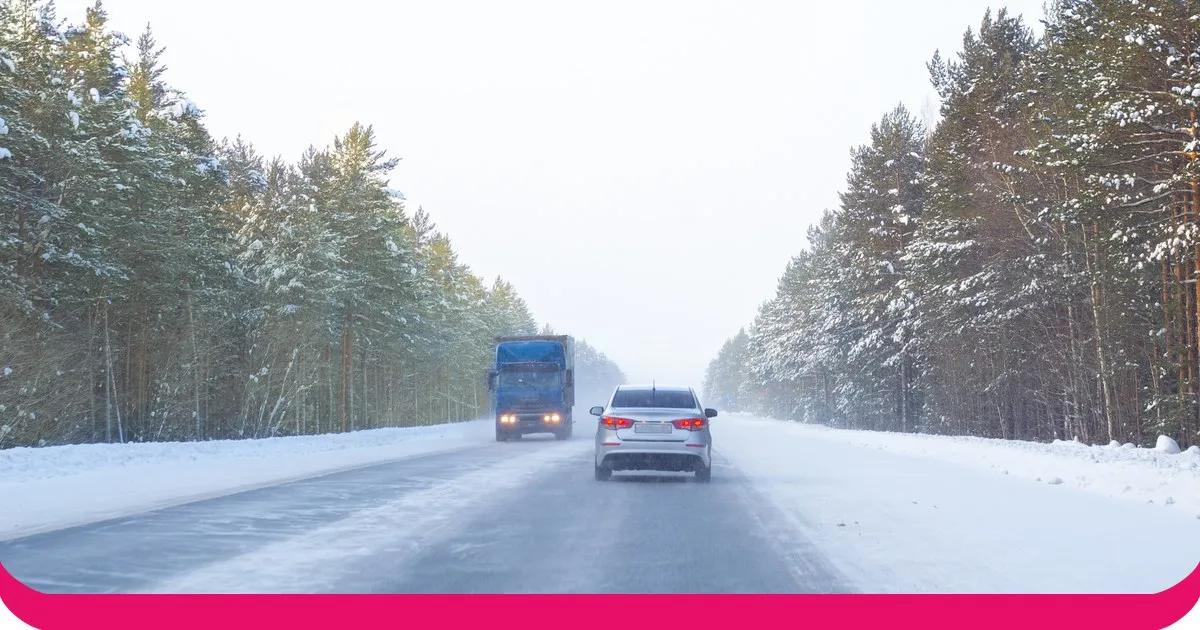
On average, 156,164 crashes a year in the United States happen on icy pavement and 186,076 on snow or slushy pavement, according to the Federal Highway Administration (FHWA, five-year averages for 2019 to 2023). Those two figures are counted separately, so do not add them. The same page counts 521 deaths on icy pavement and 496 on snow or slush each year.
If your people drive for work, some of those trips are yours. This post gives you 15 winter driving safety tips for employees in 3 sets of 5: prepare the vehicle, drive, and what to do if you get stuck. Each set has an Our pick, the rule we would brief first, with one line on why. The sources are US-based, so check local rules for anything legal, such as tyre requirements.
Round 1: Prepare the vehicle and the trip
Set 1: Before you turn the key
- Check the tyres. The National Highway Traffic Safety Administration (NHTSA) says tyre pressure drops as the temperature drops, so fill each tyre to the pressure in the owner's manual and check the tread is at least 2/32 of an inch.
- Test the battery. NHTSA says it takes more battery power to start an engine in cold weather and that an electric vehicle's range can fall. Have a mechanic check the battery, the charging system and the belts.
- Check the lights, wipers and fluid. Test headlights, brake lights, indicators and hazard lights, replace worn wiper blades and fill the reservoir with winter fluid that has de-icer.
- Stock the winter kit. NHTSA lists a snow shovel, broom and ice scraper, sand or kitty litter, jump leads, a torch, warning flares, a first aid kit, blankets, a charged phone, water and food.
- Check the forecast and the route. NHTSA says to check weather and traffic reports and to postpone non-essential travel if roads are in poor shape. Tell someone your route and your expected arrival time.
Our pick: rule 5, check the forecast and the route. It is the rule that can remove the risk altogether. Every other rule makes a trip safer. This one asks whether the trip needs to happen.
Round 2: Drive
Set 2: On the road
- Slow down. NHTSA says it is harder to control or stop a vehicle on a slick or snow-covered surface. AAA says to adjust your speed down to account for lower traction.
- Leave more space. AAA says to increase following distance to five to six seconds. The National Safety Council (NSC), quoting AAA, says eight to ten. Treat six as the minimum and stretch it on ice.
- Accelerate and brake gently. AAA says to apply the gas slowly to regain traction and that it takes longer to slow down on icy roads. With antilock brakes, NHTSA says to apply firm, continuous pressure to the pedal.
- No cruise control on slippery roads. Both AAA and the NSC say not to use it in wintry conditions.
- Clear the glass, mirrors and sensors. The NSC says to clean camera lenses and side mirrors and to remove ice and snow from the sensors that driver-assistance features such as automatic emergency braking rely on.
Our pick: rule 7, leave more space. Many other mistakes on snow are survivable if you have room to stop. A longer gap buys you the time that a late brake does not.
Round 3: If you get stuck
Set 3: Stranded
- Stay with the vehicle. AAA says the vehicle gives you temporary shelter and makes it easier for rescuers to find you. In a severe storm it is easy to lose sight of the car and become lost.
- Clear the exhaust pipe. AAA says a blocked pipe can leak deadly carbon monoxide into the cabin. NHTSA adds that you should run the engine only sporadically, just long enough to stay warm, and never in an enclosed space.
- Do not overexert yourself. AAA says to stop digging out the vehicle if you become tired.
- Be visible. NHTSA says to put bright markers on the antenna or windows and keep the interior light on. AAA suggests a brightly coloured cloth on the antenna.
- Call in. Phone your supervisor or dispatcher early, give your location and say what has happened. This one is our advice rather than a regulator's: a missed check-in is how an employer finds out something is wrong.
Our pick: rule 12, clear the exhaust pipe. It is the rule people do not know about until it matters. Heat feels like the safe choice. A blocked pipe is the danger.
For employers: the trip that does not need to happen
The FHWA figures above come from workers and non-workers alike, but your drivers are part of them. OSHA's winter weather page says winter weather presents hazards including slippery roads and surfaces, and that employers must prevent illnesses, injuries or fatalities by controlling those hazards in workplaces affected by winter weather. This post is general information, not legal advice. Four practical steps:
- Set a trip cancellation rule. Name who can cancel a trip and what triggers it, such as a weather warning on the route. AAA and NHTSA both say to delay a trip when conditions are bad.
- Agree check-in calls. For longer trips, ask for a call at departure, at the half-way point and on arrival.
- Run a vehicle check before winter. Use Round 1 as the checklist and keep the winter kit on the vehicle, not in the garage.
- Brief the team once a year. A short session before the first frost covers the 15 rules. For more topics, see our list of workplace safety topics.
Ways to host a pre-winter briefing with AhaSlides
A briefing works best when drivers answer rather than listen. Use the 15 rules as the content.
- Pick Answer: "What do you do first if you skid?" Offer four choices, such as brake hard, ease off the accelerator and steer in the direction of the skid, turn the wheel the other way, or pull the handbrake. Then go through the skid advice in the FAQ.
- Word Cloud: "What is in your winter kit?" Compare the answers with the NHTSA list in rule 4 and see what is missing.
- Rating Scale: "How confident are you driving on ice?" Ask for a rating from 1 to 5. The lowest scores show who needs more support or a different route.
- Open Ended, anonymous: "A route that worries you." People name roads they dread, and you can plan around them.
If you want a ready-made session, the Defensive driving and fleet safety course template gives you slides to adapt.
Frequently asked questions
What are the best winter driving safety tips?
Slow down, leave more space and prepare the vehicle. Add gentle braking and steering, and no cruise control on slippery roads, and you have the core of the 15 rules above.
What should be in a winter car kit?
NHTSA's list: a snow shovel, broom and ice scraper, sand or kitty litter, jump leads, a torch and warning devices, a first aid kit, blankets, a phone and charger, water, food and any necessary medicine.
What should you do if your car skids on ice?
Ease off the accelerator and steer in the direction of the skid. The NSC, quoting AAA, says this means you do not have to overcorrect when the wheels grip again.
Should employees drive in a snowstorm?
Not unless the trip is essential. AAA says to stay home and only go out if necessary, and NHTSA says to postpone non-essential travel until roads are cleared.
Where to start
Pick one set and use it this week: Round 1 as a vehicle checklist, or Round 3 as a two-minute talk at the start of a shift.