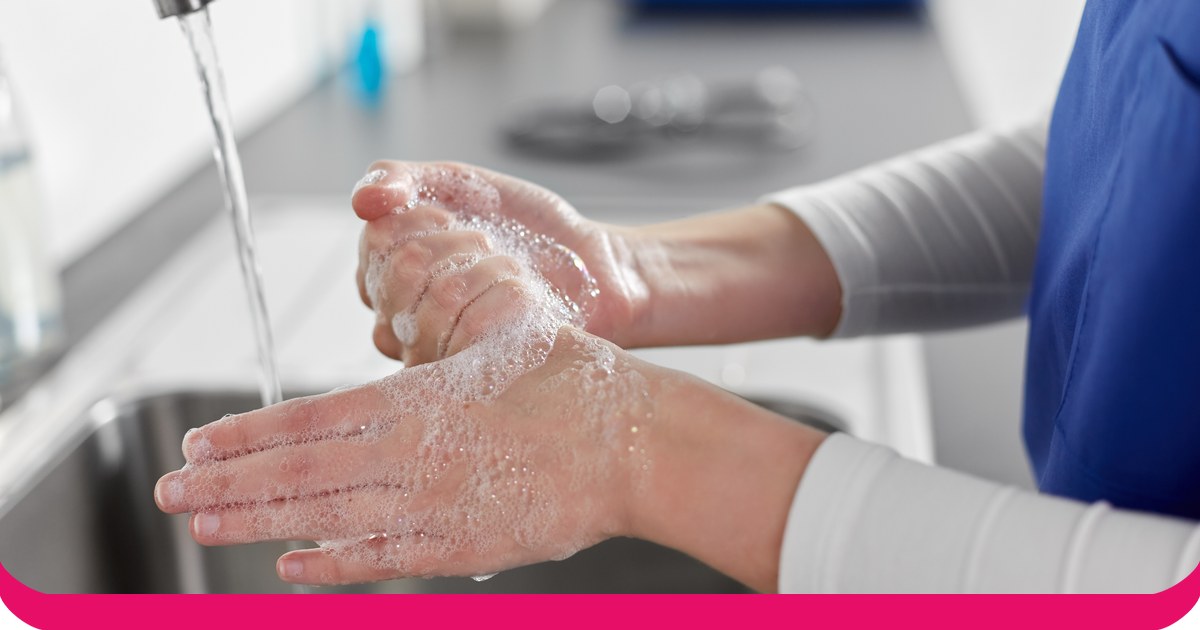
The World Health Organization (WHO) reports that out of every 100 patients in acute-care hospitals, 7 in high-income countries and 15 in low- and middle-income countries will acquire at least one health care-associated infection during their stay (WHO: first global report on infection prevention and control). WHO adds that where good hand hygiene and other cost-effective practices are followed, 70% of those infections can be prevented.
This quiz has 30 questions with answers in 3 rounds of 10: hand hygiene and personal protective equipment (PPE), standard precautions, and transmission-based precautions and exposures. Each round has two sets of 5 and an Our pick. Every answer comes from the US Centers for Disease Control and Prevention (CDC), WHO or the US Occupational Safety and Health Administration (OSHA). It is written for healthcare trainers, infection prevention leads and staff refreshing their knowledge.
This is general training content, not clinical guidance. Your own facility's policy and your employer's exposure control plan govern, so use the answers as a prompt and check them against your local rules.
Round 1: Hand hygiene and PPE (10 questions)
WHO calls hand hygiene a major component of standard precautions and one of the most effective ways to prevent transmission of pathogens in health care.
Set 1: The WHO 5 moments (5 questions)
What are the 5 moments for hand hygiene? Answer: Before touching a patient, before a clean or aseptic procedure, after body fluid exposure risk, after touching a patient, and after touching patient surroundings. WHO: Five moments for hand hygiene
A nurse is about to insert a urinary catheter. Which moment applies? Answer: Before a clean or aseptic procedure (moment 2). WHO: Five moments for hand hygiene
A health worker adjusts a drip stand beside a patient's bed and has not touched the patient. Which moment applies? Answer: After touching patient surroundings (moment 5). WHO: Five moments for hand hygiene
Our pick. A health worker touches the bed rail, then goes to insert a catheter for the same patient. Which moment applies before the catheter? Answer: Before a clean or aseptic procedure (moment 2). The bed rail counts as patient surroundings (moment 5), but the catheter is the step that needs clean hands. We picked it because two moments can sit in one task, and it shows which one to act on. WHO: Five moments for hand hygiene
True or false: hand hygiene is a major component of standard precautions. Answer: True. WHO calls it one of the most effective methods to prevent transmission of pathogens associated with health care. WHO: Standard precautions in health care
Set 2: PPE (5 questions)
When does CDC say to use PPE? Answer: Whenever there is an expectation of possible exposure to infectious material. CDC: Standard precautions
What should the choice of PPE be guided by? Answer: A risk assessment and the extent of contact anticipated with blood, body fluids or pathogens. WHO: Standard precautions in health care
For which patients are standard precautions used? Answer: All patient care. CDC: Standard precautions
True or false: standard precautions are only needed for patients known to be infectious. Answer: False. They are used for all patient care, and they are based on a risk assessment. CDC: Standard precautions
According to WHO, who should follow infection control practices in a health-care setting? Answer: All individuals, including patients and visitors, as well as health workers. WHO: Standard precautions in health care
Round 2: Standard precautions in practice (10 questions)
Standard precautions are the basic level of infection control for all patient care. These questions cover the eight practices CDC lists and the thinking behind them.
Set 1: The eight practices (5 questions)
Our pick. Name the eight practices in CDC's standard precautions. Answer: Hand hygiene; PPE; respiratory hygiene and cough etiquette; appropriate patient placement; handling, cleaning and disinfecting patient care equipment and instruments; cleaning and disinfecting the environment; careful handling of textiles and laundry; and safe injection practices. We picked it because these eight practices are the backbone of standard precautions. CDC: Standard precautions
Which outbreak led to respiratory hygiene and cough etiquette becoming part of standard precautions? Answer: The severe acute respiratory syndrome (SARS) outbreak. WHO: Standard precautions in health care
WHO says control of the spread of pathogens from the source is key. What is that approach called? Answer: Source control. Respiratory hygiene and cough etiquette is one example. WHO: Standard precautions in health care
Which standard precaution covers deciding where a patient stays in the facility? Answer: Ensuring appropriate patient placement. CDC: Standard precautions
What does CDC say about patient care equipment and instruments? Answer: They must be properly handled, cleaned and disinfected. CDC: Standard precautions
Set 2: Environment, laundry and the thinking behind it (5 questions)
What does CDC say about the patient environment? Answer: Clean and disinfect the environment appropriately. CDC: Standard precautions
How should textiles and laundry be handled? Answer: Carefully. This is one of the eight standard precautions. CDC: Standard precautions
Which standard precaution covers injections and sharps? Answer: Following safe injection practices. CDC: Standard precautions
Why are standard precautions described as risk-based? Answer: They are based on a risk assessment and use common sense practices and PPE, to protect health care providers and to prevent the spread of infection from patient to patient. CDC: Standard precautions
According to WHO, what helps staff follow recommended measures? Answer: An institutional safety climate, together with adequate staff and supplies, leadership, and education of health workers, patients and visitors. WHO: Standard precautions in health care
Round 3: Transmission-based precautions and exposures (10 questions)
Some patients need more than standard precautions. These questions cover the second tier, then what an employer must do after a worker is exposed to blood or body fluids.
Set 1: Transmission-based precautions (5 questions)
What are transmission-based precautions? Answer: The second tier of basic infection control. They are used in addition to standard precautions for patients who may be infected or colonised with certain infectious agents. CDC: Transmission-based precautions
Name the three types of transmission-based precautions. Answer: Contact, droplet and airborne. CDC: Transmission-based precautions
When are contact precautions used? Answer: For patients with known or suspected infections that represent an increased risk for contact transmission. CDC: Transmission-based precautions
When are droplet precautions used? Answer: For patients known or suspected to be infected with pathogens transmitted by respiratory droplets, which are generated when the patient coughs, sneezes or talks. CDC: Transmission-based precautions
Our pick. Name two infections that call for airborne precautions. Answer: Any two of: tuberculosis, measles, chickenpox, disseminated herpes zoster. We picked it because airborne and droplet precautions differ, and these are the examples CDC gives. CDC: Transmission-based precautions
Set 2: After an exposure (5 questions)
The answers below are from the OSHA bloodborne pathogens standard, 29 CFR 1910.1030(f), which applies to US workplaces with occupational exposure. Check the rules where you work.
After a worker reports an exposure incident, what must the employer make immediately available? Answer: A confidential medical evaluation and follow-up. OSHA 1910.1030(f)(3)
What must the post-exposure follow-up document first? Answer: The route or routes of exposure and the circumstances under which the exposure incident occurred. OSHA 1910.1030(f)(3)
Who pays for post-exposure evaluation and the hepatitis B vaccine series? Answer: The employer. They must be made available at no cost to the employee, at a reasonable time and place. OSHA 1910.1030(f)(1)
Who must be offered the hepatitis B vaccine and vaccination series? Answer: All employees who have occupational exposure. OSHA 1910.1030(f)(1)
What does the follow-up say about the source individual? Answer: The employer must identify and document the source individual, unless they can establish that identification is infeasible or prohibited by state or local law. OSHA 1910.1030(f)(3)
Ways to host an infection control quiz with AhaSlides
A refresher works best when each person answers for themselves. Build the slides from the questions above.
- Pick Answer: put a scenario on a slide, give four choices, and turn on the team leaderboard. The WHO moment questions in Round 1 convert one to one.
- Word Cloud: "At which moment do you most often forget hand hygiene?" The biggest word shows what to drill first.
- Rating Scale: "How confident are you removing PPE?" Rate 1 to 5, then spend time with the lowest scores.
- Open Ended, anonymous: one question for your infection prevention lead.
- Q&A: people send questions about local policy without having to say it aloud.
Swap in your own wards, equipment and policy numbers so the slides match what staff see on shift. For more ideas see workplace violence in healthcare: 10 prevention steps, scenario-based healthcare compliance training and medical training gamification with interactive quizzes. The Infection control & standard precautions course template is ready to use.
Tips for running the quiz
Run one round per huddle, so the quiz takes about 10 minutes. Open with the WHO figure of 7 and 15 patients in every 100 acquiring an infection, and close with the 70% that good practice can prevent. After each wrong answer, follow up with your facility's own policy, because the quiz gives the principle and your policy gives the detail. Repeat the missed questions in the next huddle.
Frequently asked questions
What are the standard precautions in infection control?
Hand hygiene, PPE, respiratory hygiene and cough etiquette, appropriate patient placement, safe handling of equipment, the environment and laundry, and safe injection practices, per CDC. They apply to all patient care.
What are the 5 moments for hand hygiene?
Before touching a patient, before a clean or aseptic procedure, after body fluid exposure risk, after touching a patient, and after touching patient surroundings. These are the WHO 5 Moments.
What is the difference between standard and transmission-based precautions?
Standard precautions apply to every patient. Transmission-based precautions are added for patients with known or suspected infections, and come as contact, droplet or airborne.
How many questions should an infection control quiz have?
Around 10 per session. Ten questions take about 10 minutes, which fits a huddle, so this quiz runs as three sessions.
Where to start
Run Round 1 at your next huddle and note which moments people hesitate on. Those are the ones to repeat in the next session.