Thirty-three easy games, 19 for indoors and 14 for outdoors, plus the safety tips that keep them fun.
If you look after energetic preschoolers, you know that a rainy day or a long afternoon needs a plan. This collection has 33 indoor and outdoor physical games for preschoolers that need little or no equipment and are simple to explain.
Why active play matters at this age
The World Health Organization's guidance for children under five says that children aged 3 to 4 should spend at least 180 minutes a day in a variety of physical activities, with at least 60 minutes of that at moderate to vigorous intensity (WHO, 2019). The US Centers for Disease Control and Prevention adds that preschool-aged children should be active throughout the day, and that adult caregivers should encourage them to be active when they play (CDC). Short, simple games like the ones below are an easy way to fit that in.
Tips for creating a safe environment for physical games
- Choose a soft, clear play area. A grassy lawn or a rubberised playground surface is ideal. Avoid concrete or asphalt, which can turn a fall into a serious injury.
- Check the equipment. Inspect toys and play equipment regularly for wear and tear, make sure they suit the children's age, and replace or repair anything that looks damaged.
- Supervise at all times. An attentive adult can spot hazards early, calm conflicts and make sure equipment is used properly.
- Keep the rules simple. Teach children to share, take turns and respect one another's space.
- Watch for tiredness. Offer water and short breaks, and let any child who is tired or sore sit out for a while.
- Keep a basic first aid kit nearby for minor cuts and scrapes.
19 indoor physical games for preschoolers
When the weather rules out outdoor play, these games work in a living room, classroom or hallway. Adapt them to the space you have and to the children's ages and abilities.
- Freeze dance. Play some music and let the children dance. When the music stops, they freeze in place until it starts again.
- Balloon volleyball. Use a soft balloon as the ball and have the children bat it back and forth over a makeshift net or a line of tape.
- Simon says. One leader gives commands such as "Simon says touch your toes" or "Simon says hop on one foot". Children only follow commands that start with "Simon says".
- Animal races. Give each child an animal and let them move like it: hop like a bunny, waddle like a penguin, crawl like a crab.
- Mini Olympics. Set up simple challenges such as jumping through hula hoops, crawling under a table or tossing beanbags into a bucket.
- Indoor bowling. Roll a soft ball at empty plastic bottles to knock them down.
- Obstacle course. Build a course from pillows to jump over, tunnels to crawl through and a masking tape line to walk along.
- Laundry basket basketball. Place laundry baskets on the floor and have the children toss soft balls or rolled-up socks into them.
- Indoor hopscotch. Make a hopscotch grid on the floor with masking tape and let the children hop from square to square.
- Gentle pillow fight. Agree ground rules first (soft pillows, no hitting heads) so the children can burn off energy safely.
- Dance party. Turn up the music and let the children dance freely and show off their moves.
- Indoor football. Make goals from household items and have the children kick a soft ball, or a pair of rolled-up socks, into them.
- Animal yoga. Lead the children through yoga poses named after animals, such as downward dog or the cat-cow stretch.
- Paper plate skating. Put paper plates under the children's feet and let them "skate" across a smooth floor.
- Feather blowing. Give each child a feather and have them blow on it to keep it in the air for as long as possible.
- Ribbon dancing. Hand out ribbons or scarves to wave and twirl while dancing to music.
- Follow the leader. One child leads and the others copy every move: marching, tiptoeing, jumping, spinning. Take turns being the leader.
- Beanbag toss. Set up targets such as buckets or hula hoops at different distances and have the children toss beanbags into them.
- Musical statues. Like freeze dance, but the children must hold a statue-like pose when the music stops. The last one to freeze sits out the next round.
14 outdoor physical games for preschoolers
- Duck, duck, goose. The children sit in a circle while one child walks around tapping heads and saying "duck, duck, goose". The chosen "goose" chases the tapper around the circle.
- Red light, green light. One child is the traffic light and calls "green light" (go) or "red light" (stop). The others move towards the light and must freeze on red.
- Nature scavenger hunt. Give the children a simple list of things to find outside, such as a pinecone, a leaf or a flower.
- Water balloon toss. On hot days, pair the children up to toss water balloons back and forth without popping them. Keep it to larger, sturdy balloons and sweep up any burst pieces straight away, because fragments are a choking risk. Damp sponges are a safer swap for the youngest children.
- Bubble party. Blow bubbles and let the children chase and pop them.
- Nature I spy. Ask the children to spot natural things around them, such as a bird, a butterfly or a particular tree.
- Three-legged race. Pair the children up and tie one leg of each partner together with a soft scarf, then race.
- Hula hoop ring toss. Lay hula hoops on the ground and have the children toss beanbags or rings into them.
- What's the time, Mr Wolf? One child is the wolf, with their back to the group. The others call "What's the time, Mr Wolf?" and take that many steps forward, until the wolf shouts "Dinner time!" and chases them back to the start.
- Tug of war. Split the children into two teams for a friendly tug of war with a soft rope or a long scarf.
- Sack races. Give each child a large sack or an old pillowcase to hop in.
- Nature art. Let the children make art from natural materials they find, such as leaf rubbings or mud paintings.
- Ring a ring o' roses. Gather the children in a circle and sing the classic song, ending with everyone falling down together.
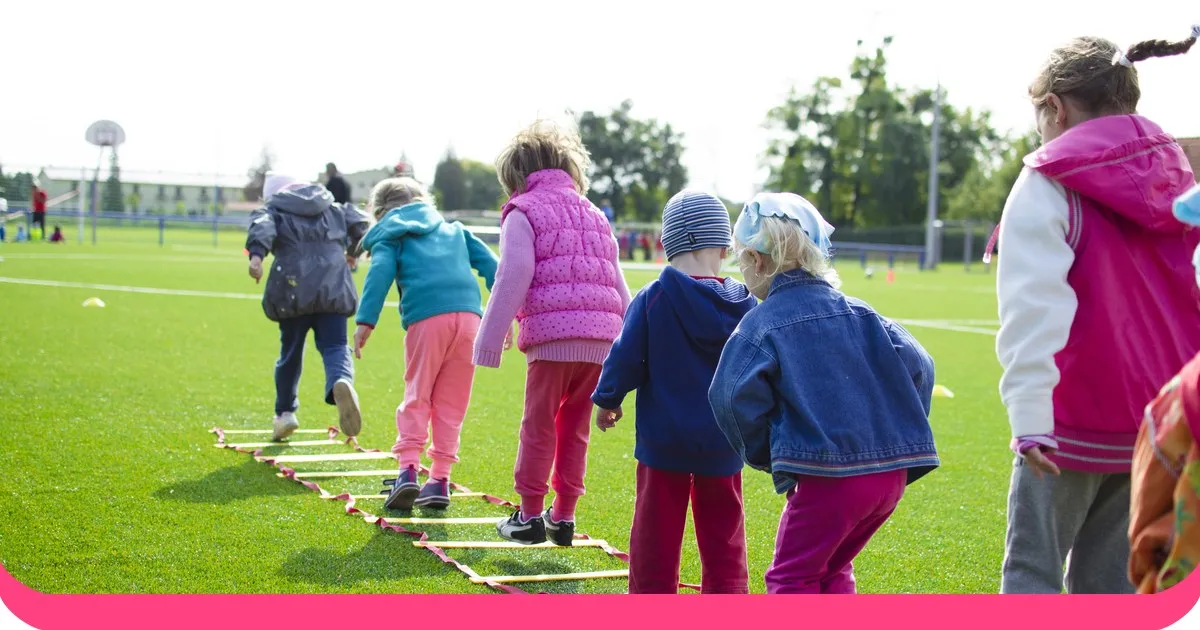
- Outdoor picnic and games. Combine a picnic in a park or garden with plenty of time to run, jump and play afterwards.
Always match the game to the age and abilities of the children, and keep supervision close, especially around ropes, balloons and water.
Pick the next game with a spinner wheel
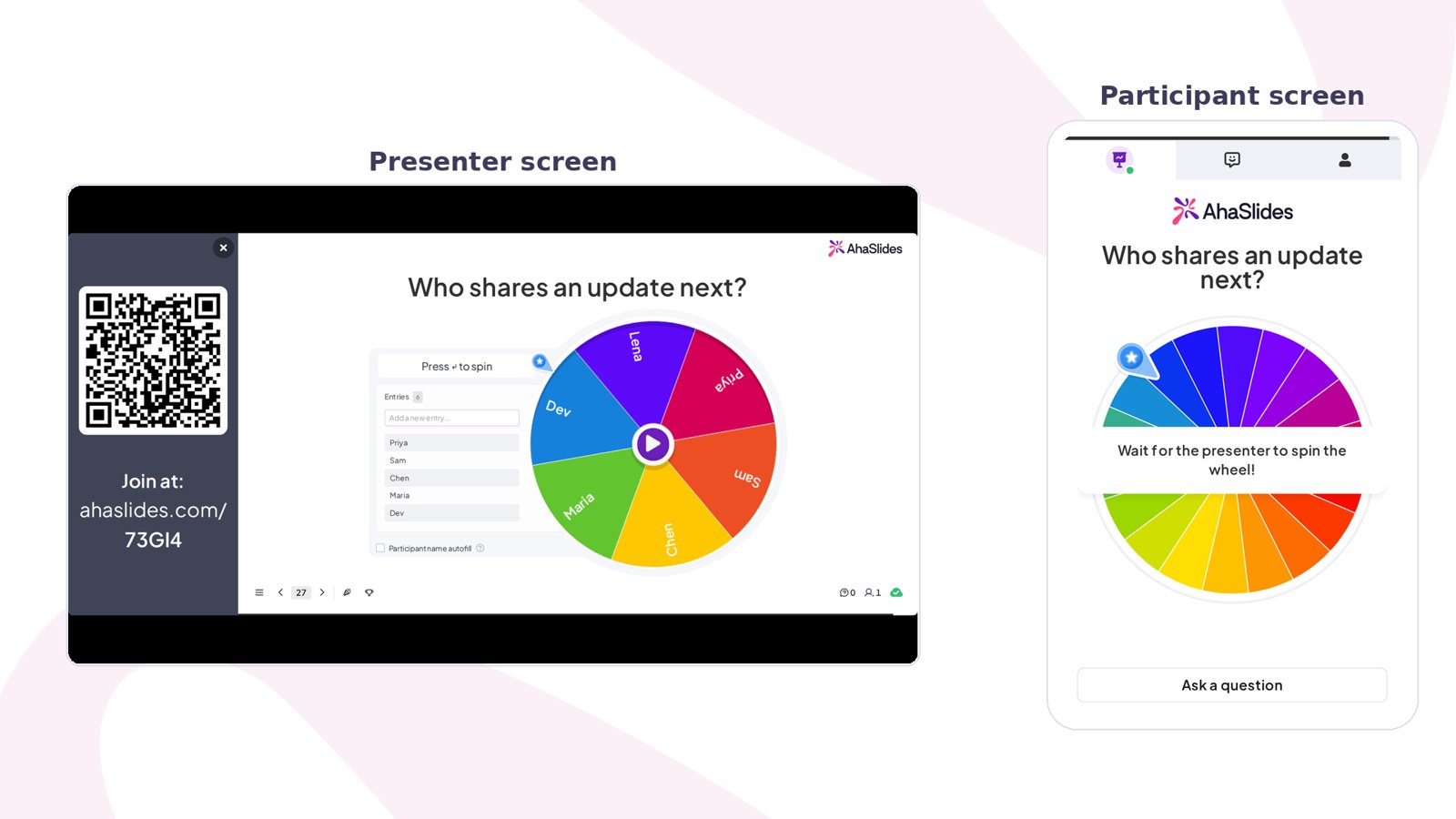
Children love not knowing what comes next, and a spinner wheel makes choosing the game part of the fun. Type your favourite games into an AhaSlides spinner wheel, show it on the classroom screen and let a child press the button. Whatever the wheel lands on is the next game.
For more ideas, see our guides to circle time activities and educational games for kids.
Final thoughts
Physical games for preschoolers are about more than burning off energy. They build coordination, listening skills and confidence, and they give children memories of playing together. Pick a few from the 33 above, adapt them to your space, and keep the rules short.
Frequently asked questions
What are examples of physical activities for preschoolers? Balloon volleyball, Simon says, animal races, mini Olympics and indoor bowling all work well indoors.
What are fun outdoor physical activities for kids? Try a nature scavenger hunt, a bubble party, a three-legged race, a hula hoop ring toss or red light, green light.
How much physical activity do preschoolers need? The World Health Organization recommends at least 180 minutes a day for children aged 3 to 4, including at least 60 minutes of moderate to vigorous activity.