A good youth group game does three jobs at once: it burns off energy, it gets people who do not know each other talking, and it is simple enough to explain in under a minute. The twelve games below cover indoor and outdoor play, small and large groups, and a few seasonal favourites. Each one has the group size, what you need and the one thing that most often goes wrong, so you can pick and run it without a long prep.
Why games matter for youth groups
Belonging is the point of most youth groups. The US Centers for Disease Control and Prevention describes school connectedness as young people feeling that the adults and peers around them care about them, and links it to better mental health and attendance. Shared play is one simple way to build that feeling, because it gives everyone a role that is not "talk about yourself in front of the room".
How to choose a game
- Group size: capture the flag and colour war need 12 or more. Mafia works best with 8 to 15. A quiz or scavenger hunt scales to almost any number.
- Space and weather: decide indoor or outdoor first, and keep a wet-weather option ready.
- Age range: with mixed ages, pair older and younger players and avoid games where size or speed decides the winner.
- Time: most of these run for 10 to 30 minutes. Stop while people still want more.
- Safety: run a quick check for allergies, injuries and anyone who is uncomfortable with touch, blindfolds or messy games. If you lead a group of under-18s, follow your organisation's safeguarding policy, for example the guidance from the NSPCC, and keep adult supervision visible.
Which game fits your group?
| Game | Best for | Where | Group size |
|---|---|---|---|
| Capture the flag | Teamwork and energy | Outdoors | 12 to 40 |
| Live trivia quiz | Mixed groups, online or in person | Anywhere | Any |
| Mafia | Deduction and talking | Indoors | 8 to 15 |
| Sardines | Retreats and sleepovers | Building or grounds | 8 to 30 |
| Minute to win it | Quick team challenges | Indoors | Teams of 3 to 5 |
| Blind retriever | Trust and communication | Indoors or outdoors | Pairs |
| Bible bingo | Church groups | Indoors | Any |
| Colour war | Summer events | Outdoors | Teams of 6 to 15 |
| Snowball fight | Winter events | Outdoors | 10 or more |
| Easter egg hunt | Spring events | Outdoors | Any |
| Thanksgiving scavenger hunt | Autumn events | Indoors or outdoors | Teams of 3 to 5 |
| Turkey bowling | Thanksgiving silliness | Outdoors | 6 to 20 |
1. Capture the flag
Best for: 12 to 40 players outdoors. Time: 20 to 40 minutes.
Split into two teams, each with a flag placed at the back of its half of the field. The aim is to cross into the other half, grab their flag and bring it home without being tagged. A tagged player goes to "jail" on the opposing side and can be freed by a teammate's touch.
What goes wrong: rough tagging. Agree a two-hand touch rule before you start, mark the boundary with cones, and appoint one adult referee for each team. Give quieter players a jail guard or flag guard role so they are part of the game without having to sprint.
2. Live trivia quiz
Best for: any size, indoors or online. Time: 15 to 30 minutes.
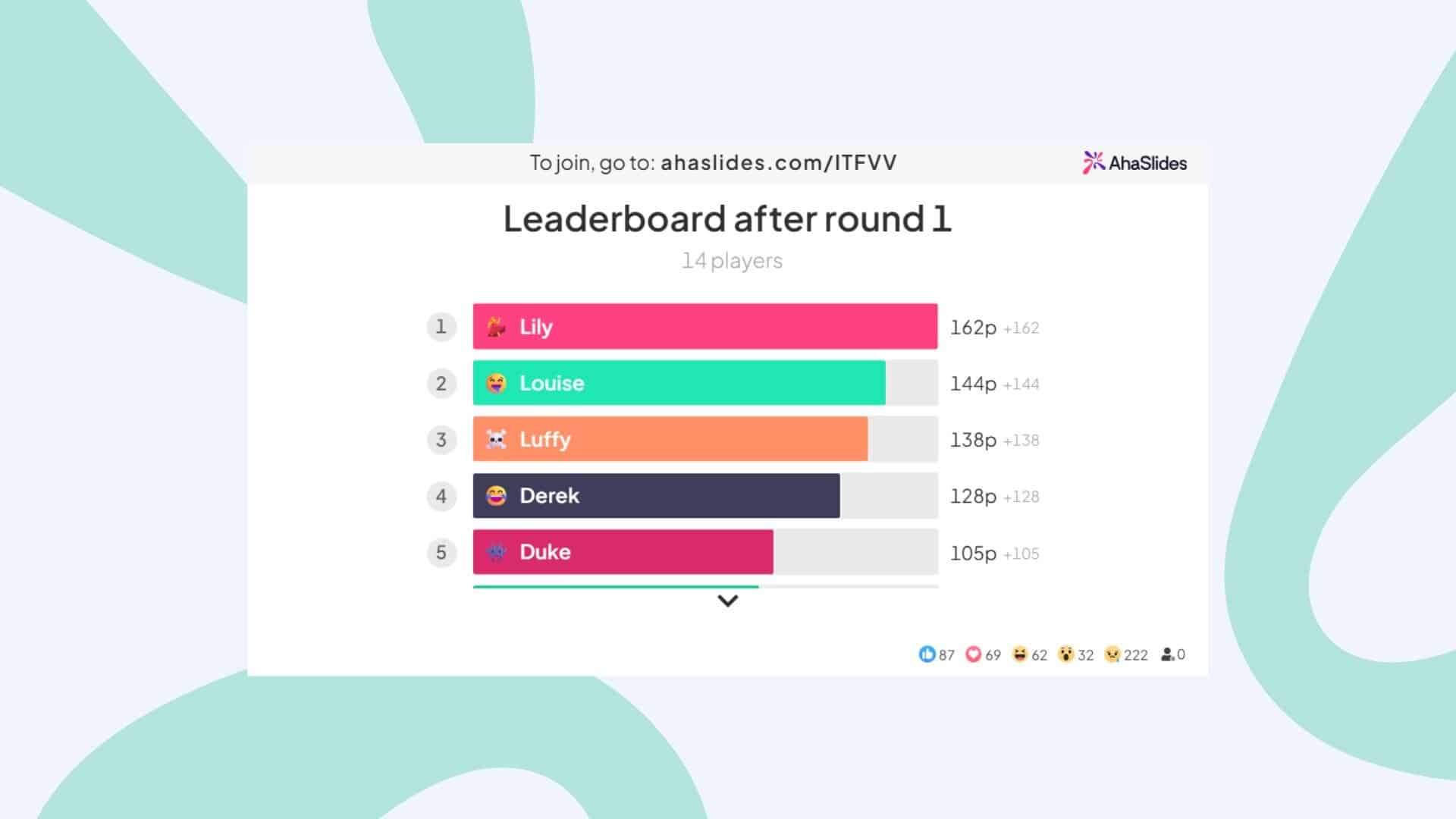
A live quiz suits youth groups because everyone answers on their own phone, so the shy player has the same chance as the loudest. With a live quiz maker like AhaSlides you write the questions, share a join link and code, and the leaderboard updates after each round. The free plan handles up to 50 participants and up to 5 quiz questions per presentation, so a longer quiz needs a paid plan.
How to run it:
- Choose a theme the group cares about, such as music, sport, films or Bible stories. Ten to 15 questions is a good length, or five if you stay on the free plan.
- Play in teams of three or four if you want more talking and less phone-staring.
- Show the leaderboard every four or five questions, not after every one.
- Use the template library to start from a ready-made quiz and change the questions to suit your group.
For seasonal ideas, see our Easter quiz questions and the trivia questions for teens.
3. Mafia (also called Werewolf)
Best for: 8 to 15 players indoors. Time: 20 to 30 minutes per round.
Players are secretly dealt roles: a few are the mafia, the rest are townspeople. Each "night" the mafia quietly choose someone to eliminate, and each "day" the town debates and votes to remove a suspect. The mafia win once they equal or outnumber the town, and the town win if they remove every mafia member. According to the game's history on Wikipedia, Dimitry Davidoff, a psychology student at Moscow State University, created it in the mid-1980s (1986 by most accounts).
What goes wrong: eliminated players get bored. Give them a job, such as helping the narrator, and keep rounds short. Use a neutral narrator, ideally an adult or a confident older teen, and remind everyone the accusations are part of the game.
4. Sardines
Best for: 8 to 30 players in a building or grounds. Time: 15 to 30 minutes.
It is hide and seek in reverse. One person hides, and everyone else searches. When you find the hider you quietly squeeze into the hiding place with them, until only one seeker is left, and that person hides next.
What goes wrong: safe hiding spots. Set the boundaries first, keep lights on in any indoor area and rule out cupboards, roofs and anywhere with a lock. It works well at retreats because it fills a stretch of free time without any equipment.
5. Minute to win it challenges
Best for: teams of three to five, indoors. Time: 20 to 30 minutes.
Borrowed from the TV show, these are 60-second challenges using household items. Give each team the same set of tasks and award a point for each one completed in time. Examples:
- Stack a pyramid of plastic cups and then take it apart, using one hand.
- Move ten cotton wool balls from one bowl to another with a straw and suction only.
- Keep three balloons in the air for 60 seconds without anyone holding a balloon.
- Bounce a ping-pong ball into a cup from a metre away.
Test every challenge yourself in advance so you know each one is possible in a minute.
6. Blind retriever
Best for: pairs, indoors or outdoors. Time: 10 to 15 minutes.
One player is blindfolded, and their partner guides them, by voice only, to pick up an object and bring it back. Add a second pair and the blindfolded players must listen for their own partner's voice in the noise.
What goes wrong: trip hazards, and players who dislike blindfolds. Clear the floor, let anyone close their eyes rather than wear a blindfold, and keep the course short.
7. Bible bingo
Best for: church youth groups, any size. Time: 15 to 20 minutes.
Give each player a bingo card filled with Bible characters, places and verses. Read out clues, such as "the man who built a boat to survive the flood", and players mark the matching square. The first to complete a line calls "bingo". It lets young people learn the stories in a playful way, and it works well as a calm activity between two energetic games.
To run it live, put the clues in a quiz so each player answers on their phone. The template library is a good starting point.
8. Colour war
Best for: teams of 6 to 15, outdoors in warm weather. Time: 30 to 45 minutes.
Each team gets a colour and competes in a series of relays and challenges, earning points for their colour. The finale is often a splash of washable paint, coloured water or powder.
What goes wrong: allergies and slippery ground. Check for skin sensitivities and asthma before using powder or paint, use powder outdoors only and away from any flame, barbecue or heat source (fine powder clouds can ignite), choose products marked non-toxic and washable, and lay the play area on grass rather than a hard surface.
9. Snowball fight
Best for: 10 or more players, outdoors, in snow. Time: 15 to 30 minutes.
Two teams build forts, then stage a battle. Snowballs are thrown below shoulder height, and a player who is hit sits out until the next round. To make it fair, set a fixed number of snowballs per team at the start.
What goes wrong: cold and ice. Agree a "no ice, no face" rule, set a time limit, and break for hot drinks. Check that everyone has dry gloves and a change of socks.
10. Easter egg hunt
Best for: any size, outdoors or indoors. Time: 15 to 30 minutes.
Hide plastic eggs holding small prizes or clues. For older youth, turn it into a team game where each egg holds a riddle that leads to the next. Add one "golden" egg for an extra prize.
What goes wrong: allergies and unfair hauls. Use non-food prizes as well as sweets, keep a note of every hiding place so you can find any egg that is missed, and give small children a head start in a separate area if the ages are mixed.
11. Thanksgiving scavenger hunt
Best for: teams of three to five. Time: 20 to 30 minutes.
Give each team a list of clues and challenges linked to the holiday, such as finding something orange, taking a photo of the team pretending to carve a turkey or answering a question about the holiday's history. The team with the most points at the end wins. Our scavenger hunt ideas have a full list of clue types to borrow.
12. Turkey bowling
Best for: 6 to 20 players, outdoors. Time: 15 to 20 minutes.
Set up ten plastic bottles or bowling pins at the end of a lane. Players take turns rolling a frozen turkey to knock them down, with the highest total after three turns winning.
What goes wrong: a frozen turkey is heavy and hard, and it is meat. Use a cheap, well-wrapped bird, roll it and never throw it, keep everyone behind the roller, do not cook or eat it afterwards, and use a bag of frozen bread rolls or a bowling ball if you would rather skip the food-safety question.
Keep your group engaged
- Start easy and build up. Open with something everyone can do at once, like a quiz, before the competitive or physical games.
- Mix energy levels. Follow a loud game with a calm one so no one burns out.
- Let young people pick. Offer three options and let the group vote, by show of hands or with a quick poll.
- Explain in a minute. If a game takes longer than that to explain, simplify the rules or demonstrate it.
- Debrief in one line. Ask what people enjoyed or learned about each other. It ties the game to the purpose of the group.
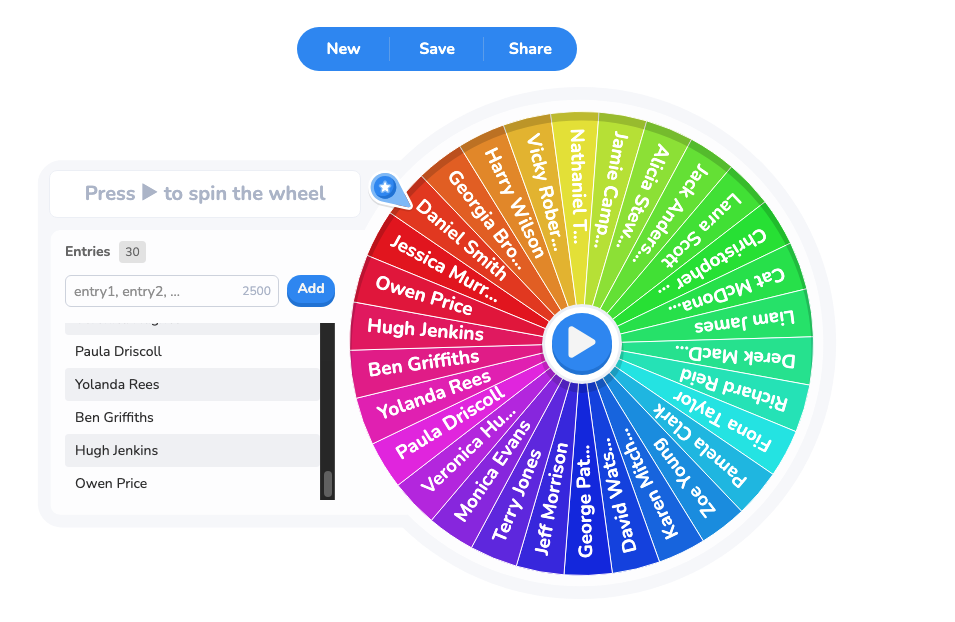
To pick who goes first or to make teams without arguments, use the AhaSlides spinner wheel: type in names, spin and the wheel decides.
For more ideas, see our guides to icebreaker games, large group games and games for teens.
Frequently asked questions
What are the best youth group games?
Capture the flag, a live trivia quiz, Mafia and Sardines are the most reliable, because the rules are short, they suit a wide range of ages and they need little equipment.
What are some indoor youth group games?
Mafia, Minute to win it, Bible bingo, a quiz and blind retriever all work indoors with no special space.
What are some youth group games for church?
Bible bingo, a Bible trivia quiz, Sardines and Mafia are common choices. A quiz built around Bible stories is easy to set up and works for any group size.
How do you make youth group games more fun?
Keep them short, let the group choose, and mix active games with calmer ones. Offer a way to opt out so nobody is forced to take part.
How many people do you need for a youth group game?
It depends. Mafia plays best with eight or more, capture the flag works best with 12 or more, and a quiz or scavenger hunt works for any number.